
Stage Review - Assassins (Red Curtain Foundation for the Arts)
Stage Review - Assassins
Presented By: Red Curtain Foundation for the Arts - Marysville, WA
Show Run: September 11 - October 04, 2026
Date Reviewed: Sunday, September 27, 2026
Run Time: 2 Hours (including a 15-minute intermission)
Reviewed by: Greg Heilman
Stephen Sondheim and John Weidman’s Assassins has always been one of the stranger entries in the musical theatre canon, bringing together a collection of successful and would-be presidential assassins and asking what could possibly drive someone to believe that pulling a trigger might solve what has gone wrong in their life. In Red Curtain Foundation for the Arts’ production, running in Marysville through October 4, director Scott B. Randall dives right into the absurdity of that question, placing these figures inside a grotesquely American carnival where assassination becomes another game on the midway and the promise that everybody has the right to be happy takes on a decidedly darker meaning.
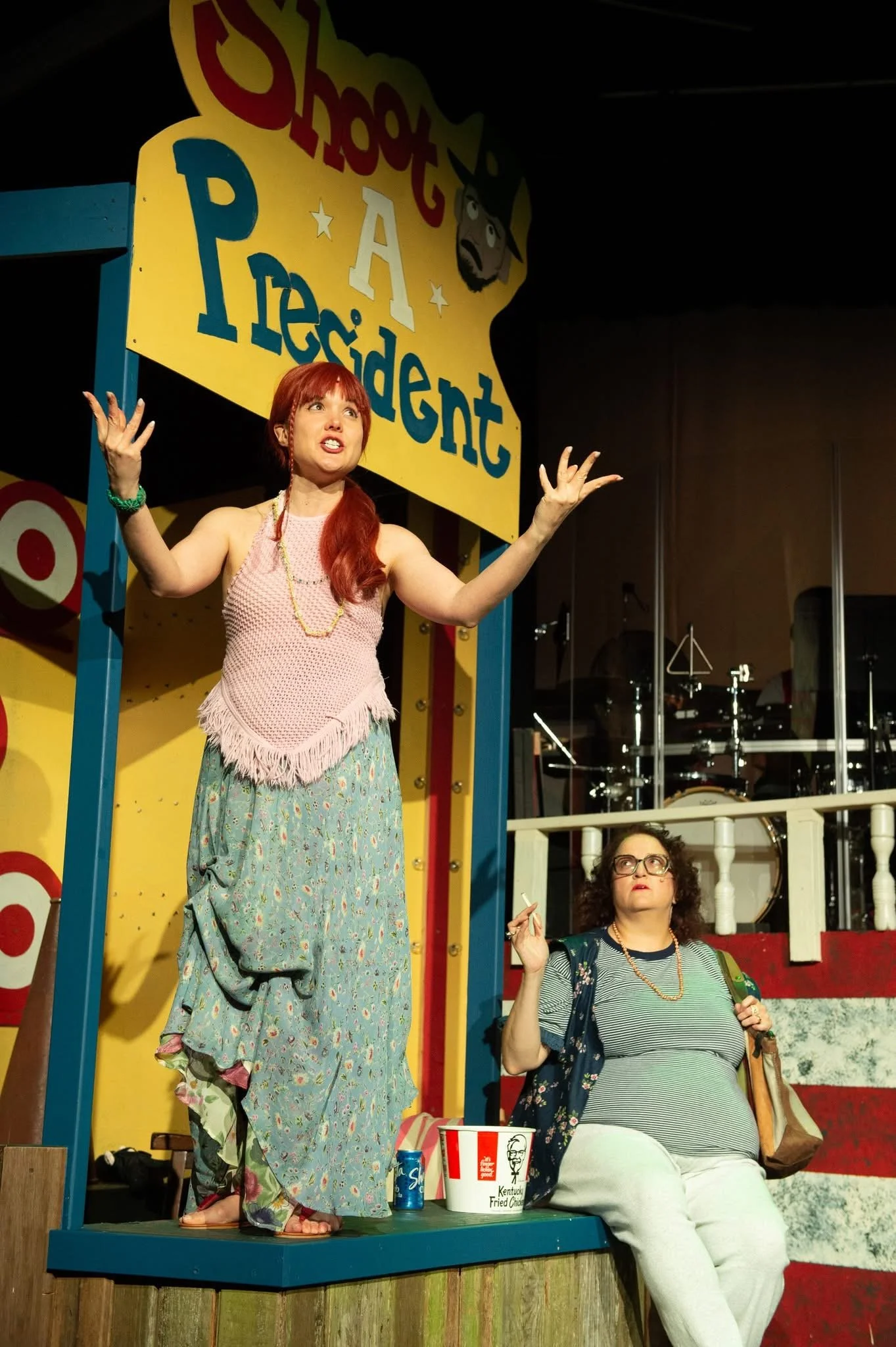
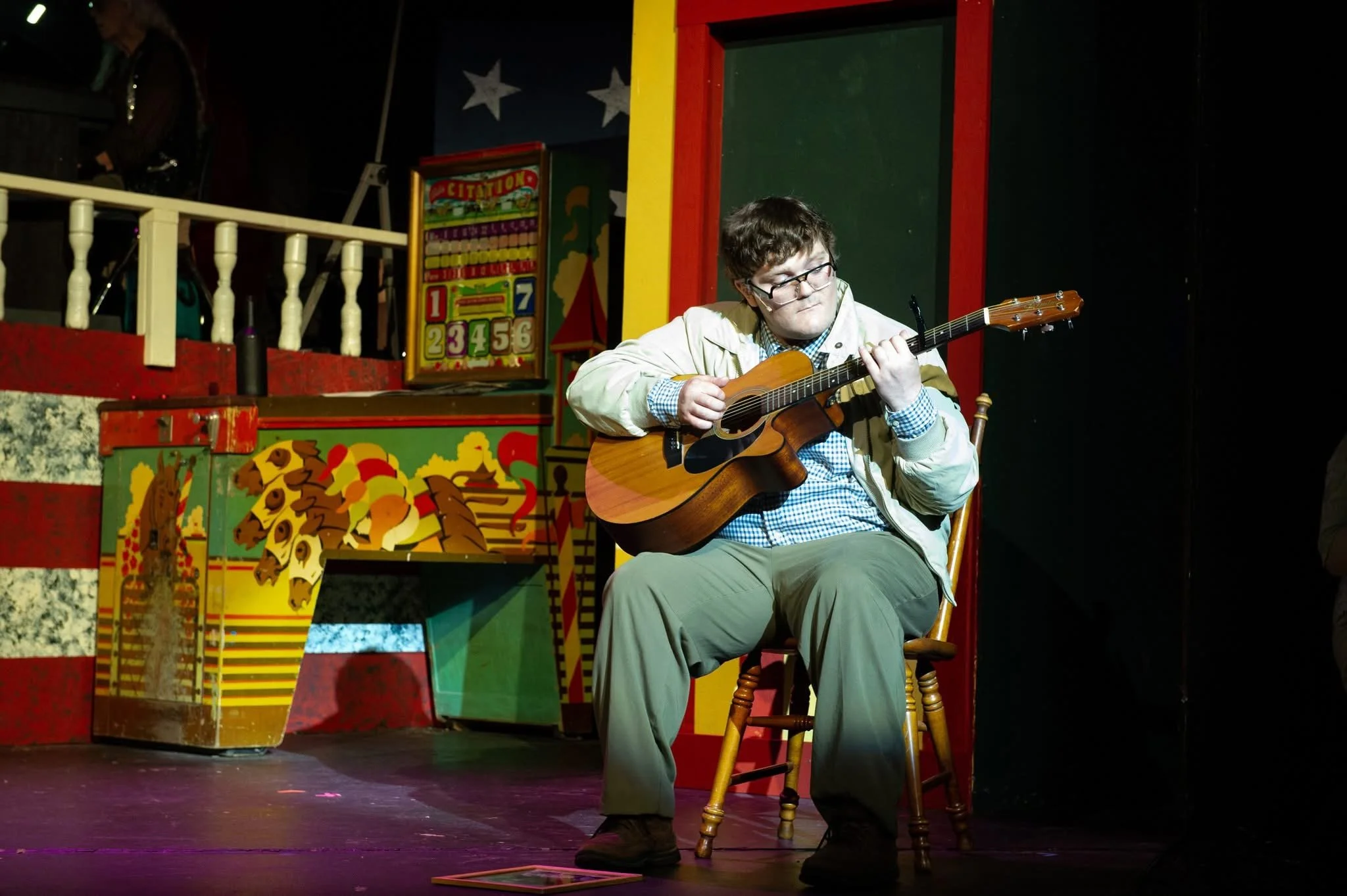
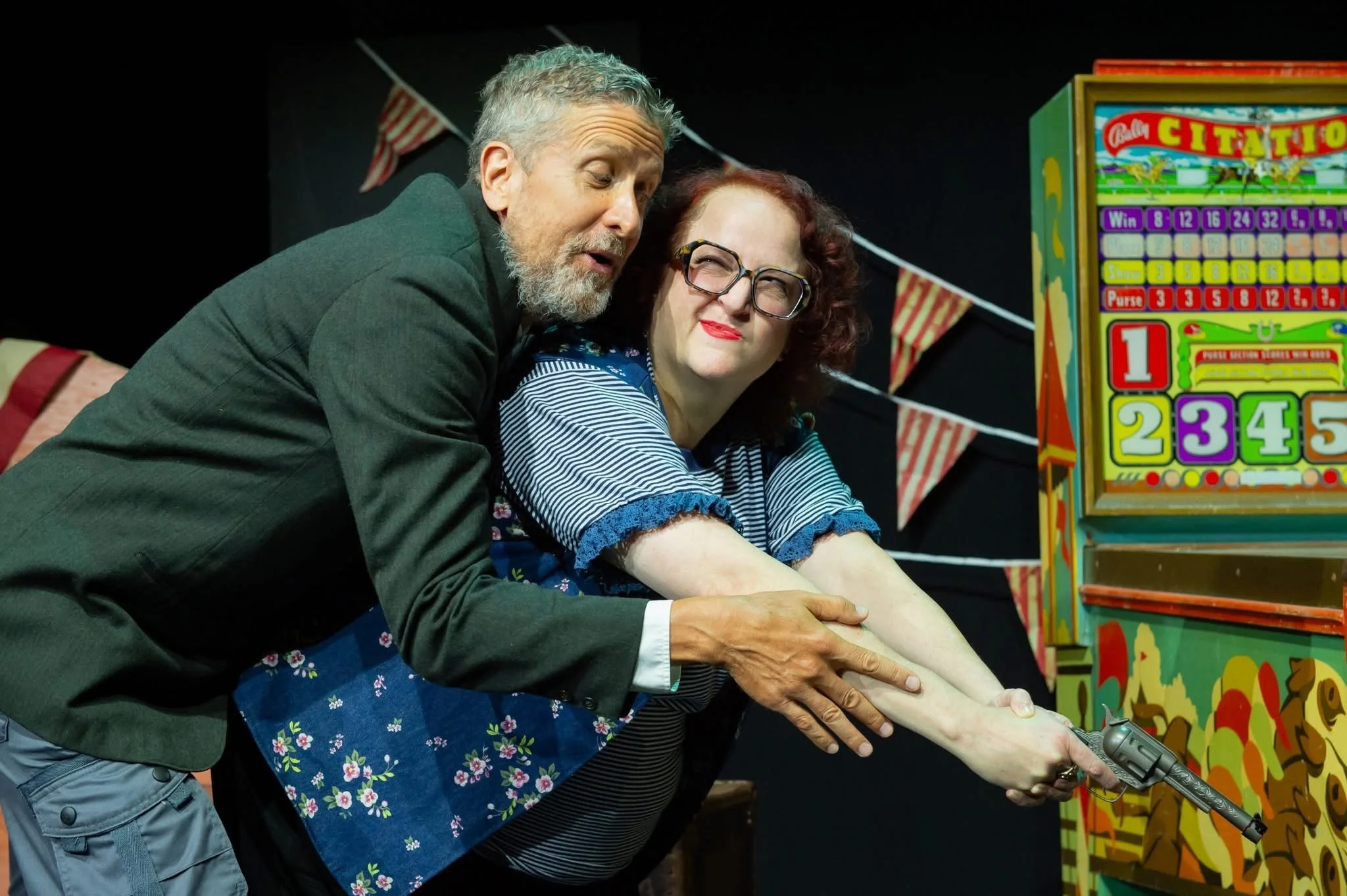
Scott, who also designed the set and lighting, establishes that idea before much of anything else happens. The stage is a combination of carnival midway and shooting gallery, with a USO-style bandstand, or something representing a town-square gazebo, occupying the center. There are carnival games, a strongman hammer game, a vintage pinball machine and, most appropriately, a “Shoot a President” attraction. Individual set pieces are brought out as the assassins take their turns in the spotlight, including a stage for John Wilkes Booth and an electric chair for Giuseppe Zangara. One of the cleverest touches is a Ronald Reagan shooting gallery for John Hinckley Jr., where he can never quite manage to hit his target.
That setting makes the opening “Everybody’s Got the Right” particularly effective. On its surface, the number offers the quintessential American promise that everyone is entitled to happiness. Here, however, it also introduces the warped premise around which Assassins revolves, for this particular collection of unhappy people, shooting a President might be the thing that finally makes everything okay. It is a ridiculous idea until one begins listening to their stories, at which point Sondheim and Weidman make it considerably less comfortable to dismiss.
Lochlan Mor presides over this particular carnival as the Proprietor, while Yana Ramos serves as the Balladeer, guiding the audience through the stories of people who have become infamous footnotes in American history. Scott doesn’t try to make these people sympathetic, nor does the material ask us to excuse what they did. Instead, the production presents their anger, disappointment, delusion and desperation, frequently through comedy, and allows us to see how those emotions can become twisted into something horrific.
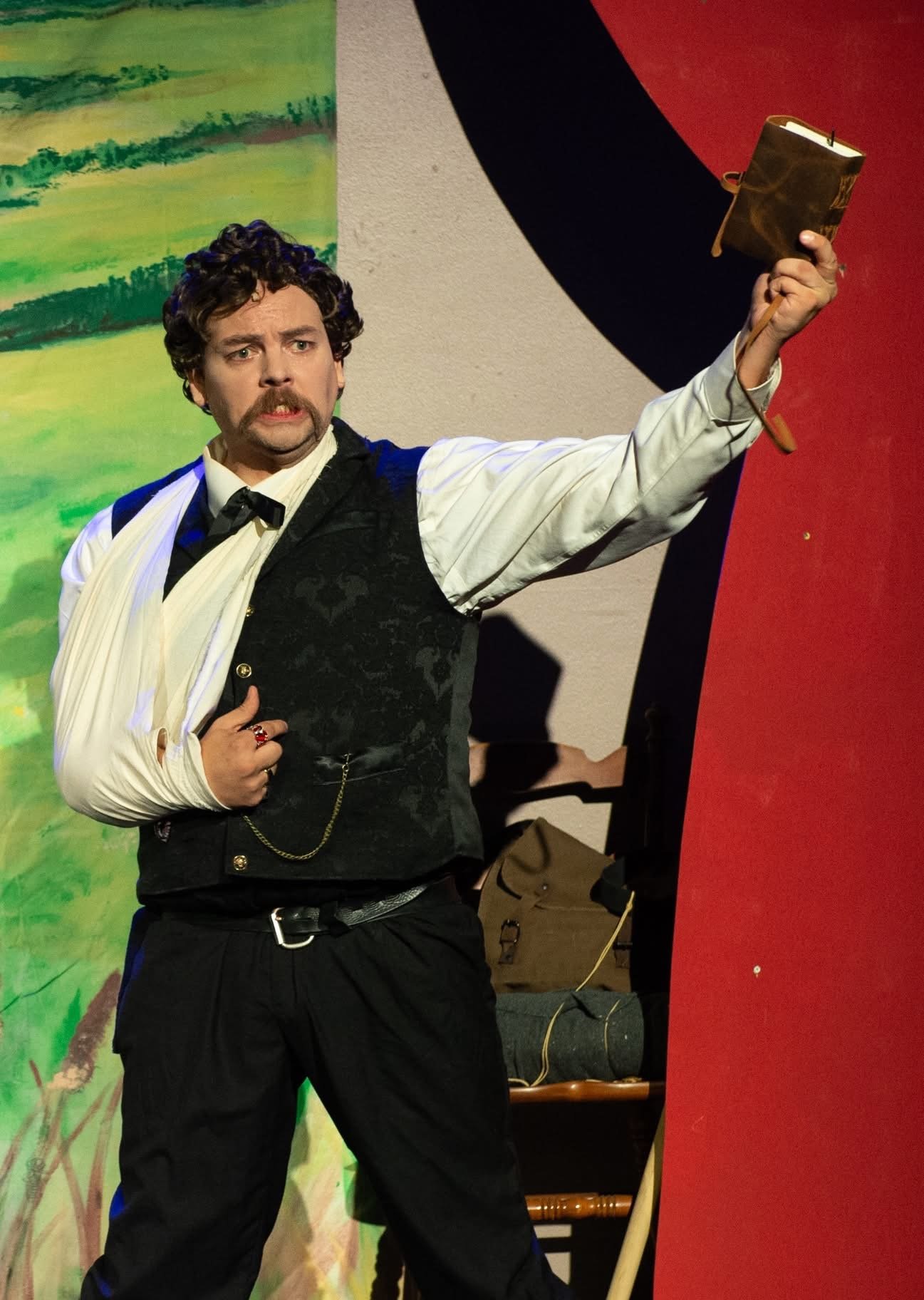
Paul Hutchinson provides the production’s strongest individual performance as John Wilkes Booth, establishing him as something more than simply the first assassin encountered in the musical. Paul gives Booth an authority over the others, both dramatically and vocally, that becomes increasingly important as the story moves toward its conclusion. He is charismatic enough that one can understand why the other assassins might listen to him, while never losing sight of the ugliness behind what Booth represents.
Alex Williams is also strong as Leon Czolgosz, bringing an especially good low singing voice to “The Gun Song” and its barbershop musical style. The number, with its almost instructional consideration of how a gun is built, is quintessential Sondheim, where something mechanically ordinary becomes increasingly ominous simply because we understand what these characters intend to do with it. Alex also handles Czolgosz’s accent particularly well. In fact, the accents throughout the production are generally quite good, particularly those belonging to the European-born assassins, including Giorgio Selvaggio’s Giuseppe Zangara.
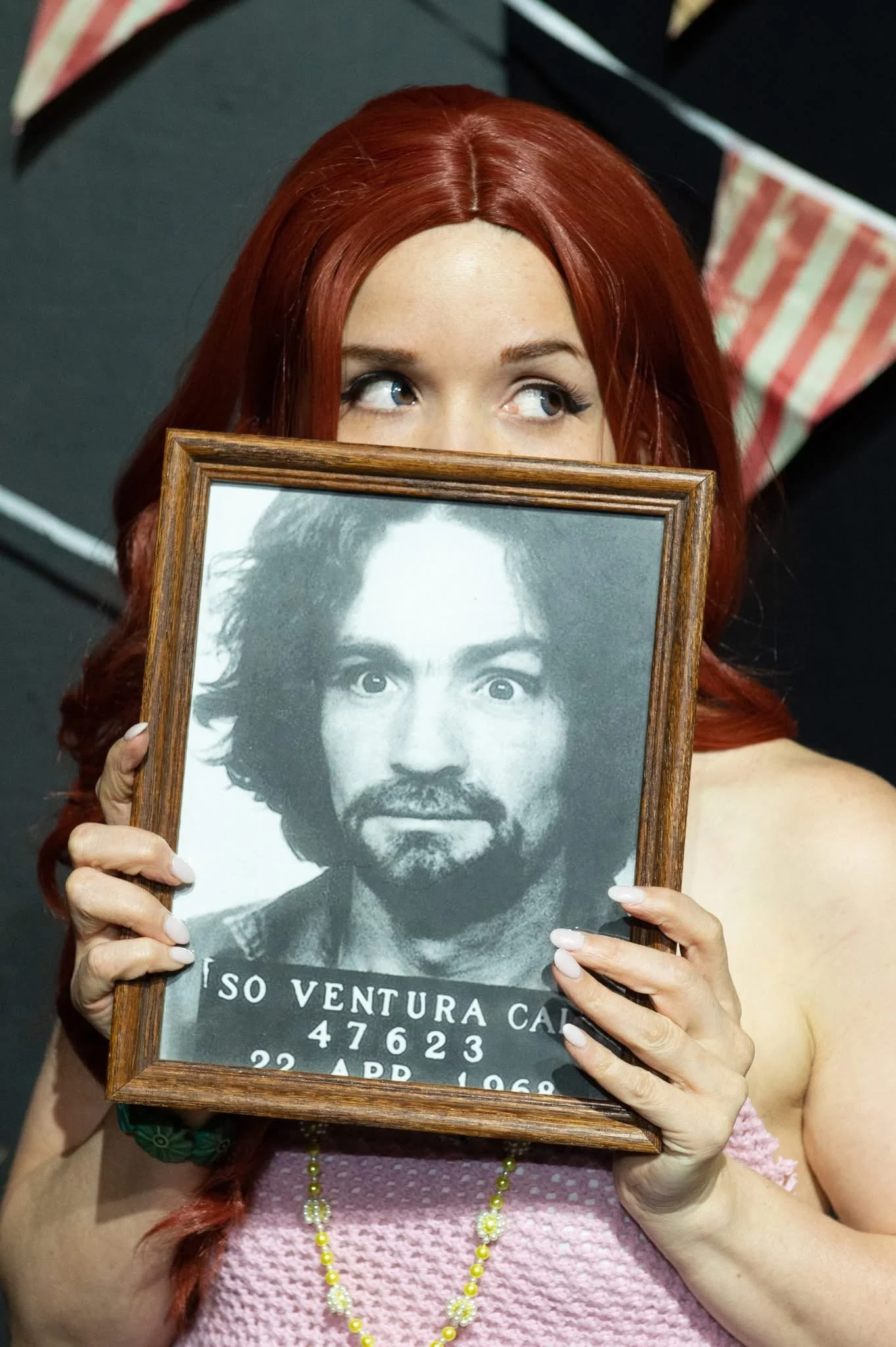
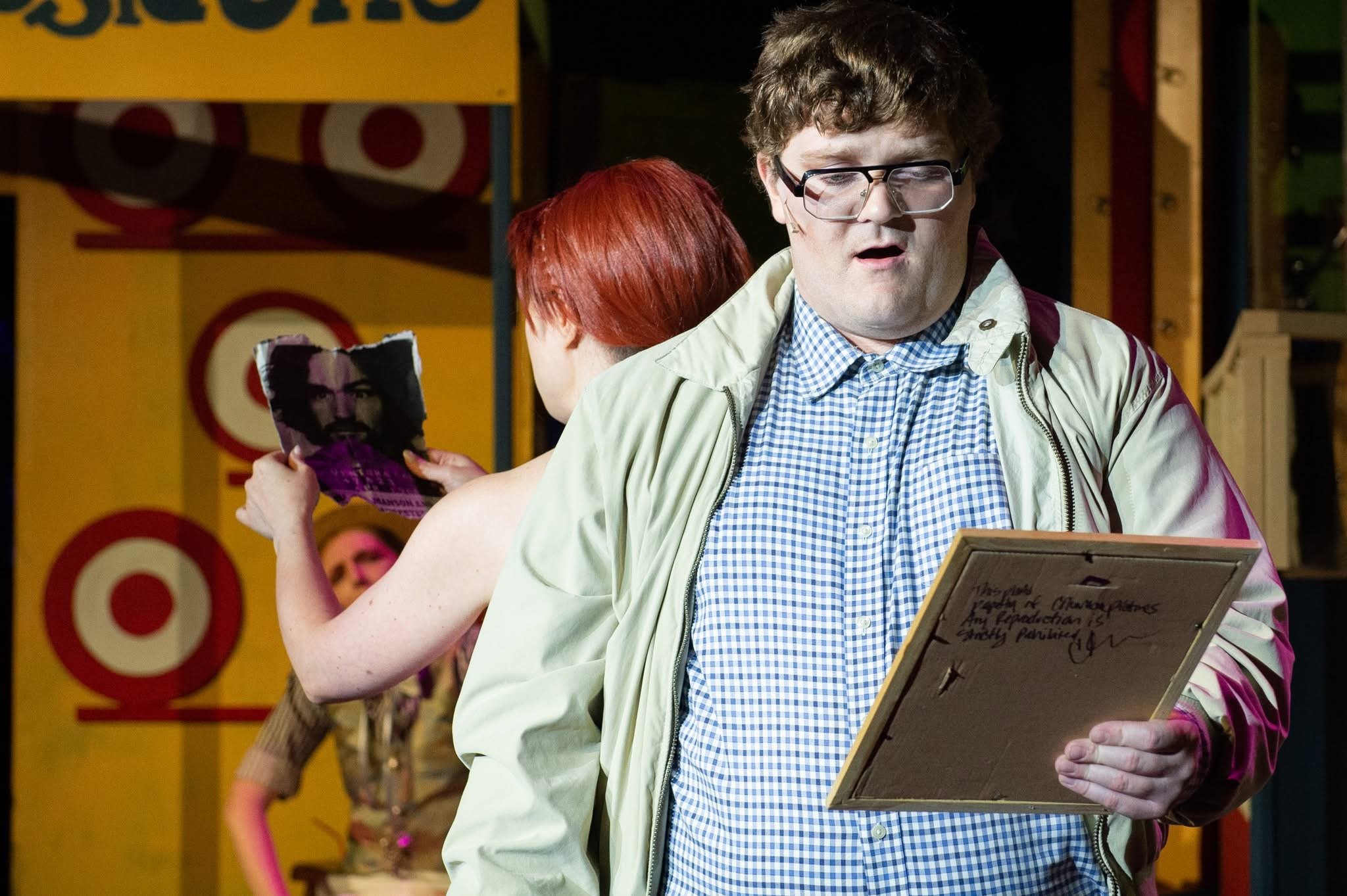
The show’s strangest (and only) love song belongs to Nathaniel G. Thomsen as John Hinckley Jr. and Jax Alves as Lynette “Squeaky” Fromme. “Unworthy of Your Love” is intentionally unsettling, allowing two people with dangerously obsessive attachments to sing what initially sounds like a perfectly conventional romantic duet. Nathaniel and Jax sing it very well, both individually and in harmony. Jax is especially good throughout the production, capturing Fromme as a thoroughly brainwashed member of Charles Manson’s cult while also delivering an excellent musical and vocal performance.
Sean Murphy embraces the manic theatricality of Charles J. Guiteau, a character who may be the clearest representation of the production’s crazy, chaotic and frequently farcical view of the frustrations that drive people toward despicable acts. “The Ballad of Guiteau” fits naturally into Scott’s carnival world, where spectacle and violence have become increasingly difficult to separate. Crazy and chaotic is a good way of describing the first act of Assassins as well. There’s a lot going on, but it never seems to click until Act 2, and that coming together starts with Morgan Peeler’s portrayal of Samuel Byck.
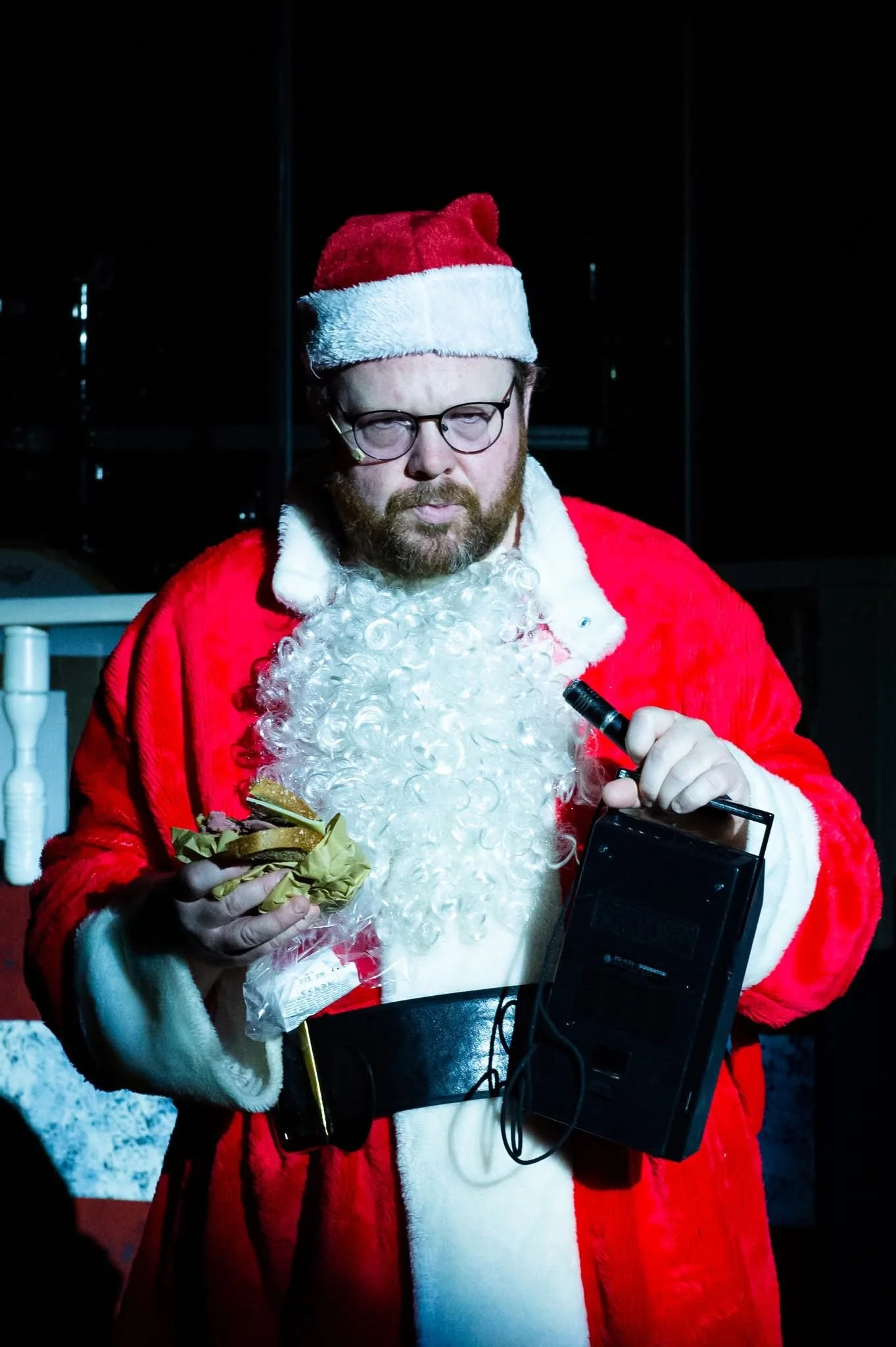
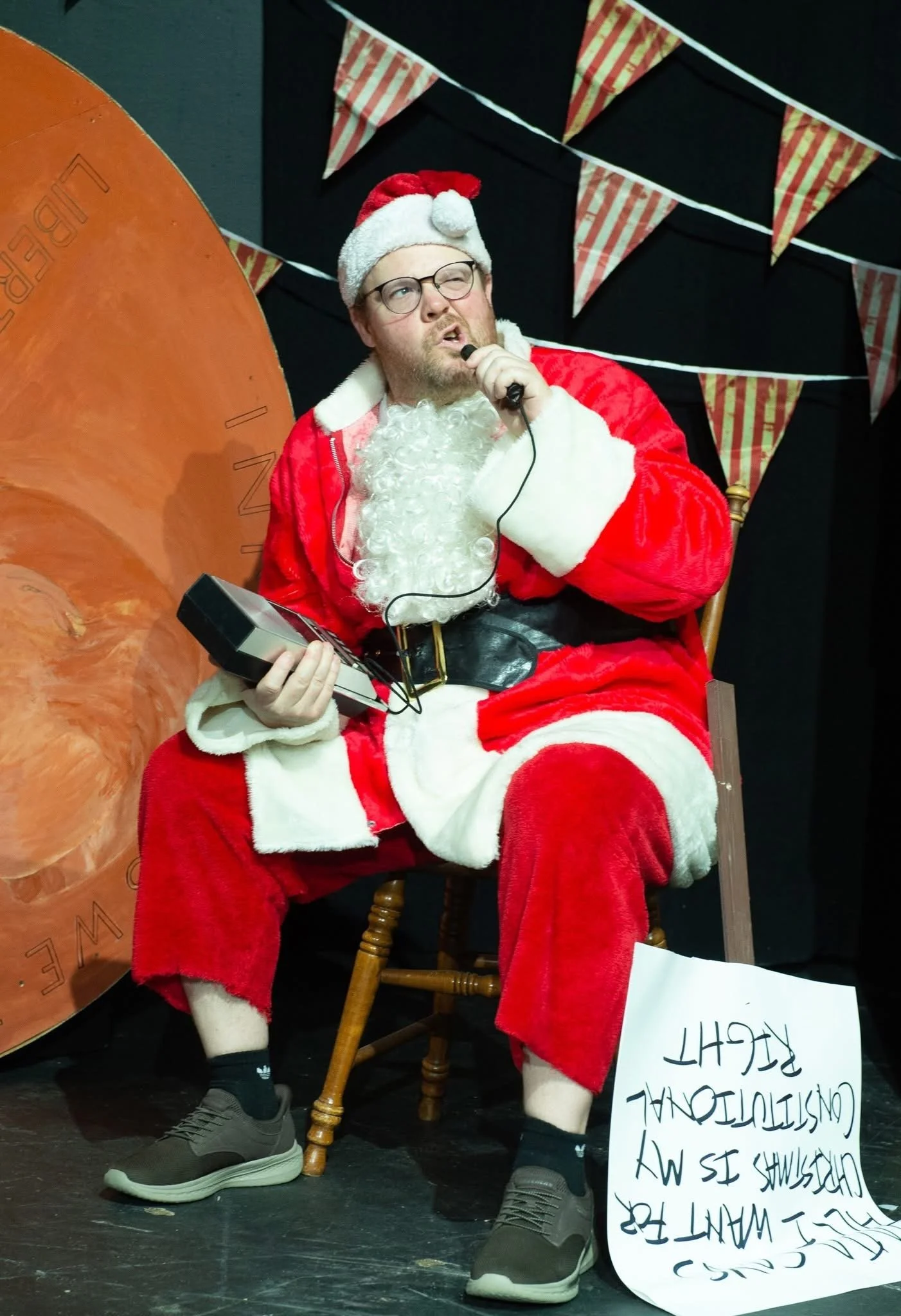
Byck enters as an out-of-work tire salesman dressed as a hobo Santa, dictating a letter to Leonard Bernstein, and Morgan initially finds plenty of humor in the absurdity of the character. But that humor gradually disappears. By Act II, particularly during that later monologue, the performance has become angry, bitter and serious. His words encapsulate the frustration of someone convinced that the world has failed him and searching for someone to blame, demonstrating how that anger can eventually metastasize into the belief that an act as extreme as killing a President is somehow justified. This is another solid performance from Morgan, and an emotional one, the kind I’m sure patrons of Red Curtain have become quite familiar with and appreciative of.
Portrayals like Morgan’s are also where Assassins feels most uncomfortable. These are extreme characters, but the emotions underneath them are not especially foreign. Frustration with government, distrust of institutions and the belief that those in power are either lying to us or ignoring us are hardly relics of American history. At one point the question essentially becomes: who do we trust when both sides are lying to us? Assassins offers no easy answer, of course. Instead, it explores what can happen when someone decides there is no answer at all.
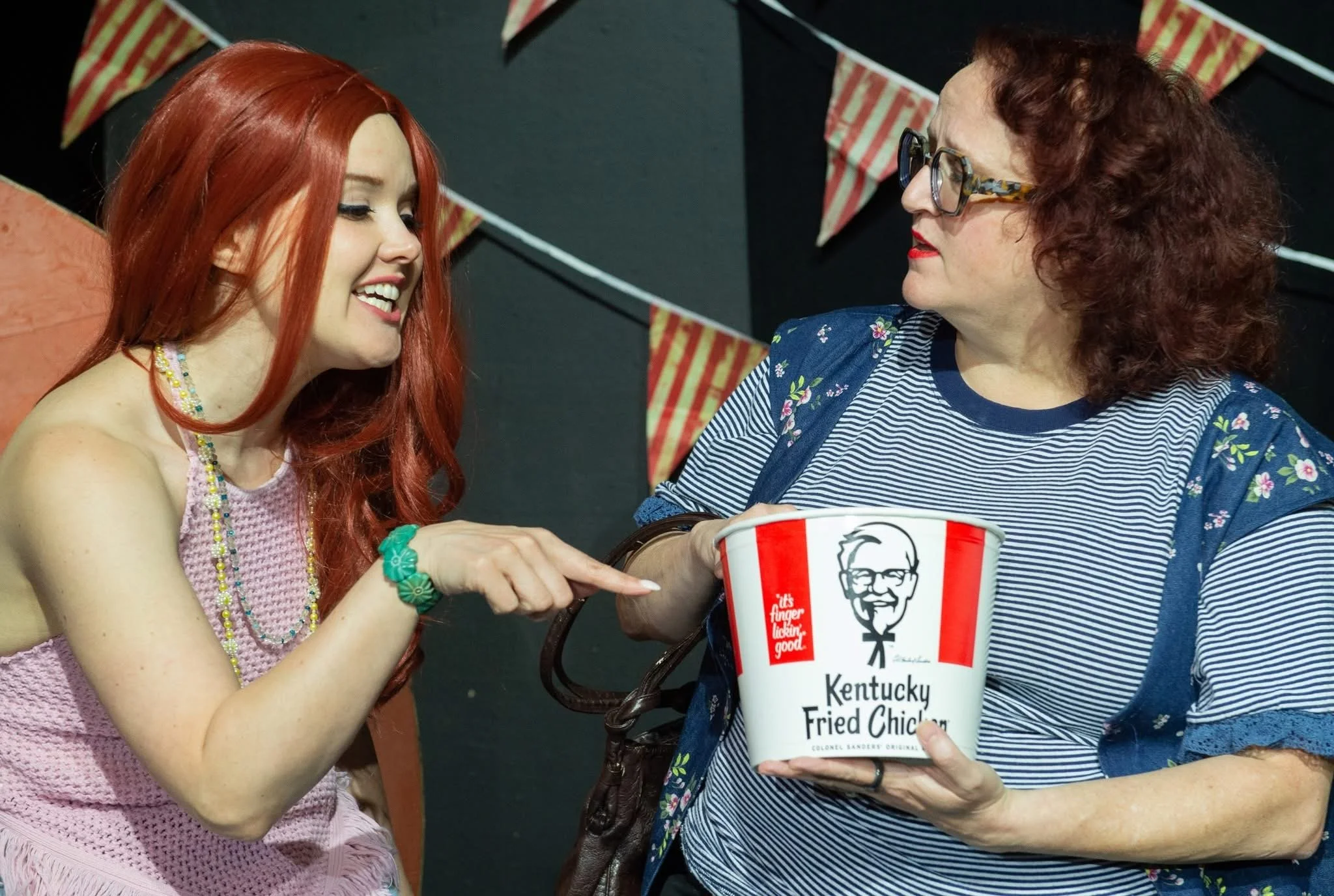
The production wisely continues to find humor amid that darkness. Adrienne Easton’s Sara Jane Moore and Jax’s Fromme make the attempted assassination of Gerald Ford every bit as absurd as one might expect, while the recurring carnival imagery prevents the show from becoming a procession of historical reenactments. There is always a sense that these people are competing for something, be it attention, recognition, validation or perhaps simply a prize at the end of the game. The question “What’s my prize?” becomes particularly apt, distilling the larger question of what someone believes they will actually gain by doing something as extreme as shooting a President.
Musically, the production is supported nicely. Music director Payten Redwood and conductor Kevin DeFord guide a seven-piece band featuring Iris Ingram on keyboard, Jenessa Stout on flute, piccolo and clarinet, Wes Willard on alto saxophone, Jackson Mulivrana on trombone and euphonium, Louie Hackett on bass and Jake Cunningham on drums. Sondheim’s score moves through a variety of distinctly American musical idioms, and Kevin and the musicians provide a solid foundation beneath a cast that is collectively strong vocally. Choreographer Candace Larson similarly works within the production’s ensemble-driven approach rather than attempting to turn the material into something it is not.
The technical elements reinforce Scott’s central concept. Kate Dohr’s costumes help establish both period and character, while Mike Pieckiel’s sound design supports the musical demands of the piece and Scott’s lighting makes particularly effective use of the carnival environment. Stage manager Courtney Rose Calkins, who also oversees props, has plenty to coordinate as set pieces and props arrive and disappear to transform the midway into the various locations demanded by the story. Fight choreographer Daniel Hanlon and armorers Brent Stainer and Paul Grass also have an unusually important responsibility in a production in which firearms are necessarily a constant presence.
Everything in the story ultimately converges on Lee Harvey Oswald, played by Luke Losi Pfleger. It is here that the collection of seemingly disconnected stories reveals its larger purpose. Booth returns and, eventually joined by the others, works to convince Oswald to turn the gun away from himself and toward President Kennedy. Paul is at his best in this sequence, using the charisma and authority he has established throughout the show to make Booth’s influence over Oswald disturbingly believable. It is the culmination not only of Paul’s performance, but of Scott’s entire conception of the musical. All of these unhappy, angry and forgotten people gathering around one man and convincing him that an act of violence will finally make him matter.
That makes “Another National Anthem” and the final movement toward Oswald particularly effective. The promise offered in “Everybody’s Got the Right” has curdled completely. These characters have convinced themselves that happiness, recognition or meaning has been denied to them, and therefore something (or someone) must be responsible. If the American Dream has failed them, their answer is not to reconsider the dream, but to reach for a gun.
Paul’s Booth may be the individual standout, but Assassins succeeds because this is a solid group effort. Lochlan, Yana, Paul, Adrienne, Jax, Morgan, Giorgio, Sean, Alex, Nathaniel and Luke each have a different piece of the argument to make, supported by an ensemble that includes Brian Armstrong, Deja Edwards, Wesley Garman, Rachel Gordon and Liz Vogeli. Together they make Scott’s carnival increasingly less amusing as the evening progresses.
Assassins is funny until suddenly it isn’t, which is precisely why it resonates. Red Curtain Foundation’s production understands that Steven Sondheim and John Weidman aren’t simply presenting a collection of disturbed people from American history. They are examining the anger, entitlement, loneliness and desperation that allow people to convince themselves that an extraordinary act of violence might somehow fix an ordinary life. Director Scott Randall wraps that idea in carnival lights, games and music, inviting us onto the midway before gradually revealing what the prizes actually cost.
Assassins runs on stage in Marysville at Red Curtain Foundation for the Arts through October 4. For more information, including ticket availability and sales, visit https://redcurtainfoundation.org/.
Photo credit: Kenny Randall