
Stage Review - Chick Fight (Artemis Theatre Project)
Stage Review - Chick Fight
Presented By: Artemis Theatre Project - Seattle, WA
Show Run: February 20 - March 08, 2026
Date Reviewed: Friday, February 20, 2026 (Opening Night)
Run Time: 75 minutes (no intermission)
Reviewed by: Greg Heilman
If you’ve read my reviews, you know I like to take in what I’m presented with the moment I walk into a theatre and try to decipher what it might be telling me about the experience ahead. In Chick Fight!, presented by Artemis Theatre Project and running on stage at Yaw Theatre in Georgetown through March 8, stepping into the space immediately signals that this won’t be a standard run of the mill production. Chairs are arranged in a horseshoe, a single seat with a music stand sits at the center, and there’s even the faint smell of sweat, heightened by the warmth of the room.
As the audience settles in, Matthew Tevenan, credited as Him in the program, sits alone with his cello, poised to begin. It’s an image that feels deceptively simple, yet the stillness carries a quiet tension. The audience isn’t quite sure what to make of it. That uncertainty grows—low murmurs ripple through the house, a few voices call out—until the line between observer and participant begins to blur. When one audience member pulls out her phone and another challenges her, reminding her that they are, in fact, in the theatre, the moment snaps into focus. The event begins in earnest, and with it, the understanding that this won’t be a passive experience. Like ringside spectators at a boxing match, the audience is implicated from the start.
Sara Jean Accuardi’s Chick Fight! – A Reckoning in 9 Rounds is a lean, muscular piece of theatre that blends physicality with psychological excavation. Structured as a series of “rounds,” the play examines the shifting dynamics between two women—identified simply as She and Her—as they navigate memory, identity, power, and connection through encounters that range from playful to deeply confrontational.
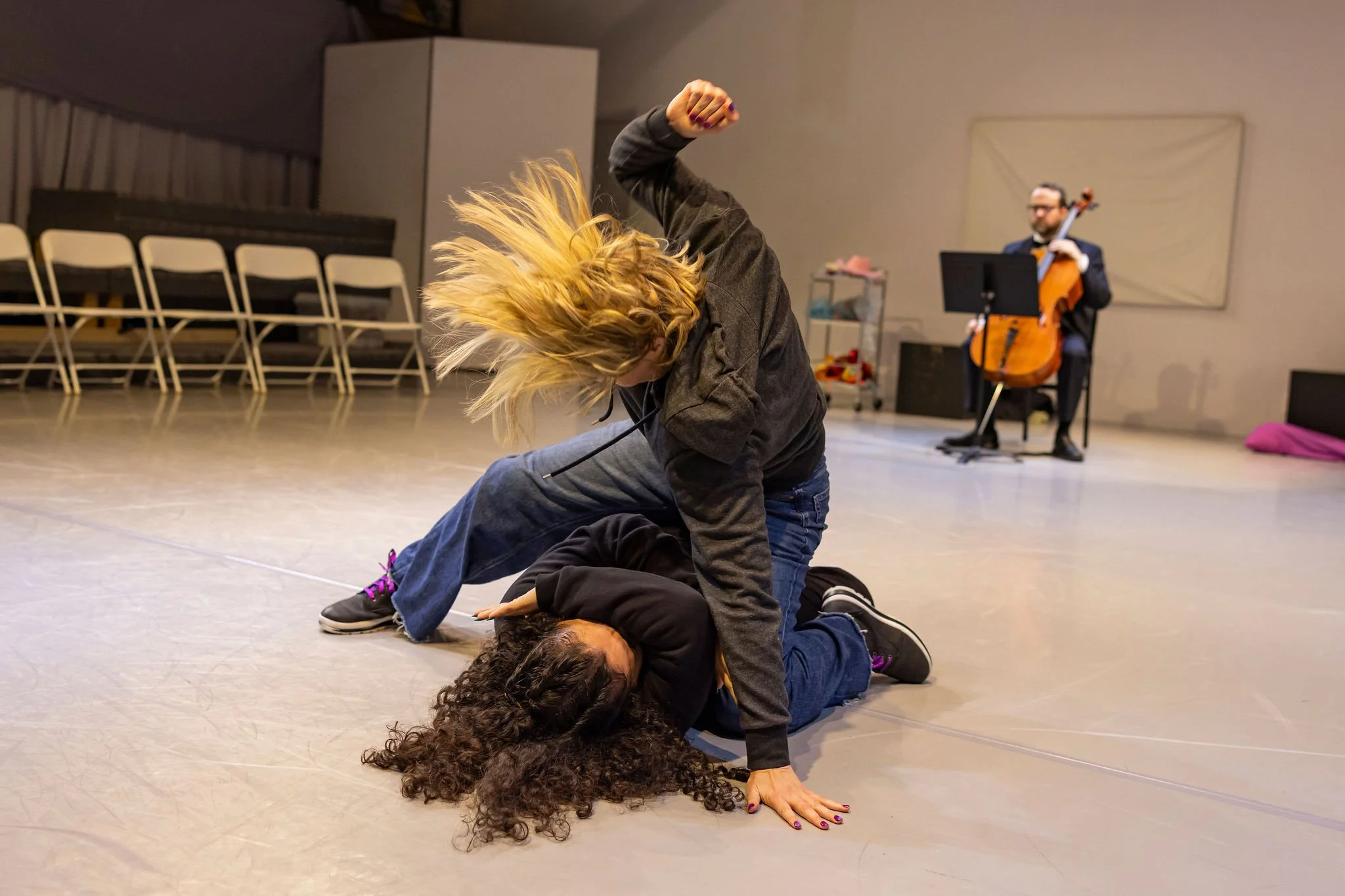
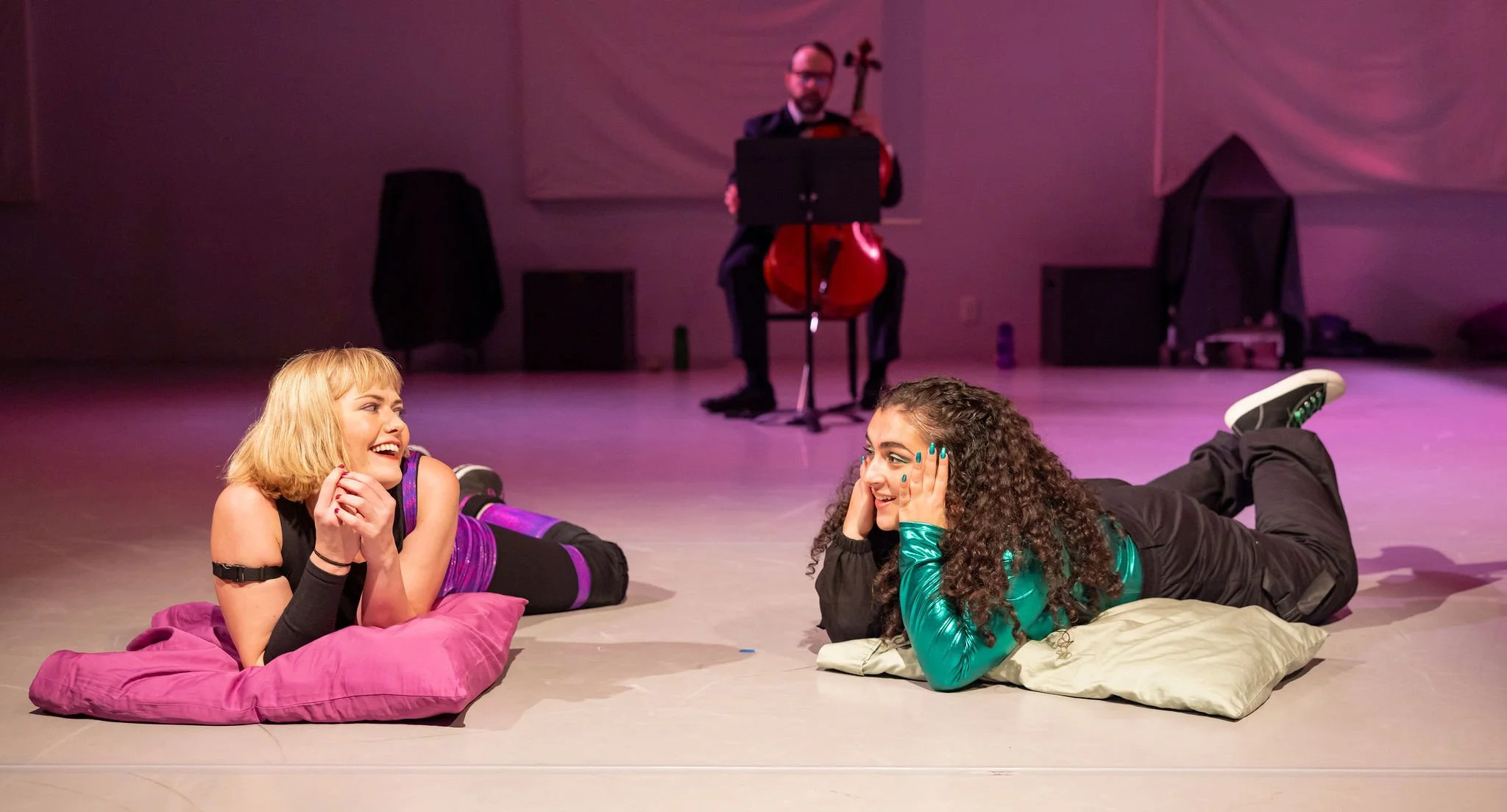
Under the direction of Diana Trotter, with fight choreography and intimacy direction by Chelsey Sheppard, the production understands the duality that is at the heart of the script: combat as both literal and metaphorical. Each round introduces a new scenario, requiring rapid transformation not only in character, but in emotional stakes. The play becomes a study in female emotion, relationships, and conflict, while also interrogating the ways in which society strips away self-determination, replacing it with a pre-defined script—one that often feels staged for the benefit of those in control. It’s not messaging that takes the easy way out, but it is undeniably the necessary one. The conflicts range from outwardly aggressive to completely passive, with enough passive-aggressiveness in between to make the this piece fit well in the Pacific Northwest. There’s even a bit of playfulness between the participants, but as in the world outside the theatre space, as soon as the “chicks” begin to find some common ground, they’re quickly reminded about why they are here.
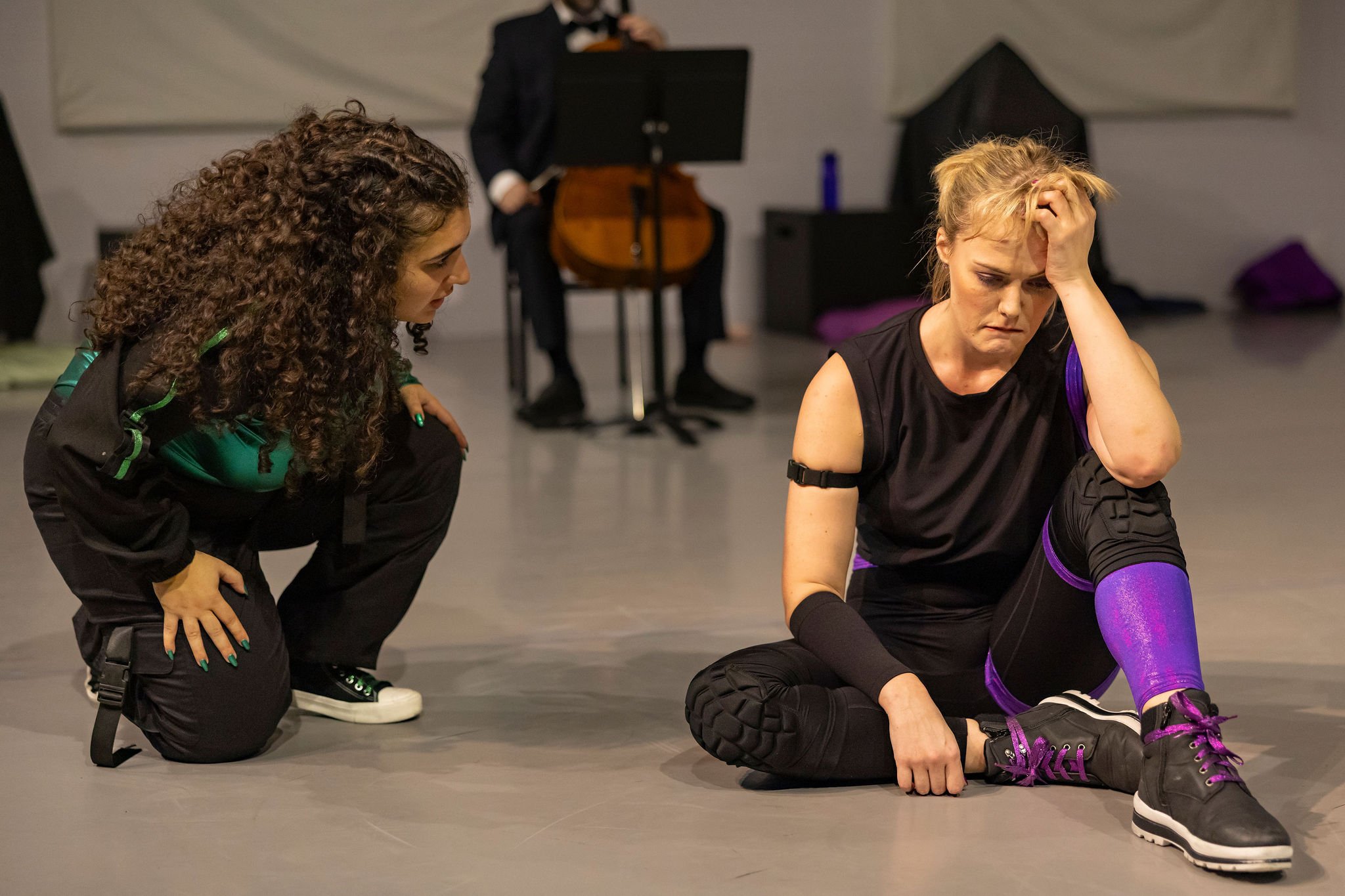
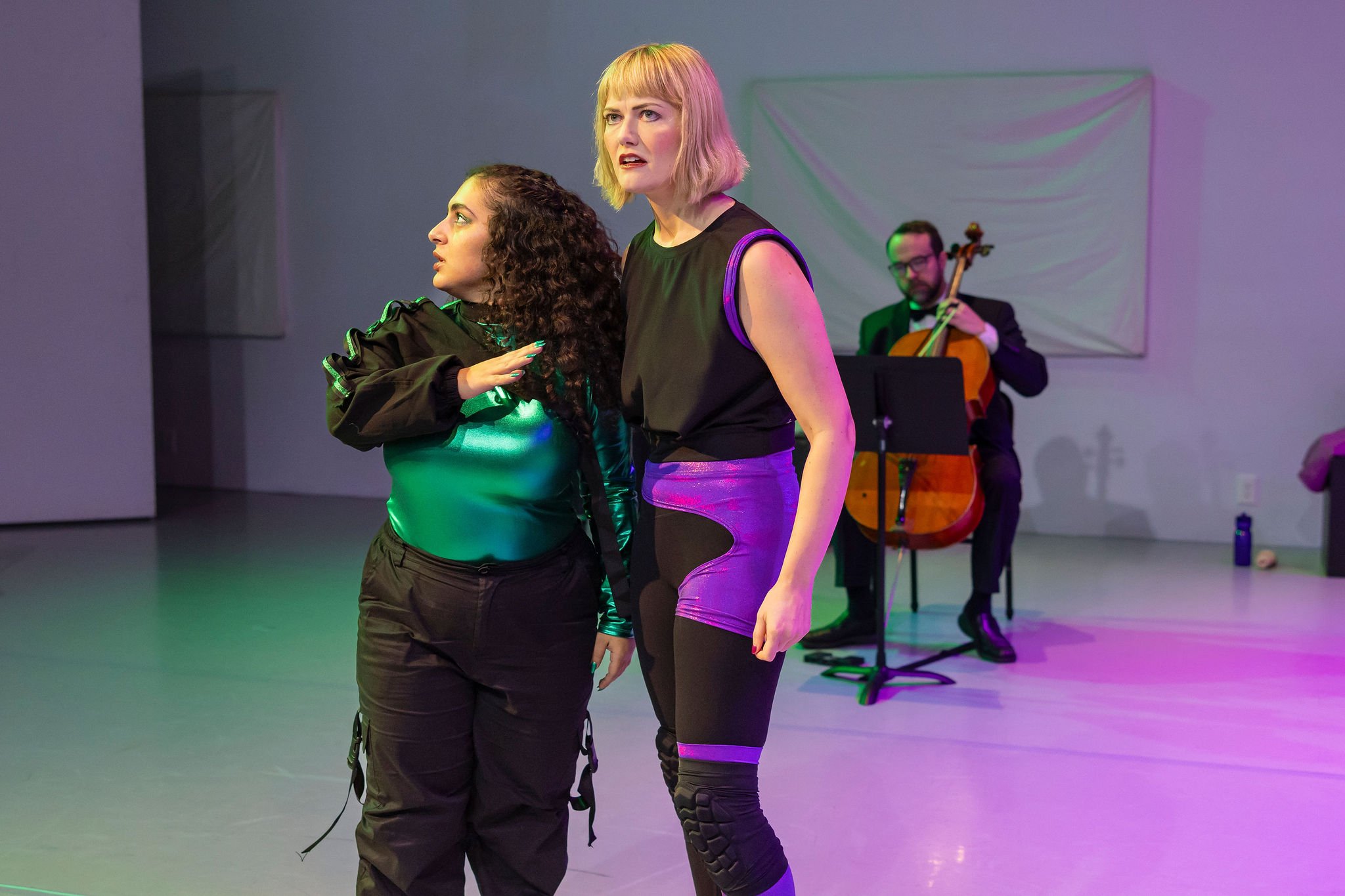
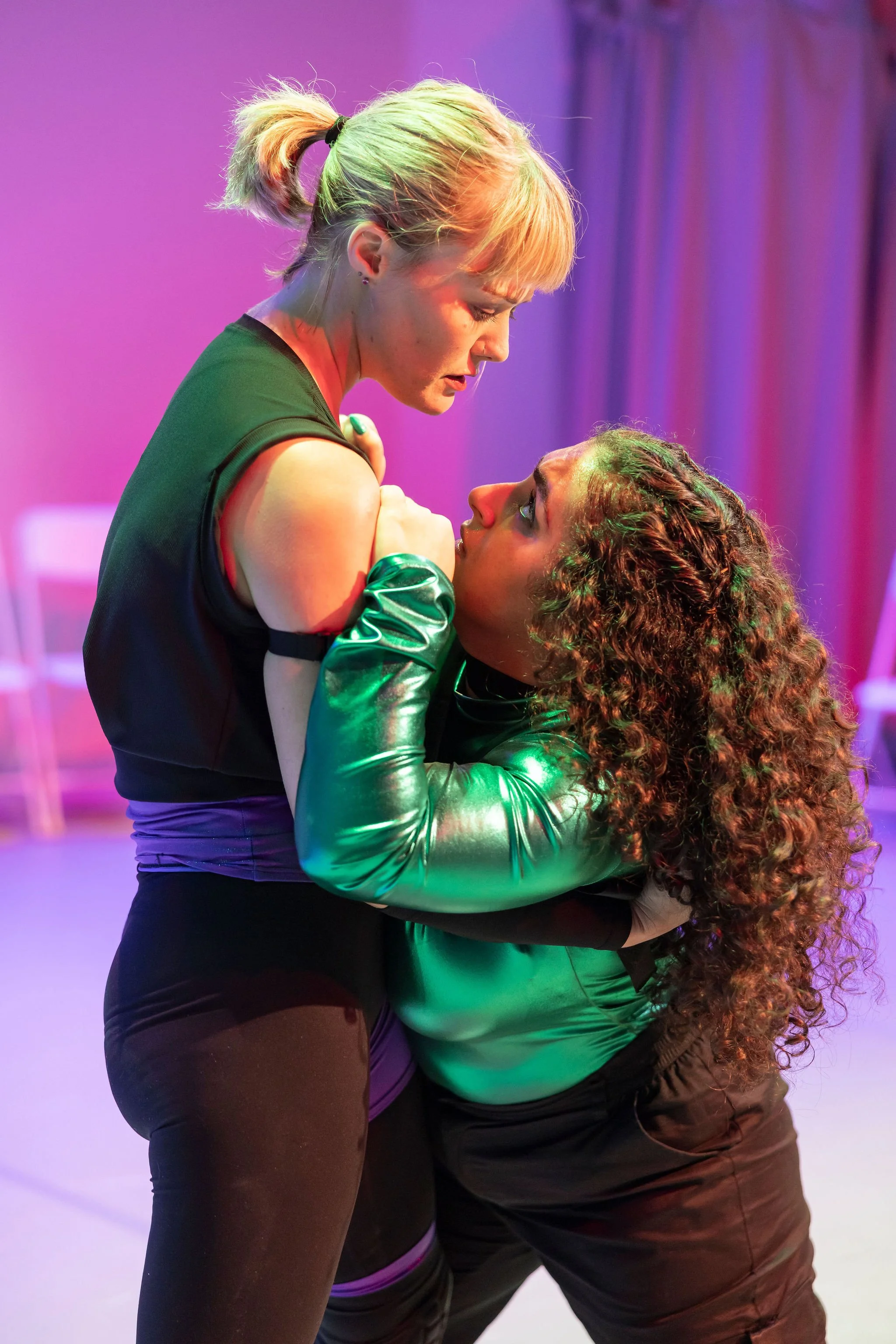
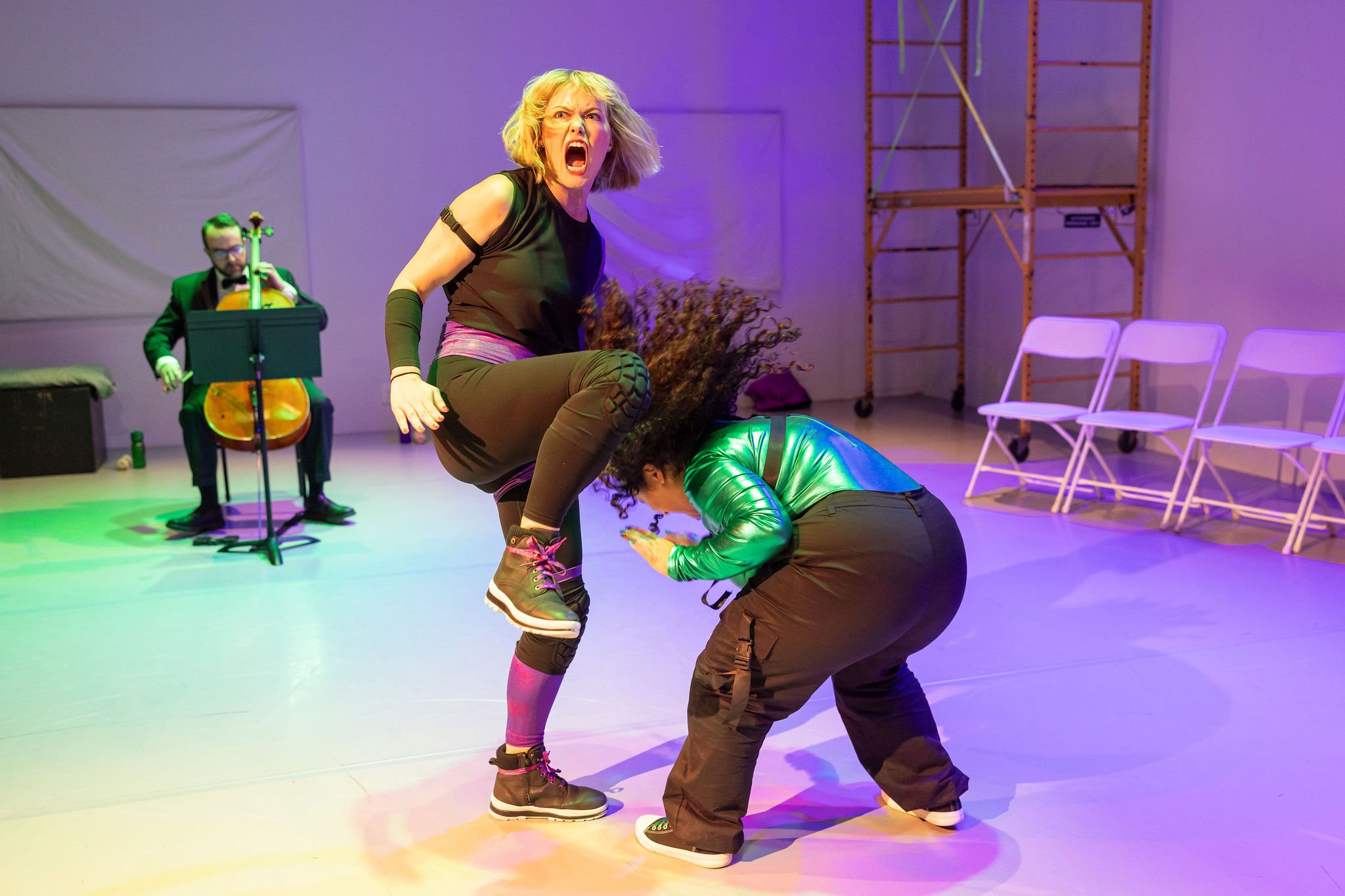
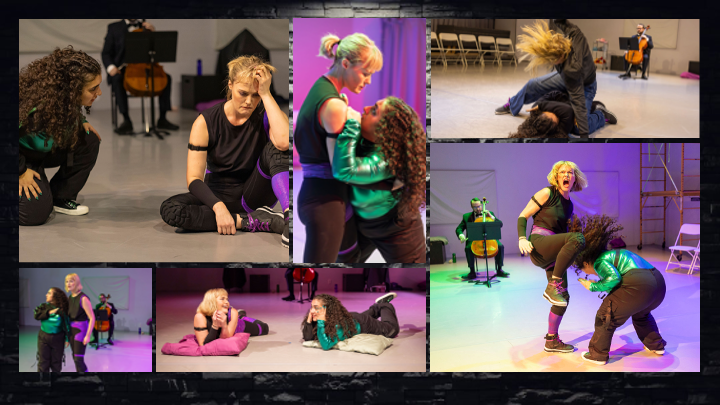
Talena Laine (She) and Raya Tuffaha (Her) carry the production with remarkable agility. Talena, in particular, is striking in her expressiveness. From innocence to anger, the audience can watch emotion move across her in real time, her transitions immediate and fully realized. One moment she embodies the raw intensity of a street fight; the next, the vulnerability of a teenage girl. It’s quite an impressive and “all-in” performance. Raya, by contrast, operates with a quieter precision. Her shifts are more subtle, but no less effective, often accompanied by a disarming smile that suggests she’s playing just a bit dirty beneath the surface. Together, they create a dynamic that is both volatile and deeply human, handling the physical demands of the piece alongside its emotional weight with impressive control.
Matthew Tevenan’s work as Him proves essential to the overall texture of the production. I’ve often said that if there is one instrument that can unlock emotion in a piece, it’s the cello, and when Matthew finally begins to play, that belief is reaffirmed. His performance does more than underscore the action—it shapes it. The music heightens tension, underscores moments of humor, and provides a thread of continuity throughout the shifting rounds. At times, though, it risks pulling focus from the actors, especially when turned away from the audience, a testament to both the strength of his playing and the prominence of the instrument within the storytelling.
Chelsey Sheppard’s choreography is equally integral. Movement becomes the primary language of many of the scenes, defining the emotional temperature as much as any line of dialogue. Whether exploring intimacy, confrontation, or something that lives uneasily between the two, the choreography establishes the rules of engagement and gives each round its own distinct identity. The overall design of Chick Fight! leans toward minimalism, a choice that largely serves the piece by keeping attention on the performers and Chelsey’s choreography. Sumer Monroe’s lighting design is key in shaping the environment, using contrast and isolation to heighten moments of tension, while Andy Brooke’s sound design complements the live cello to create an immersive auditory landscape. The props design, likewise, embraces that same restraint, with each piece used sparingly but with clear intention, reinforcing the storytelling without disrupting the visual simplicity of the space.
One of the key characteristics of Accuardi’s script is that it resists resolution, even though there is a conclusion. The best example is in one of the rounds, framed almost like a game show, which reinforces the idea that there may be no single “right” answer—only perspectives, shaped by experience and circumstance. It’s a fitting message for a piece that consistently challenges its audience to engage, question, and reflect.
At just over 75 minutes with no intermission, Chick Fight! delivers a theatrical experience that is both immediate and thought-provoking, but more importantly, it’s one that refuses to let its audience remain at a comfortable distance. This is not passive viewing—it’s participation, whether you’re ready for it or not. The production’s strength lies in its willingness to embrace that discomfort, to challenge both its characters and its audience to confront difficult questions about control, identity, and agency. Supported by strong performances, intentional design, and choreography that carries as much narrative weight as the text itself, the piece succeeds in creating something that feels urgent and relevant. It doesn’t aim to please everyone, nor should it. Instead, it commits fully to its perspective, and in doing so, carves out a space for dialogue that feels necessary. That alone makes Chick Fight! a production worth seeking out.
The Artemis Theatre Project production of Chick Fight runs on stage at the YAW Theatre in Georgetown through March 8. For more information, including ticket availability and sales, visit https://www.facebook.com/profile.php?id=61565741350824.
Photo credit: Colin Madison Photography