
Stage Review - Eureka Day (Seattle Rep)
Stage Review - Eureka Day
Presented By: Seattle Rep - Seattle, WA
Show Run: September 24 - November 15, 2026
Date Reviewed: Wednesday, September 30, 2026
Run Time: 1 Hour, 40 Minutes (no intermission)
Reviewed by: Greg Heilman
There is a particular, and sometimes comedic, kind of choreography that happens when people work so hard to say exactly the right thing that they eventually tie themselves into knots. Jonathan Spector’s Eureka Day begins right there, gathering five members of a private school’s executive committee in a library where inclusivity, consensus, and careful language are the order of the day. But what begins as an almost painfully funny examination of progressive consensus culture gradually becomes something much more complicated, asking what happens when perspective becomes idea, idea becomes belief, and science and logic are no longer enough to change someone’s mind. Directed by Matthew Leavitt, Eureka Day runs at Seattle Rep’s Leo K. Theater through November 15.
Originally commissioned and produced by Aurora Theatre Company in Berkeley, Eureka Day takes place at a private school in the Bay Area where nearly every decision is made by consensus. Don (Jonathan Slavin), Suzanne (Sara Hennessy), Meiko (Ashley Song), and Eli (Quinn Mattfeld) have clearly learned how to navigate that process together. Into their established dynamic comes Carina (Nemuna Ceesay), a new parent filling a rotating position on the committee and, as it turns out, someone who hasn’t yet learned (or acquiesced to) the particular rules of their consensus culture.
Early on, something as seemingly benign as deciding which racial identities should appear in a pull-down menu on the school’s online application form becomes an exercise in linguistic gymnastics. Everyone wants to say the politically correct thing, everyone wants to be agreeable, and absolutely no one wants to offend anyone else. Watching them alter their positions almost in real time as they search for agreement is hilarious, particularly because Jonathan Spector continually allows little comments to slip through that reveal these people may not be quite as enlightened as they believe themselves to be.
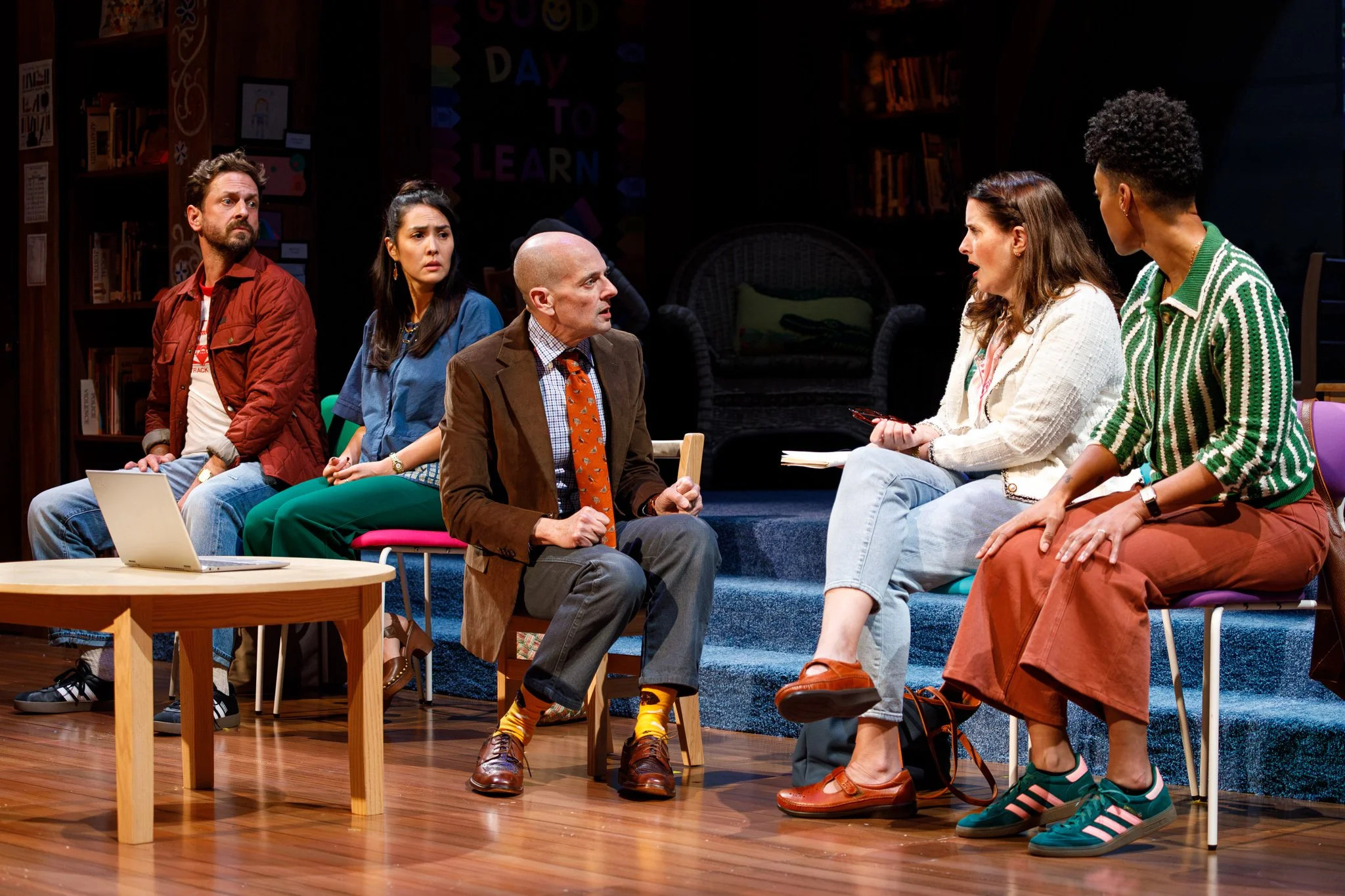
Matthew and his cast understand that much of the comedy is in the timing. Conversations overlap as people interrupt one another to agree, qualify, reconsider, and agree again. A pause lasts precisely long enough for an uncomfortable thought to register before someone attempts to smooth it over. Nobody breaks that tension quite as comically as Jonathan’s Don. His ability to interrupt a heated exchange at precisely the right moment and lower the temperature is impeccable. But the timing belongs to the entire company. As a group, they never miss a step.
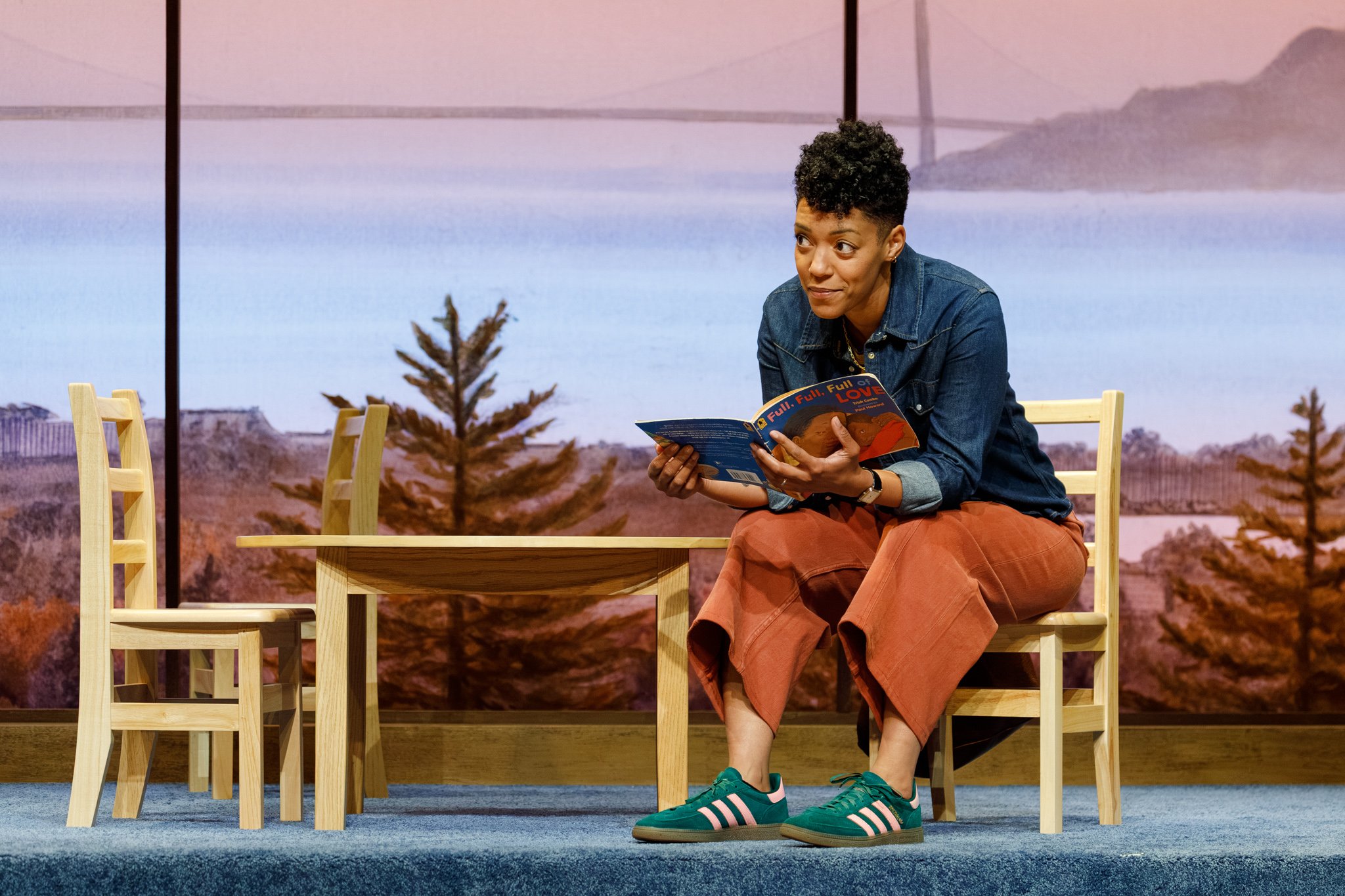
Carina becomes particularly important because she is not yet part of that rhythm. Nemuna gives her a matter-of-fact quality that distinguishes her from the others, and her outsider status makes her a genuine disruptor. She hasn’t acquiesced to the assumption that maintaining consensus is itself a virtue, so she is willing to question things the others have long accepted. In doing so, she begins tugging at a thread in the carefully constructed ball of twine that represents this group’s normalcy, threatening to pull the whole thing apart.
The catalyst is a case of mumps at Eureka Day, which forces the committee to confront the school’s vaccination policy. Suddenly, the techniques they use to reach consensus on less consequential issues aren’t enough. What happens when compromise involves not simply feelings or language, but the health of other people’s children?
And then comes the Community Activated Conversation.
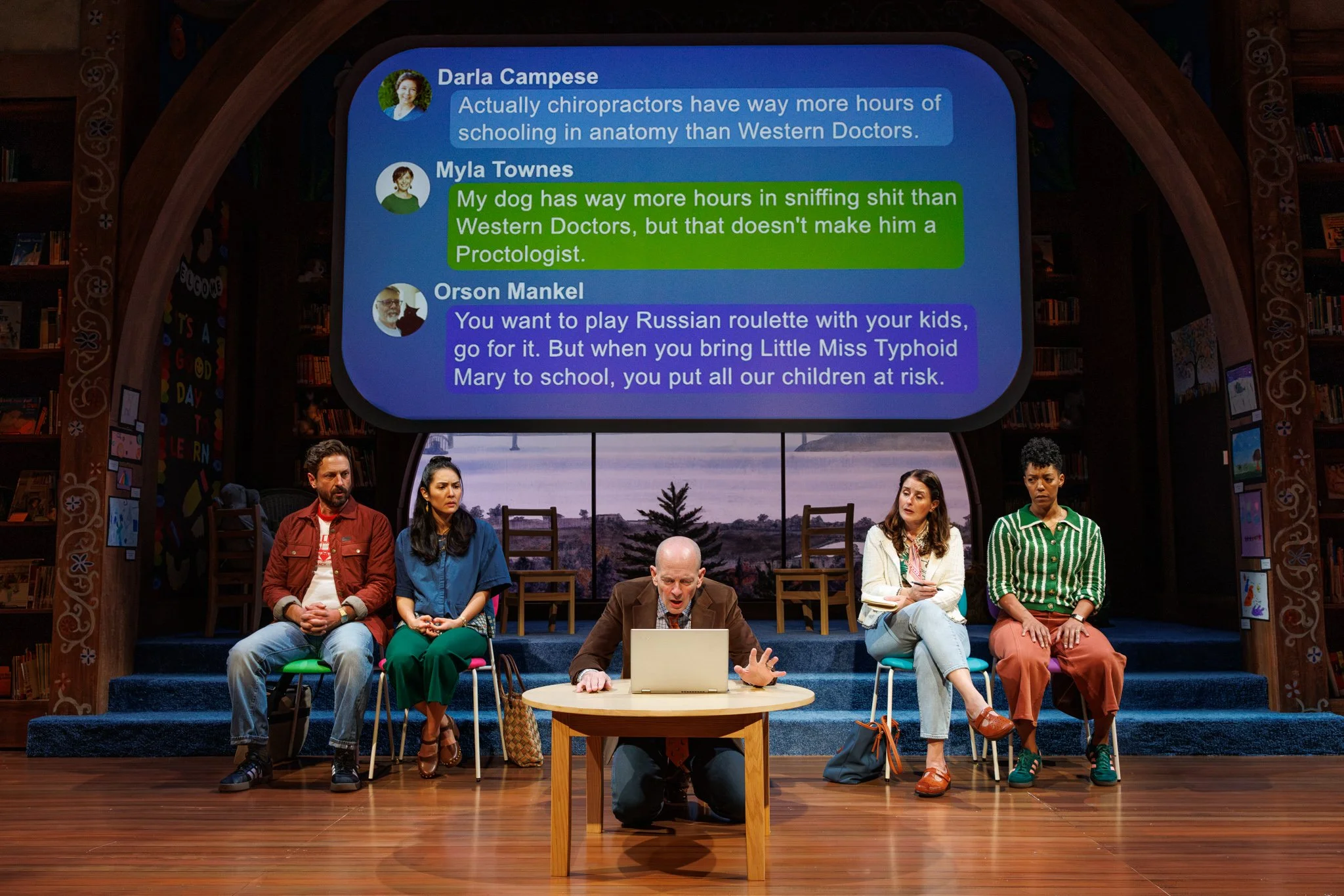
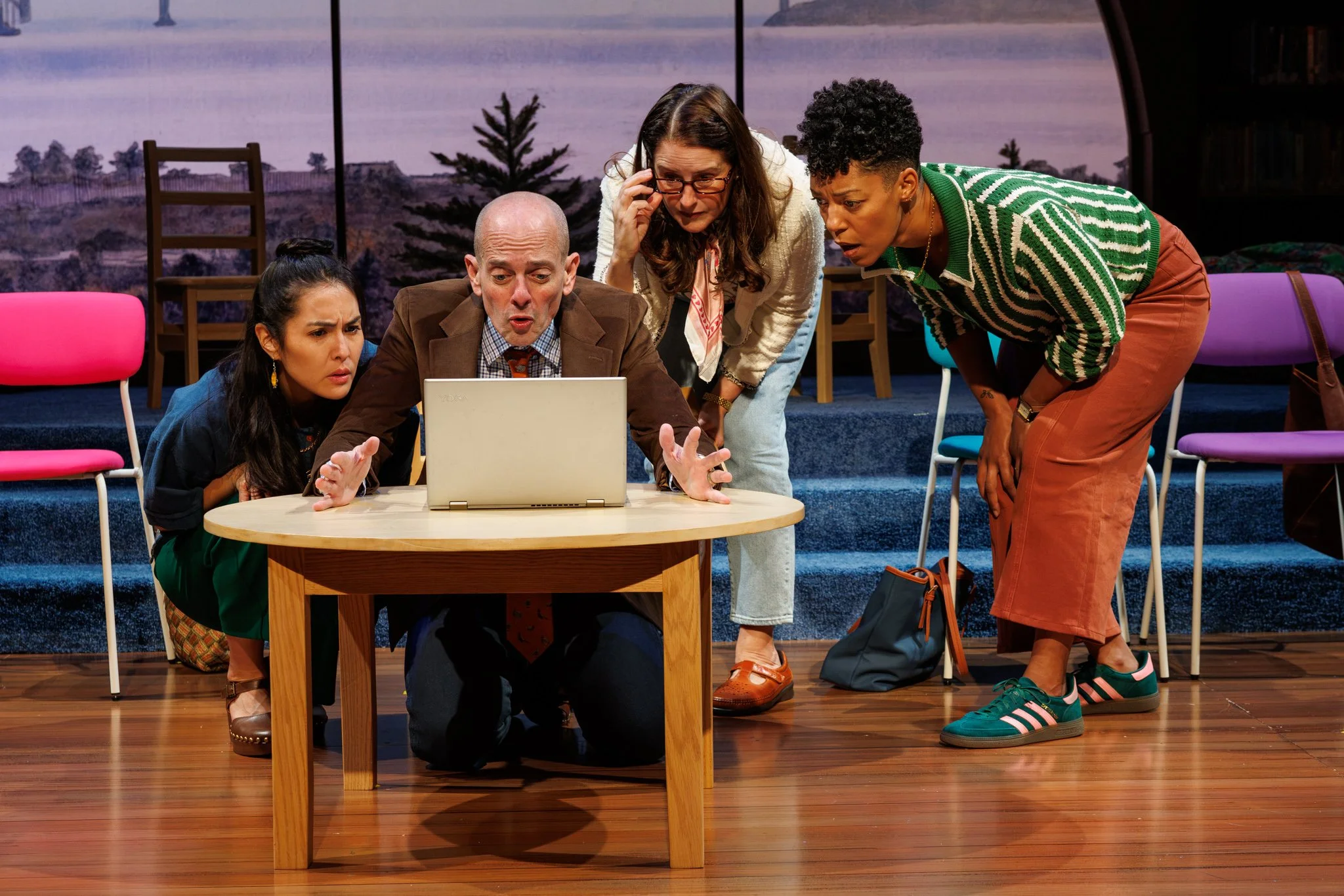
Essentially a virtual town hall, the scene gathers the committee around a laptop while a large screen descends from above to display a live conversation among Eureka Day parents. What follows is, quite possibly, the funniest thing I have ever seen on a stage.
The comments begin appearing, responses follow, avatars join the conversation, and before long the screen has become an increasingly chaotic representation of exactly what happens when reasonable public discourse meets the internet. There was something almost cathartic about the laughter in the Leo K. Theater. For anyone who lived through the arguments surrounding vaccines during COVID, and who has watched vaccine skepticism remain part of our public conversation since, there is an enormous amount of accumulated frustration packed into this scene. Spector gives an audience permission to release a lot of that frustration through laughter. Yet what makes the sequence extraordinary isn’t simply what projection designer L.B. Morse puts on the screen. The five actors still have a scene to perform.
They know the audience is reading the comments. They know people are laughing at something other than the words they are speaking. Yet their dialogue, interruptions, reactions, and pauses have to remain perfectly synchronized with what is happening on that screen. It becomes a wonderfully choreographed dance between actors and projection, with neither being more important than the other, though the scrolling comments on the screen are purposely designed to upstage the rest of the action. The timing of the performers is every bit as important as the timing of each new comment appearing. That the sequence works as seamlessly as it does is a considerable directorial achievement for Matthew, as well as a testament to L.B.’s projection design and a cast capable of maintaining remarkable comic precision amid controlled chaos.
Eureka Day, though, doesn’t remain comfortably on one side of the argument. That’s where Spector’s writing becomes much more interesting. Suzanne eventually relates the deeply personal experience that helped form her beliefs about vaccination, describing what she believes happened to her child after receiving a vaccine. Sara makes the moment matter because the play doesn’t treat Suzanne merely as a punchline or an opponent who needs to be defeated. Her experience is real to her. Her grief is real. And her perspective is every bit as important to her as someone else’s is to them.
The question becomes what happens when a perspective generates an idea, and that idea hardens into a belief. Ideas leave room for reconsideration. Beliefs are much more difficult to dislodge. Once someone has incorporated an idea into their understanding of the world, trying to defeat that belief with science or logic can become a battle that is over before it begins. Eureka Day doesn’t ask its audience to accept every belief as equally factual. Instead, it asks the more uncomfortable question of how people who fundamentally disagree are supposed to communicate when each is beginning from an entirely different definition of truth.
Ashley’s Meiko provides another useful perspective during a discussion about antibiotics, pointing toward the uncomfortable reality that scientific knowledge itself develops as we learn more. That isn’t an argument against science so much as an acknowledgment of why uncertainty can leave space for doubt. People are being given conflicting information from every direction while simultaneously being asked to make decisions with very real consequences.
The comedy consequently gives way to some remarkably serious moments. Quinn is particularly adept at both sides of that transition. His physical comedy is excellent, but as the stakes become personal, the humor falls away without making him feel like a different character. Ashley similarly finds the humanity underneath Meiko’s position, while Sara’s work as Suzanne makes it increasingly difficult to dismiss someone whose conclusions we may reject once we understand the experience from which they came. Nemuna’s Carina remains the valuable outsider, forcing the others, and by extension the audience, to examine assumptions that had previously gone largely unchallenged.
Individually, this is a collection of remarkably talented actors, but Eureka Day is so good because of what they accomplish collectively. This is ensemble acting in the truest sense. The comedy depends upon one actor knowing exactly when to interrupt another, someone else knowing when to react without speaking, and everyone understanding when a pause is more effective than another line. The more serious moments require that same trust. No one appears to be competing to own the scene, they are constantly giving one another something to work with. That chemistry is particularly apparent during the Community Activated Conversation, but it exists throughout the production. Matthew has assembled actors who don’t simply play their individual characters well, they play this committee exceptionally well.
Marena Kleinpeter’s appearance as Winter provides a fitting extension of that ensemble and something of a coda to everything that has happened. For all the conflict, differing opinions, and deeply held beliefs that have threatened to pull this group apart, the committee remains a going concern. The world still spins, Eureka Day still has a school to run, and its executive committee still has to meet.
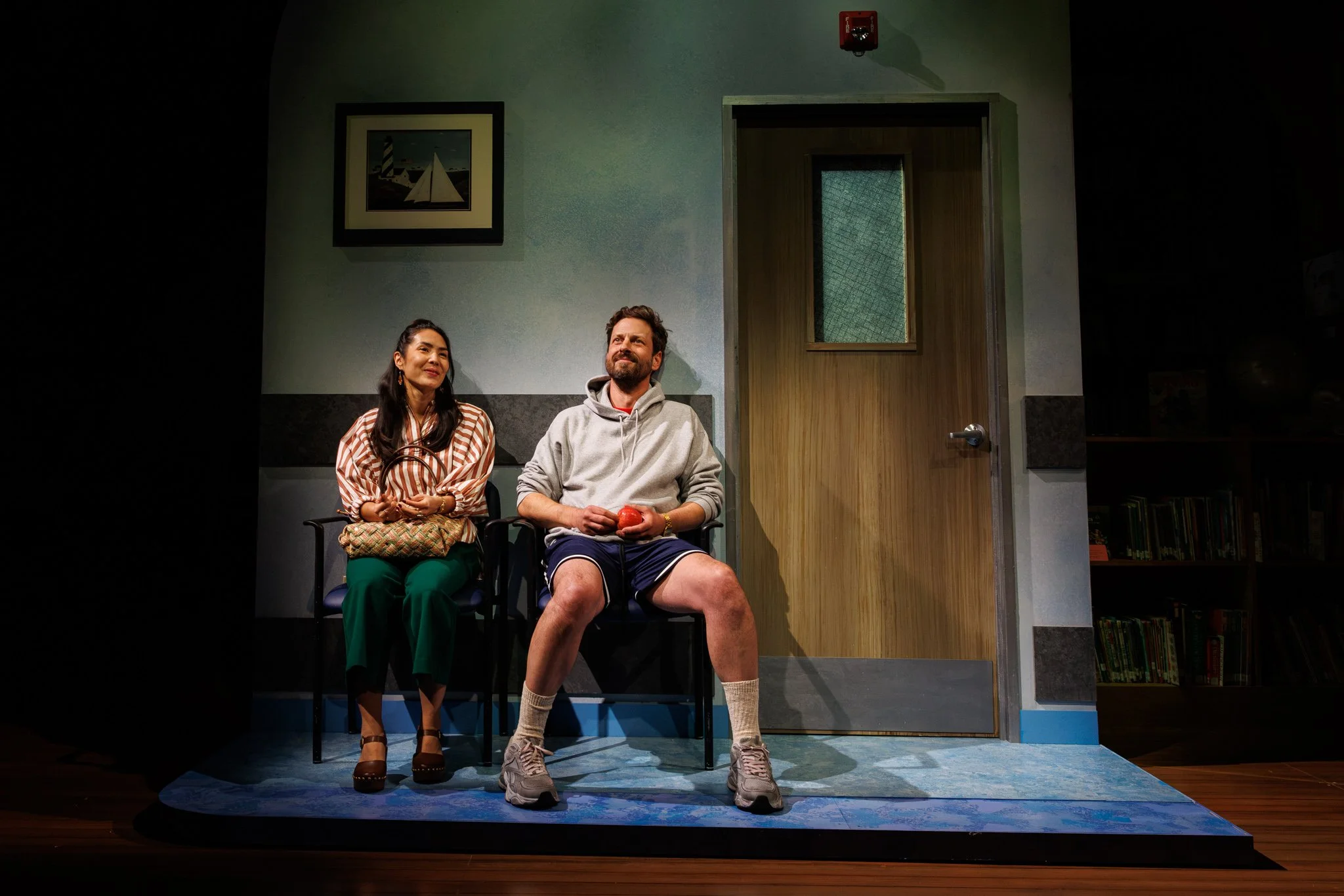
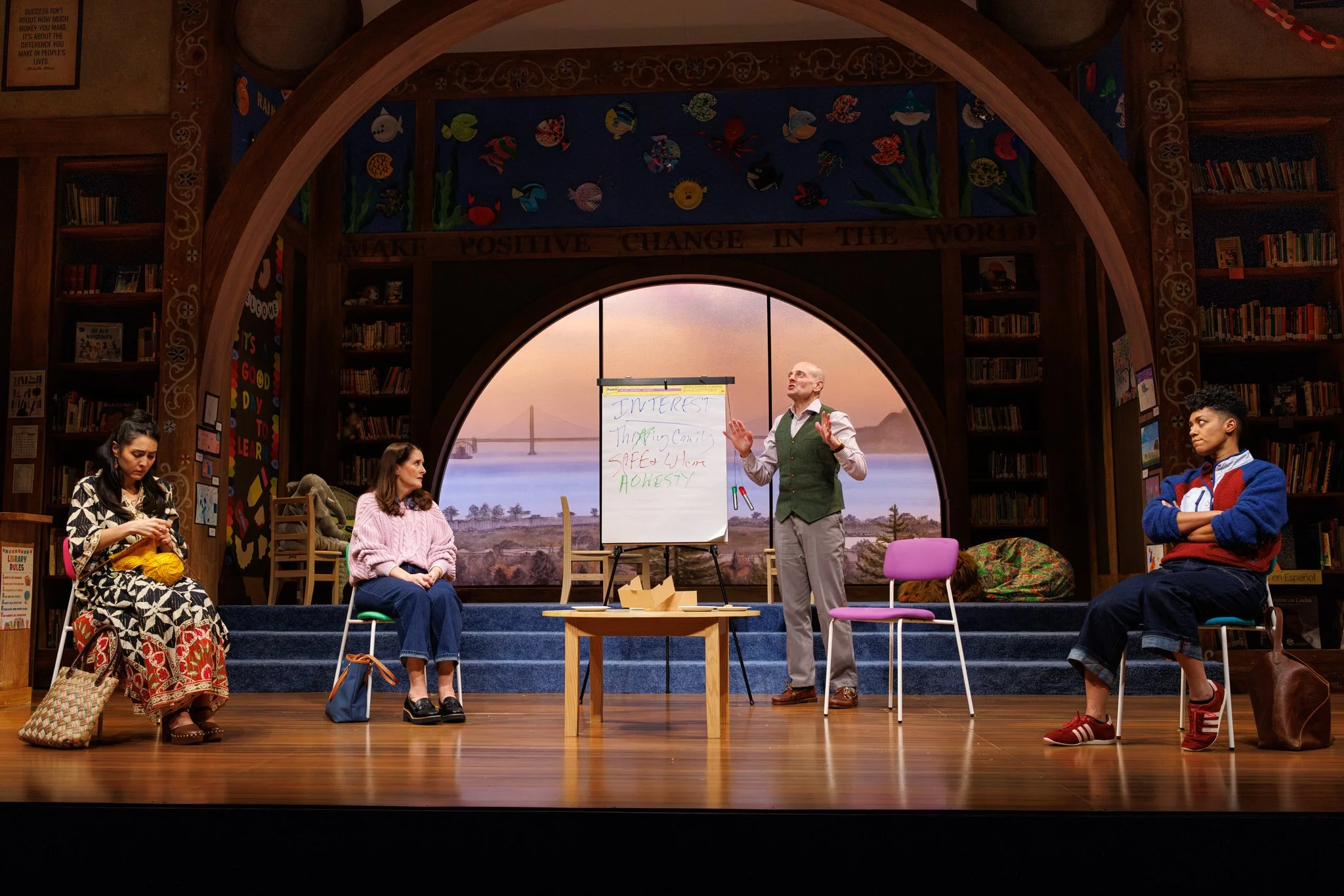
Scenic designer Sara C Walsh provides an ideal environment for all of this. The Eureka Day library is packed with an almost jaw-dropping number of books, with carefully chosen titles facing outward among shelves that feel genuinely used rather than dressed for a stage. Props and furnishings fill out the room, while the view toward San Francisco and the Golden Gate Bridge immediately places us in the Bay Area. Chelsea Cook’s costumes help define these people before we know much about them, while Robert J. Aguilar’s lighting and Evan Mosher’s sound support the shift from broad comedy into increasingly personal conflict without calling attention away from it.
And keep an eye on Sara’s set after it seems as though everything is over. Eureka Day has something resembling the theatrical equivalent of a post-credit scene. That’s all I’ll say about that.
Perhaps the greatest accomplishment of the Seattle Rep production of Eureka Day is that it never makes its characters easy to categorize. They are funny, occasionally ridiculous, sometimes infuriating, and ultimately recognizable. Even when the play appears to be setting someone up as the obvious target, it eventually finds a way to complicate that judgment. That’s important because Eureka Day isn’t really a play about whether vaccines work. It’s about what happens to a community when the people within it no longer share an agreed-upon way of determining what is true.
Consensus works wonderfully when everyone is debating a pull-down menu. It becomes much harder when someone’s child is involved. Every person’s perspective deserves to be understood. Compromise requires some respect for the reality that produced that perspective. But understanding why someone believes something isn’t the same as agreeing that the belief is correct, and empathy alone cannot always reconcile fundamentally incompatible conclusions.
Which leaves Eureka Day with a question far more difficult than anything its executive committee can solve through consensus:
What do we do when the science contradicts our own experience?
Eureka Day runs on stage in Seattle Rep’s Leo K. Theater through November 15. For more information, including ticket availability and sales, visit https://www.seattlerep.org/plays/202627-season/eureka-day.
Photo credit: Sayed Alamy