
Stage Review - Fiddler on the Roof
Presented By: Bremerton Community Theatre - Bremerton, WA
Show Run: October 30 - November 22, 2026
Date Reviewed: Sunday, November 15, 2026
Run Time: 2 Hours, 45 Minutes (including a 15-minute intermission)
Reviewed by: Greg Heilman
Tradition offers a sense of belonging, a connection to those who came before, and a framework for understanding one’s place in the world. It becomes more complicated when preserving that framework means questioning the choices of the people someone loves most. That tension is at the heart of Fiddler on the Roof, on stage at Bremerton Community Theatre’s Robert Montgomery Auditorium through November 22 under the direction of Chris Borer. With a book by Joseph Stein, music by Jerry Bock, and lyrics by Sheldon Harnick, the musical brings humor and warmth to a story of family, faith, and change, and this production finds its greatest strength in the relationships that make those competing loyalties so difficult to reconcile.
The musical follows Tevye, a Jewish dairyman in the village of Anatevka, as his daughters’ choices challenge the traditions that have ordered his life. Each successive relationship asks him to reconsider where his convictions end and his willingness to change begins, while the growing threat of persecution makes the future of his entire community uncertain. Its humor and familiar songs make the story inviting, but its enduring emotional pull comes from the difficulty of holding a family together when the world, and the people within it, refuse to stand still.
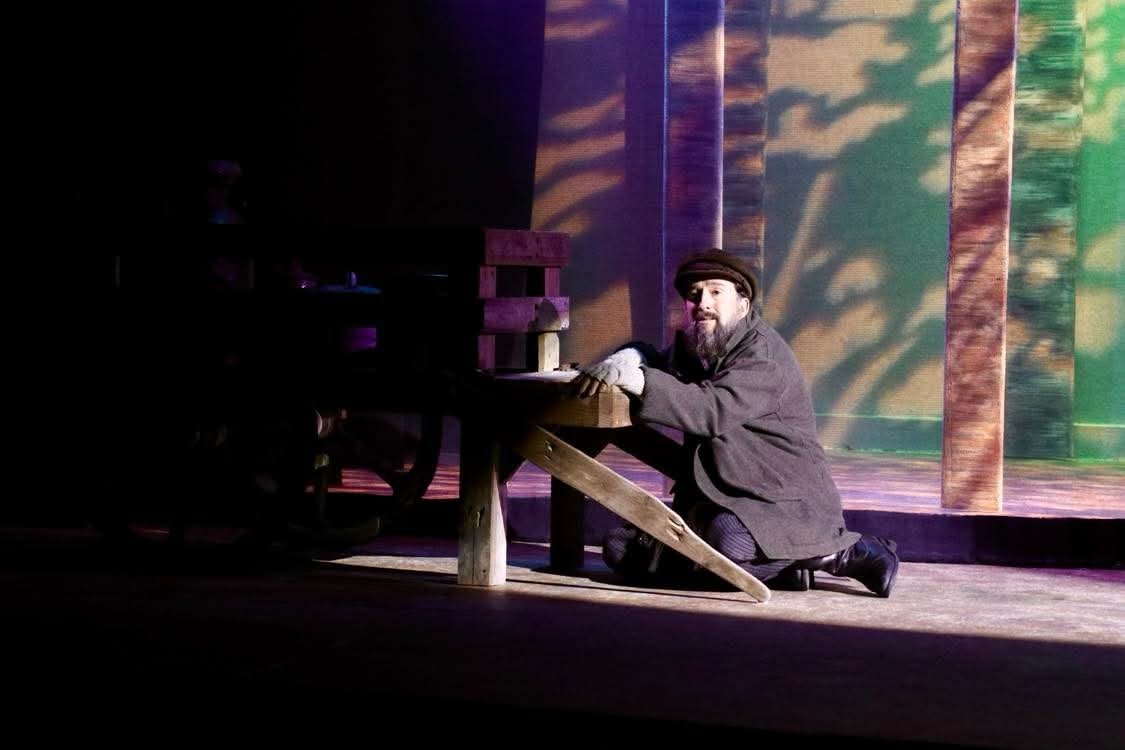
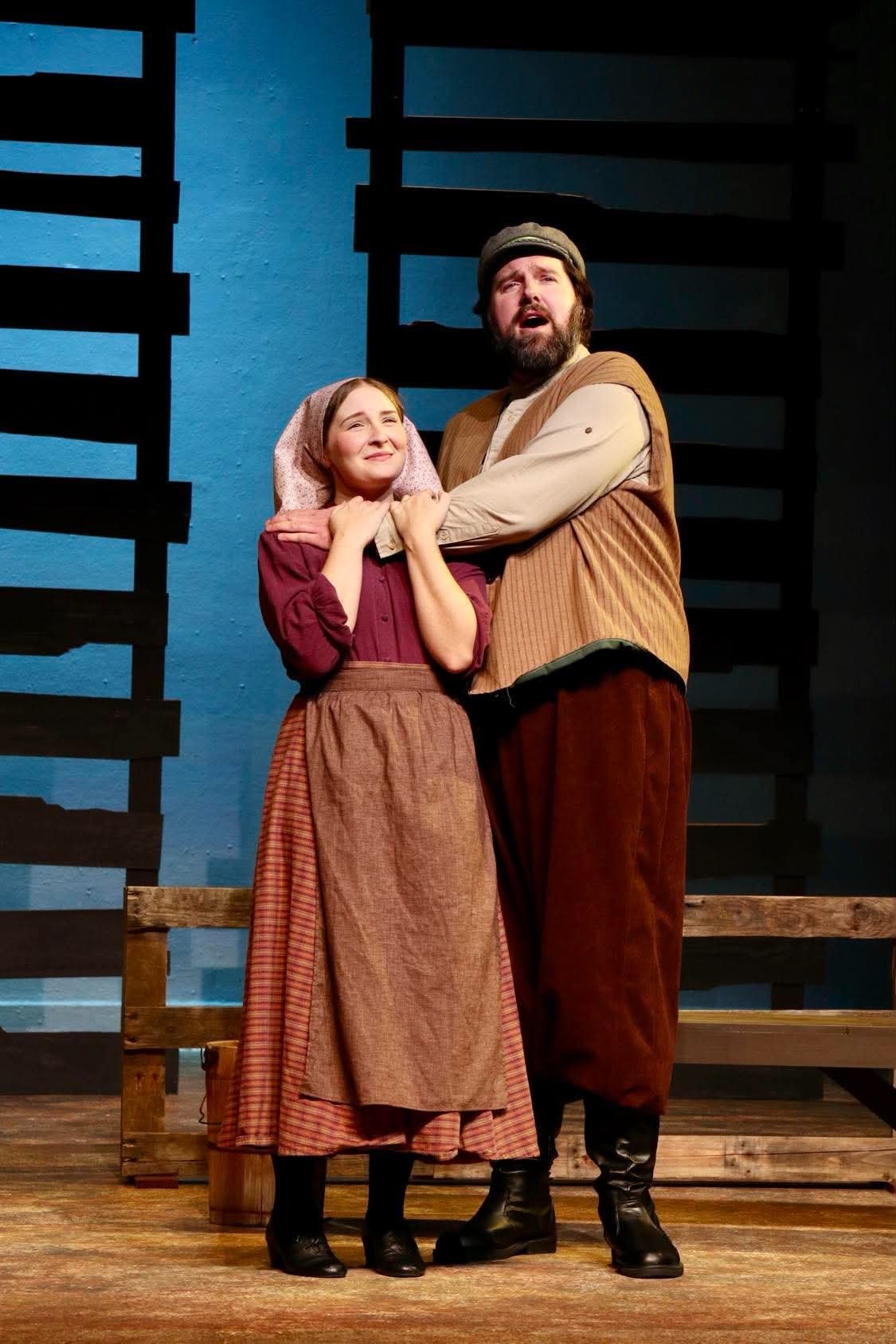
Eric Spencer understands both sides of Tevye. Eric has a clear and easy grasp of the character’s humor in his delivery, particularly in the way Tevye reasons through circumstances that rarely cooperate with his expectations. Eric allows those arguments to reveal the man’s personality, making his stubbornness entertaining without losing the affection beneath it, his delivery with a consistent accent contributes heavily to that. That affection becomes especially important as his daughters make decisions he struggles to accept. When Chava’s relationship with a non-Jewish man pushes him beyond what he believes he can accommodate, Eric communicates the pain of a father whose love and convictions have come into direct conflict. The only area where Eric struggles at times is in his projection. Especially when competing with the music accompaniment, his voice gets lost among the surrounding sound at times. Otherwise, this is a very solid and engaging performance.
As Golde, Kelli McAuley provides a strong partner for that performance. Her sweet soprano contributes beautifully to “Sabbath Prayer,” one of the production’s most effectively staged and sung moments. Together, Eric and Kelli find a lovely tenderness in “Do You Love Me?” The exchange has the feeling of two people considering a question their years of shared responsibilities have rarely given them reason to ask. The humor is there, but so is the undercurrent of vulnerability as Tevye waits for an answer that Golde eventually delivers.
Katie Cleven is a particular standout as Hodel. She has a pretty voice, but it is the expression within her singing, supported by her face and manner, that makes “Far from the Home I Love” so affecting. At the train station, Hodel understands that choosing a future with Perchik means accepting a painful separation from her father and home. Katie gives both the hope and the cost of that choice room to register. Terry McAuley, as Perchik, conveys the conviction of a young radical prepared to sacrifice for his beliefs, and their voices work well together.
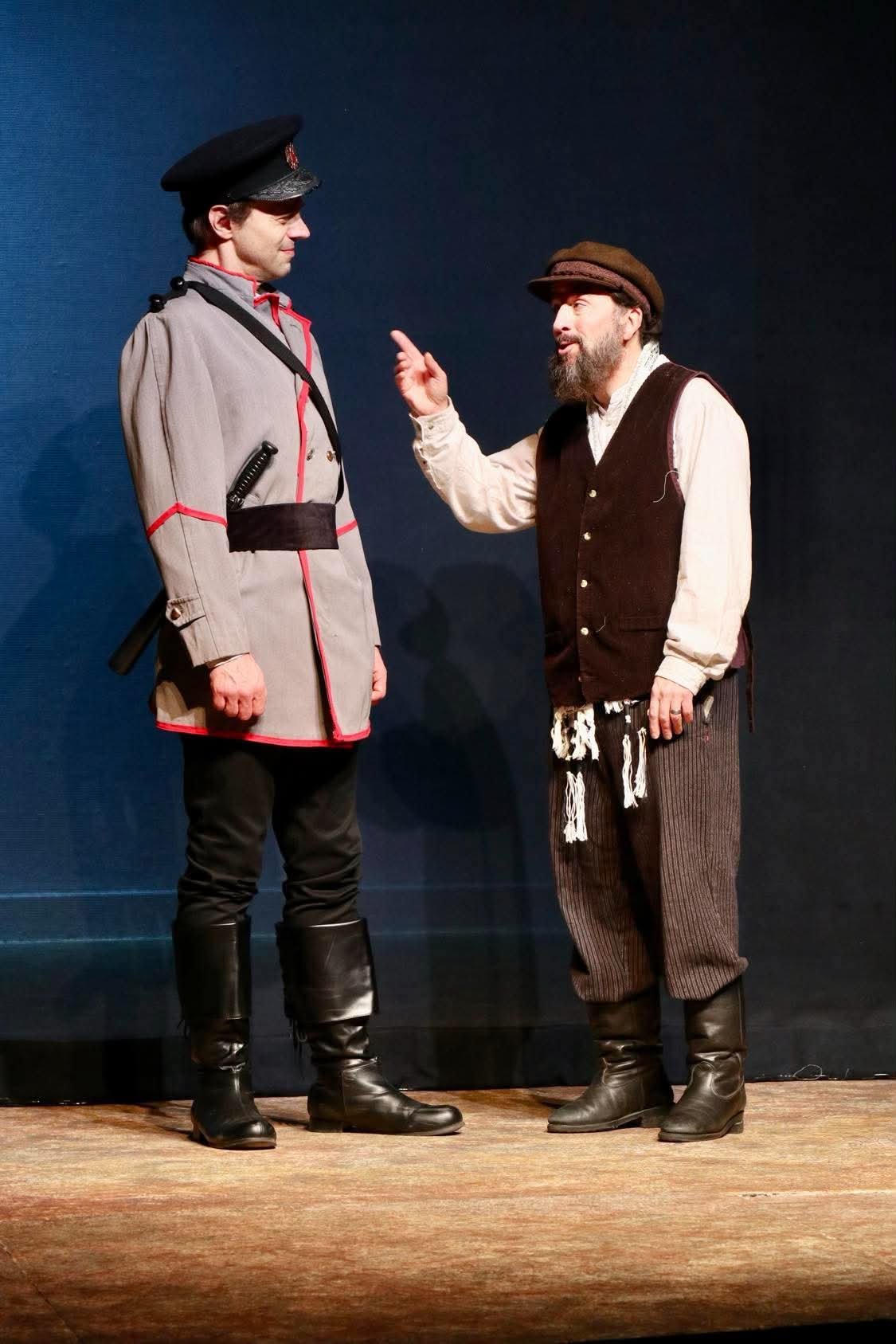
There is good work elsewhere among the principals. Erik Lawrence brings an appealing quality to Motel and handles “Miracle of Miracles” nicely. Arthur Bogard’s Lazar Wolfe benefits from excellent projection, particularly in “To Life,” and his scene with Eric demonstrates a shared sense of comic timing. Both actors use their accents effectively while keeping the exchange clear and lively. Rana Teresa Tan makes Yente an entertaining presence through her delivery and accent, while Raymond Deuel gives the Constable an unsettling edge. There is something menacing in Raymond’s performance that makes the character’s authority felt even before its consequences become explicit.
The ensemble’s vocal work is another strength. Under Rana’s vocal direction, the group produces pleasing harmonies, with “Matchmaker” providing an early example and “Sabbath Prayer” bringing those voices together particularly well. There are, however, moments when individual voices need more presence. Some lines become difficult to hear when performers face away from portions of the audience or compete with the accompaniment, and a few passages would benefit from a stronger balance between the vocals and music.
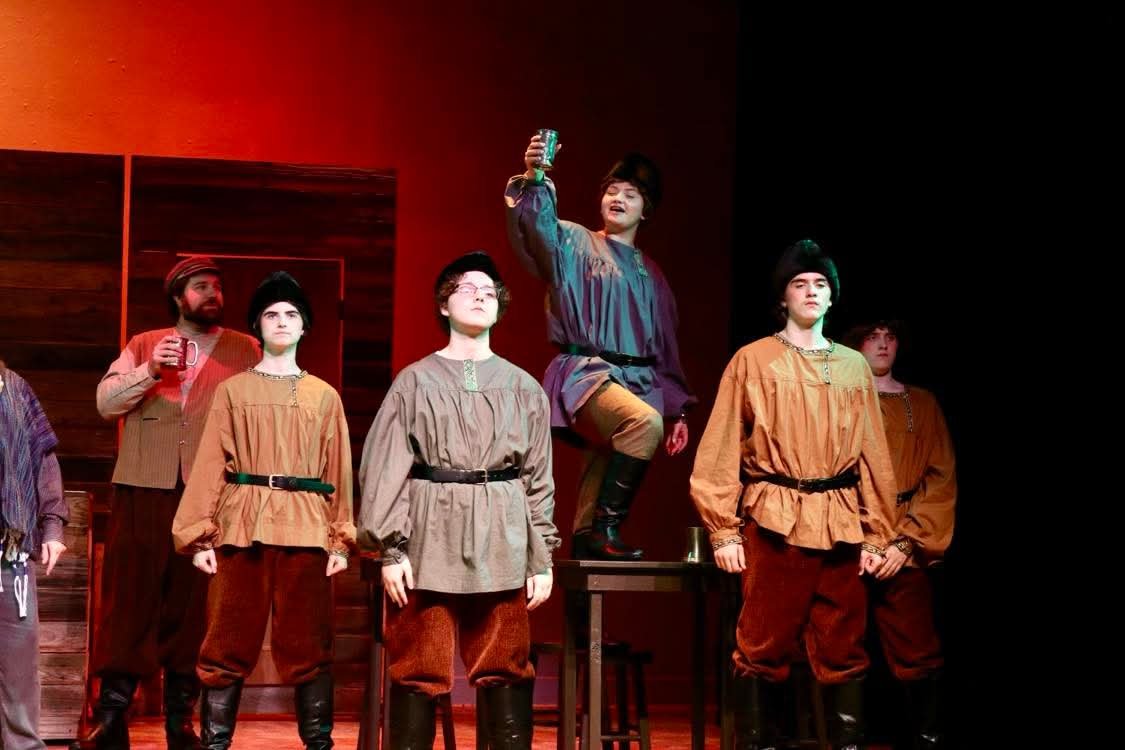
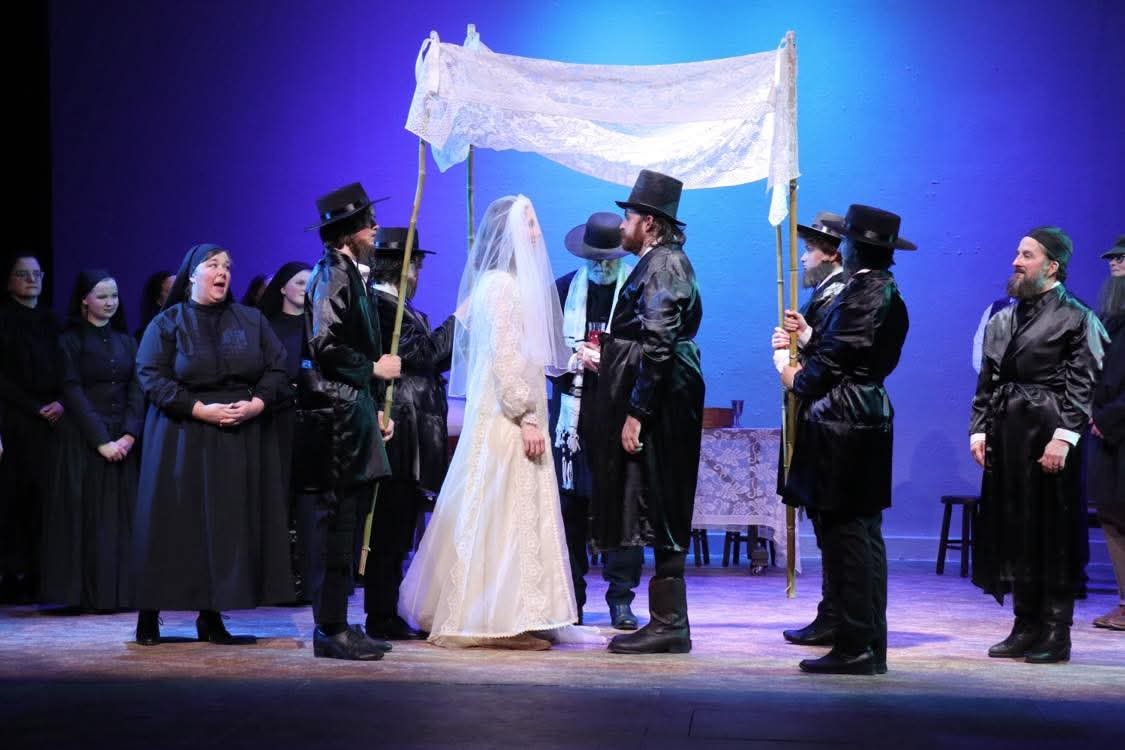
The larger physical sequences are slightly less consistent. Stephanie Clarke’s choreography gives “To Life” an enjoyable energy, but the execution across the production sometimes lacks the precision necessary to complete the effect. The wedding’s bottle dance is one example. The structure is there, but the performance needs greater coordination and assurance. Some interactions among the younger ensemble members also feel less convincing than the principal scenes around them, creating an unevenness in the portrayal of the village. More consequentially, the disruption at the end of the first act lacks the force it needs. The soldiers’ arrival and their treatment of Perchik should sharply change the atmosphere, rather here, the threat feels too slight to deliver the scene’s full impact.
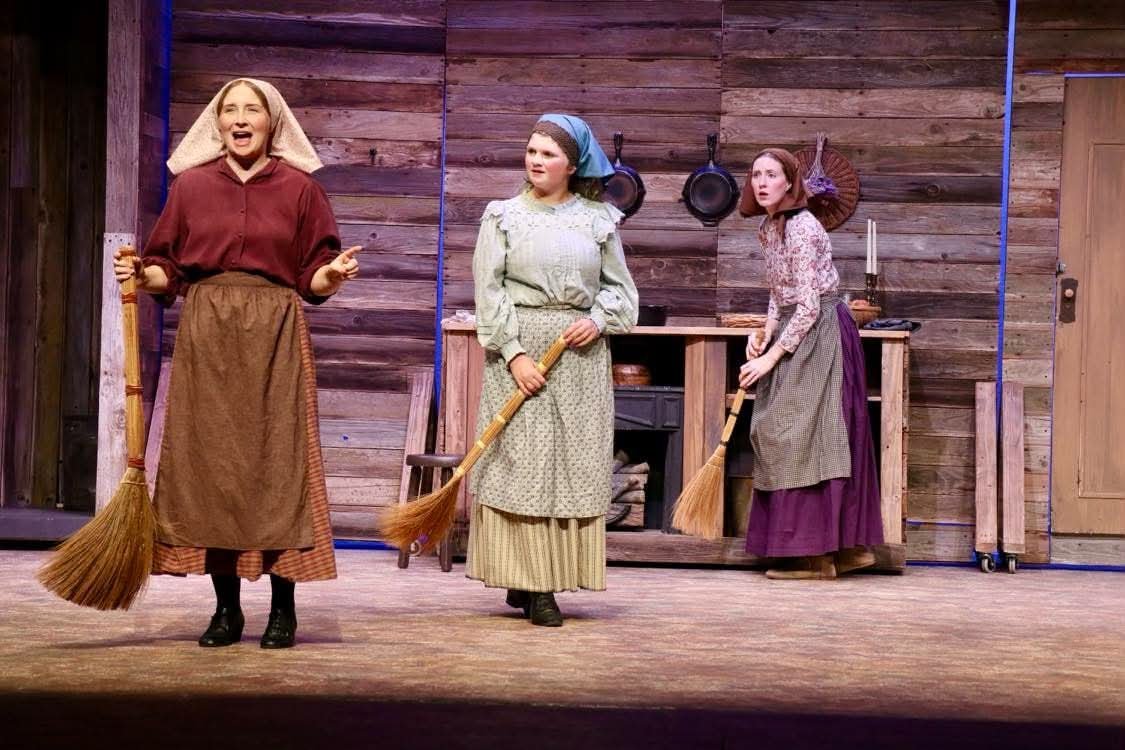
Rana’s scenic design supplies an appealing rustic setting, with wooden panels establishing the family home and serving additional purposes as the action moves elsewhere, including the tavern. Built by Eric and Rana, the pieces give the production a useful visual continuity. “The Dream” is an especially creative sequence, with Andrew Guy-Billups’ lighting and the sound operated by David Whitemarsh helping turn Tevye’s invention into an oversized supernatural encounter, one of the most uniquely staged moments of the show, the echo on Fruma-Sarah’s voice contributing to that larger-than-life effect.
Costumes by Stephanie Mikos and Rana generally support the setting well, though the facial hair is a distracting exception. The use of natural facial hair for some performers, artificial beards for others, and little or none elsewhere creates an inconsistent appearance. The dark artificial beards are particularly conspicuous, drawing attention to the costume pieces when the audience should be watching the characters.
Bremerton Community Theatre’s Fiddler on the Roof finds its strongest footing in the relationships at its center. Chris Borer’s production’s principal performances give the familiar story humor, affection, and emotional weight. In a musical about the difficulty of adapting to change, the moments that resonate most are those in which someone pauses to recognize what another person is giving up. This production understands the importance of those moments, and its best scenes give them the care they deserve.
The Bremerton Community Theatre production of Fiddler on the Roof runs through November 22. For more information, including ticket availability and sales, visit https://bctshows.com/.
Photo credit: Kathy Berg