
Stage Review - Hamlet (The Original Theatre Black Dog)
Stage Review - Hamlet
Presented By: The Original Theatre Black Dog - Seattle, WA
Show Run: August 13 - August 30, 2026
Date Reviewed: Saturday, August 15, 2026 (Opening Weekend)
Run Time: 3 Hours, 30 Minutes (including at 15-minute intermission)
Reviewed by: Greg Heilman
There is perhaps no more difficult Shakespearean play to approach with fresh ears than Hamlet. It isn't simply that William Shakespeare's tragedy has survived more than four centuries on stages around the world, the play has become so deeply embedded in our culture that its words regularly escape our mouths without us even remembering where they came from. "Method to the madness," "something is rotten in Denmark," "murder most foul," "the lady doth protest too much," and "cruel to be kind" (great song, by the way) are all rooted in Hamlet. That familiarity puts an extra bit of pressure on any cast tackling the play. These aren't supposed to be famous quotations delivered for the audience’s recognition, no, they're supposed to be impactful words spoken by people experiencing extraordinary circumstances for the first time.
The cast of The Original Theatre Black Dog's Hamlet is more than up to that challenge. Directed by Susan Bradford and running at the TPS Black Box Theatre at the Seattle Center Armory through August 30, the production takes one of Shakespeare's most familiar tragedies and, at its best, allows us to hear those familiar words as part of the story rather than as entries in a collection of famous quotations.
The story itself has become nearly as ubiquitous as its language. Prince Hamlet returns home to Denmark following the death of his father, only to find his mother, Queen Gertrude, married to his uncle Claudius, who has assumed the throne. When the ghost of Hamlet's father reveals that his death was actually murder and names Claudius as his killer, Hamlet is charged with avenging him. What follows is a story of grief, suspicion, revenge and madness in which Hamlet's search for certainty leaves an increasingly devastating trail behind him.
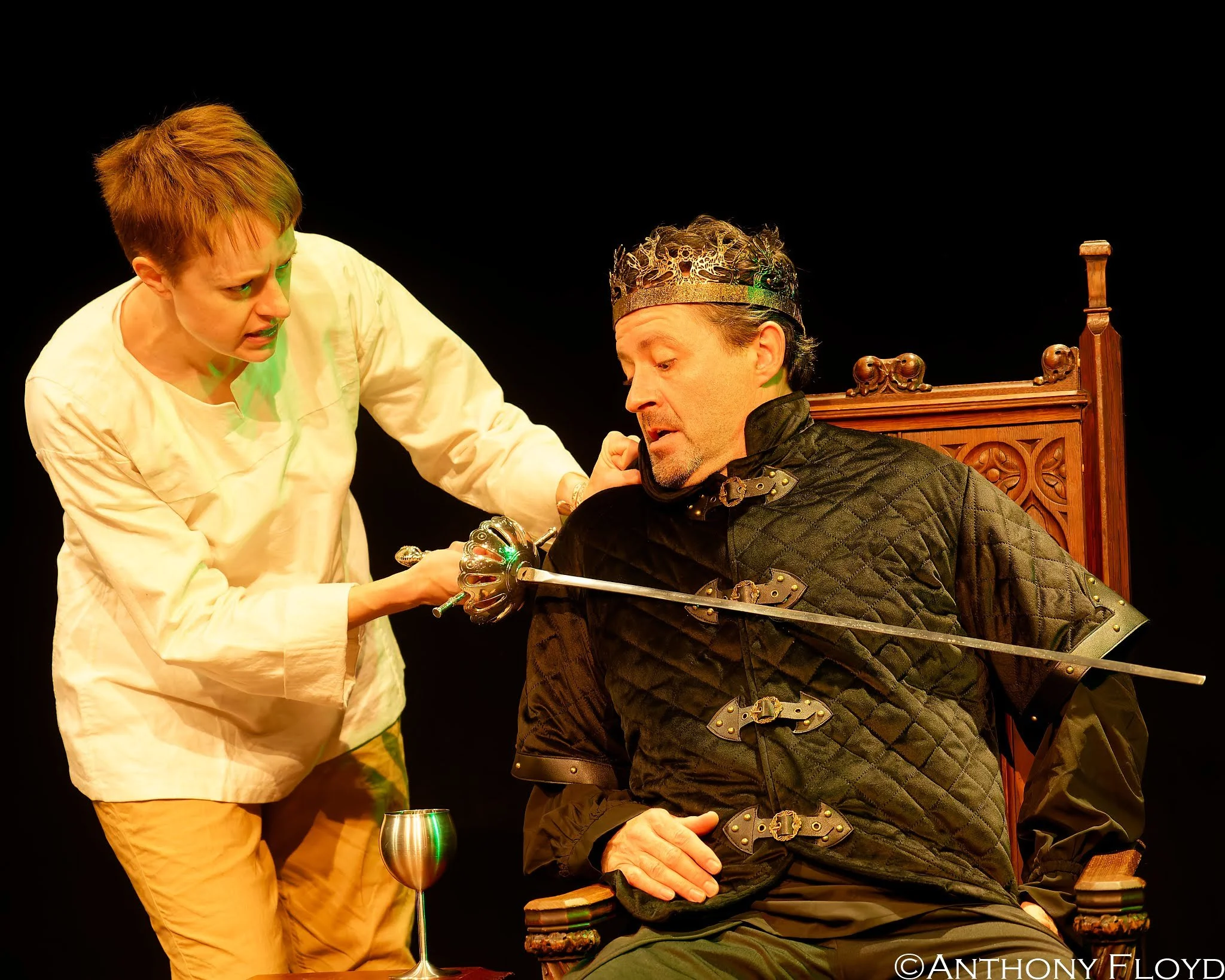
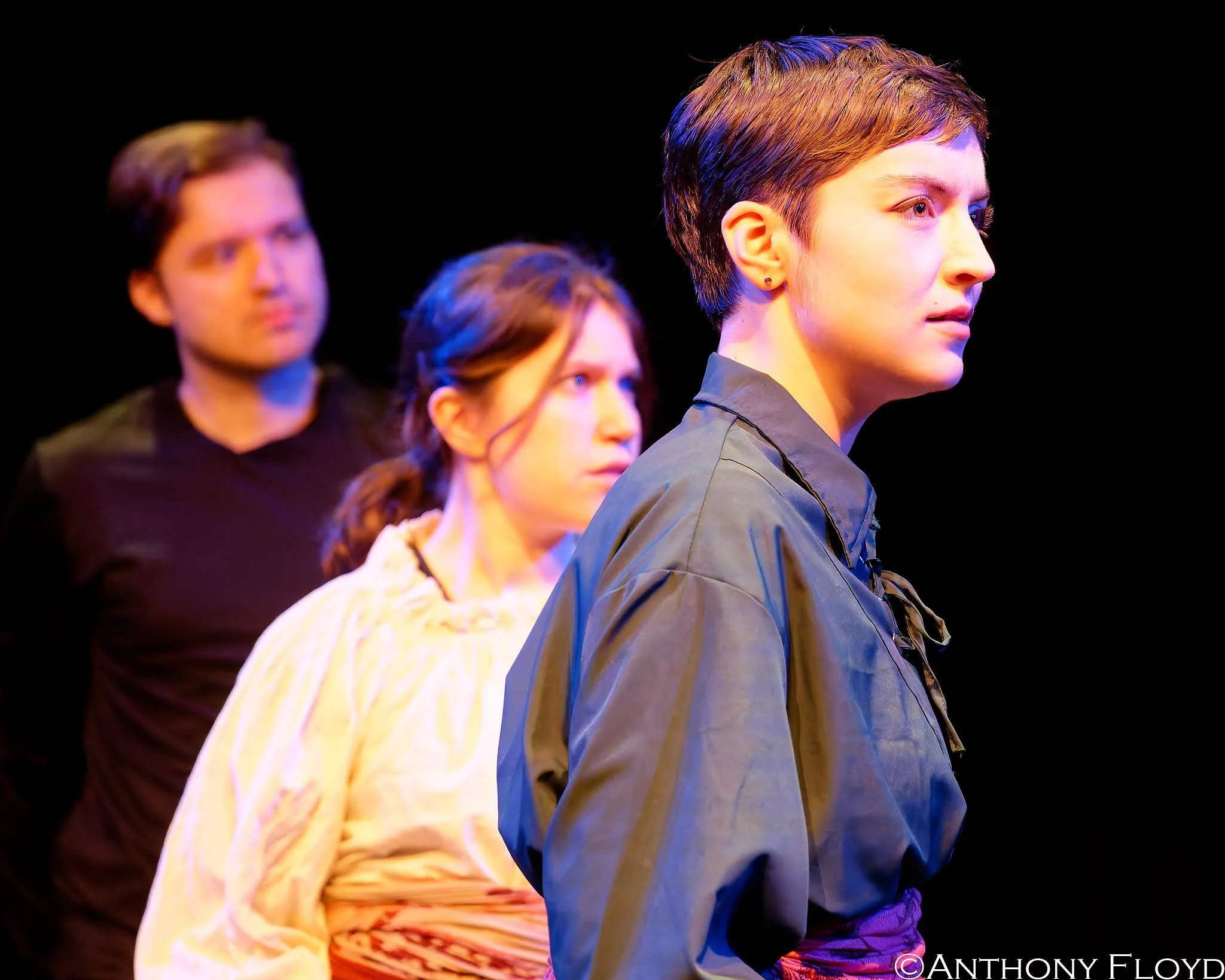
Christine Fisk gives the production a strong center as Hamlet, and what makes her performance work is an understanding that these famous speeches don't need additional weight simply because audiences recognize them. Christine doesn't reach for artificial power when arriving at familiar passages like "To be or not to be." Instead, there is thought behind the words. Her Hamlet feels like a young person trying to process grief, betrayal, love, anger and an almost unimaginable responsibility all at once. There is an understanding of Hamlet's youth in the performance, and Christine allows the emotional responses to reflect that age. The result makes some of Shakespeare's most recognizable language feel less like a recitation of “important theatre” and more like the thoughts of a person desperately trying to understand what has happened to his world.
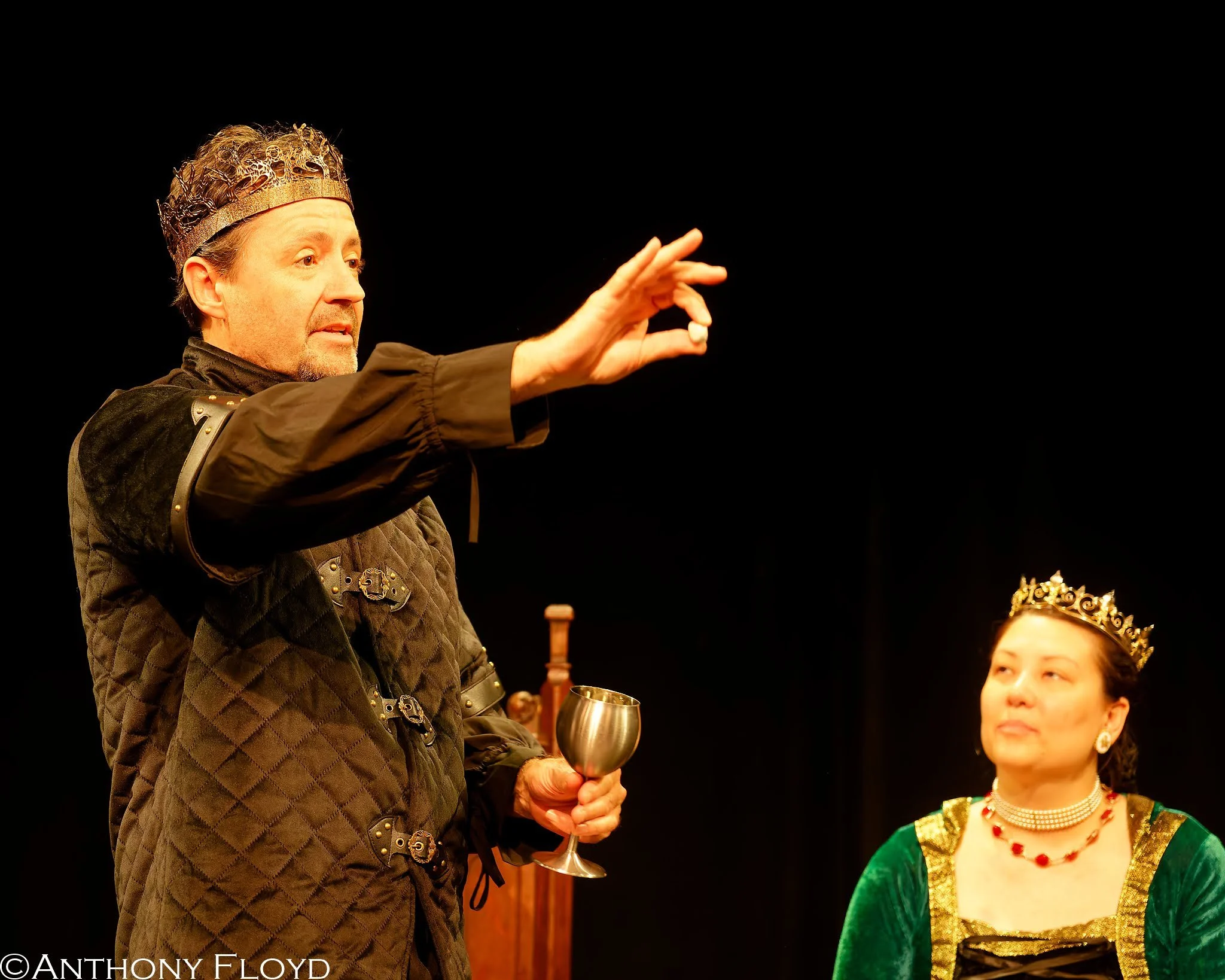
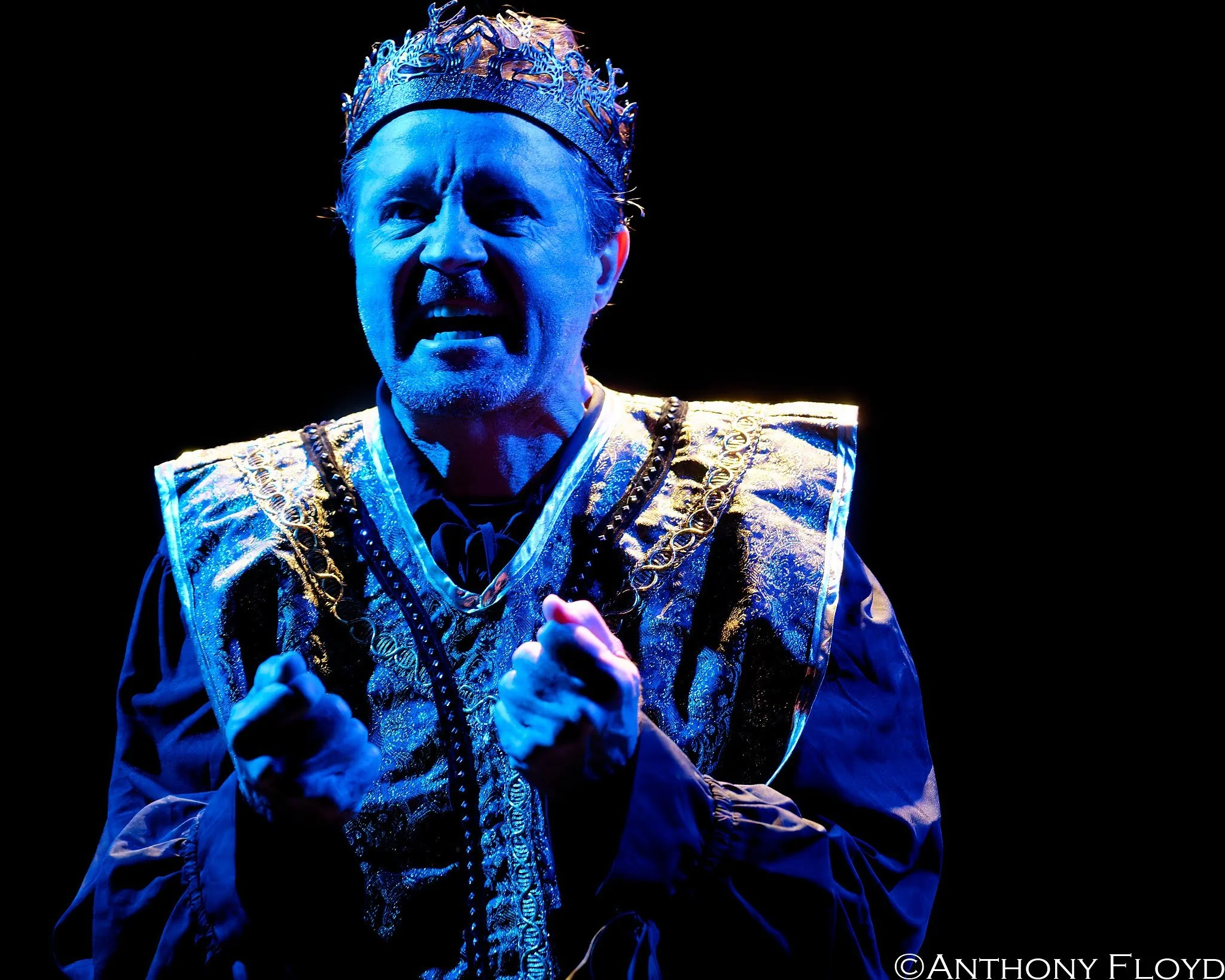
Out of everyone in this extremely talented cast, Brenden Elwood delivers the production's standout performance as Claudius. There is a confidence to his command of Shakespeare's dialogue that immediately establishes the authority necessary for a newly crowned king, but the performance becomes much more interesting when that confidence begins to crack. His attempt to pray beneath the weight of his guilt is particularly strong, revealing the turmoil underneath the polished exterior. Brenden understands that Claudius cannot simply be played as the villain standing in Hamlet's way, the character knows precisely what he has done, and watching that knowledge work against his desire to maintain control gives the performance its depth.
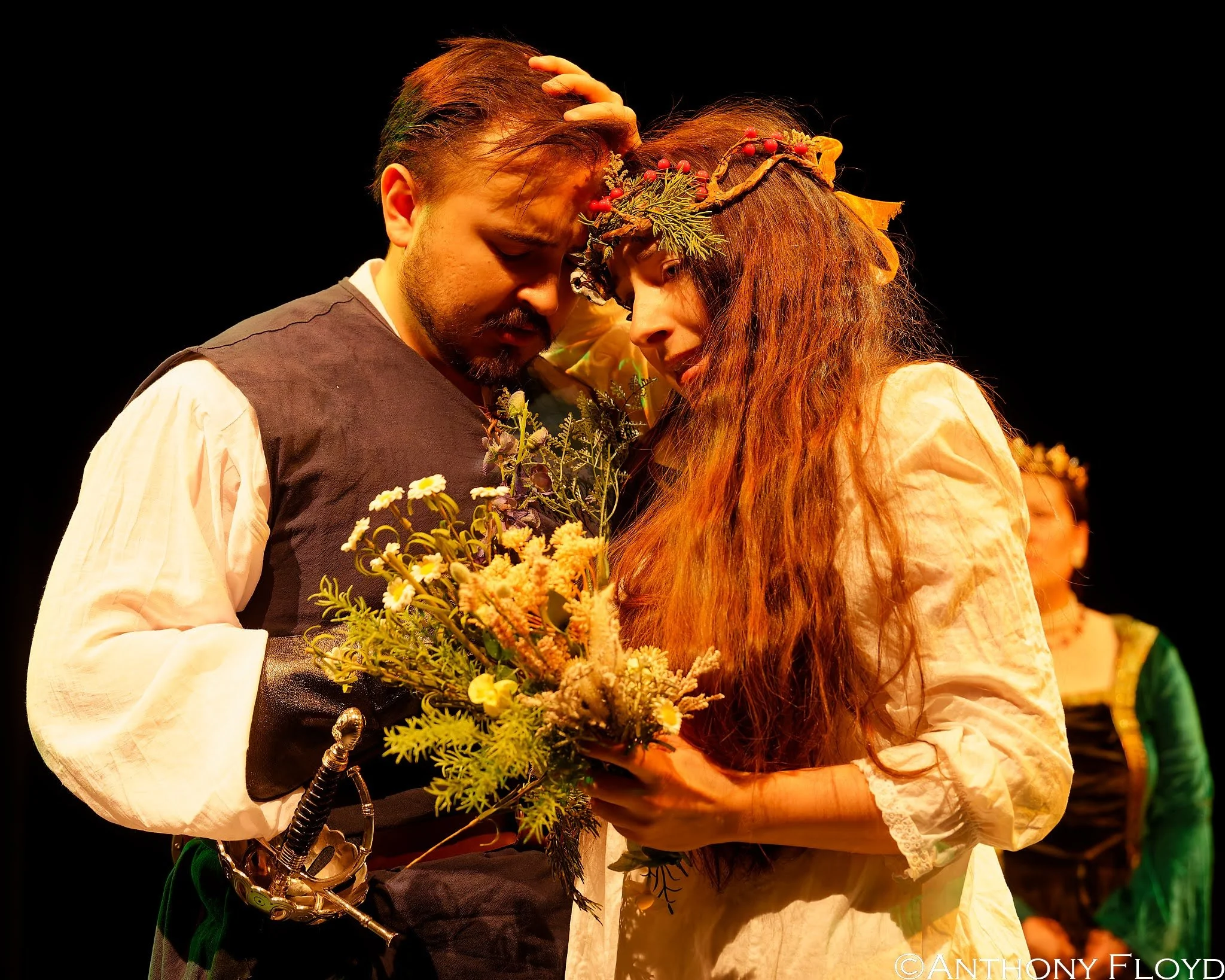
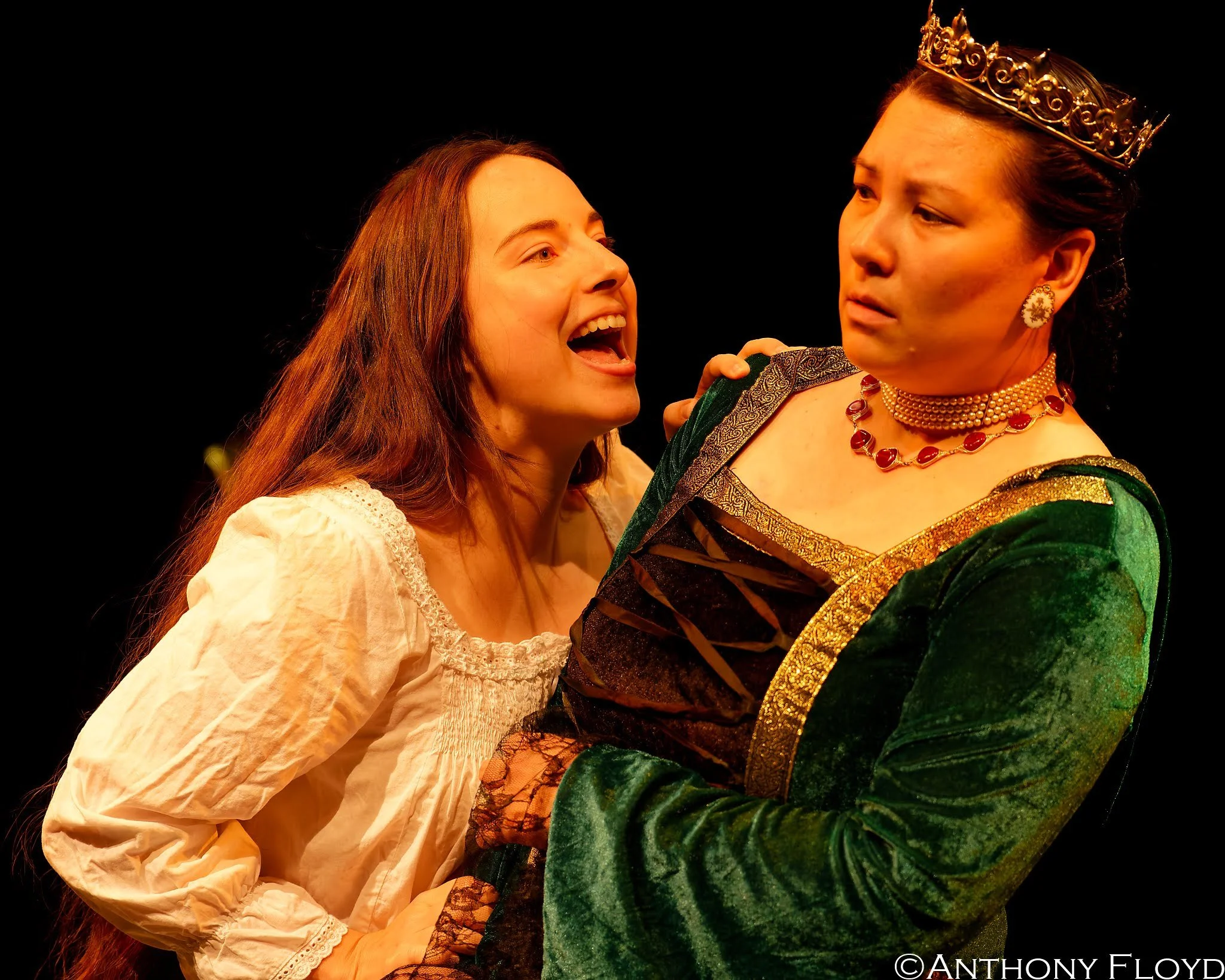
Not far behind is Holly Madland as Ophelia. Her descent into madness is very well played, with Holly allowing the deterioration to emerge as a progression rather than an abrupt transformation. Shakespearean madness can easily become an invitation to simply play "crazy," but there is something more nuanced happening here. Ophelia's world has been steadily dismantled around her, and Holly lets the audience see the accumulating damage. Her fall may not reach the psychological depths Shakespeare later explores in Macbeth, but within Hamlet it remains one of the tragedy's most painful turns, and Holly handles it beautifully.
As an example of how a role with a great deal less stage time can still be impactful to a story, Kael Sherrard scenes as the ghost of Hamlet’s father carry an appropriately imposing presence, particularly as the spirit implores Hamlet to avenge his murder. It is a good reminder that impact isn't measured in minutes on stage. The Ghost exists primarily to ignite the action that follows, and Kael gives the character enough presence that his relatively brief appearances reverberate through everything that comes afterward.
Allison Adams and Monique Preston provide strong supporting performances as Rosencrantz and Guildenstern, respectively, while Jennifer Baxter brings an appropriate regal bearing to Gertrude. Anthony Floyd's Polonius is a bit less consistent. There are moments when the dialogue could use greater emotional variation, with some passages feeling more rote than natural, and he seemed to struggle a bit with some lines during the performance I attended. Brenden picked things up smoothly, however, keeping the action moving without allowing the moment to become a larger distraction.
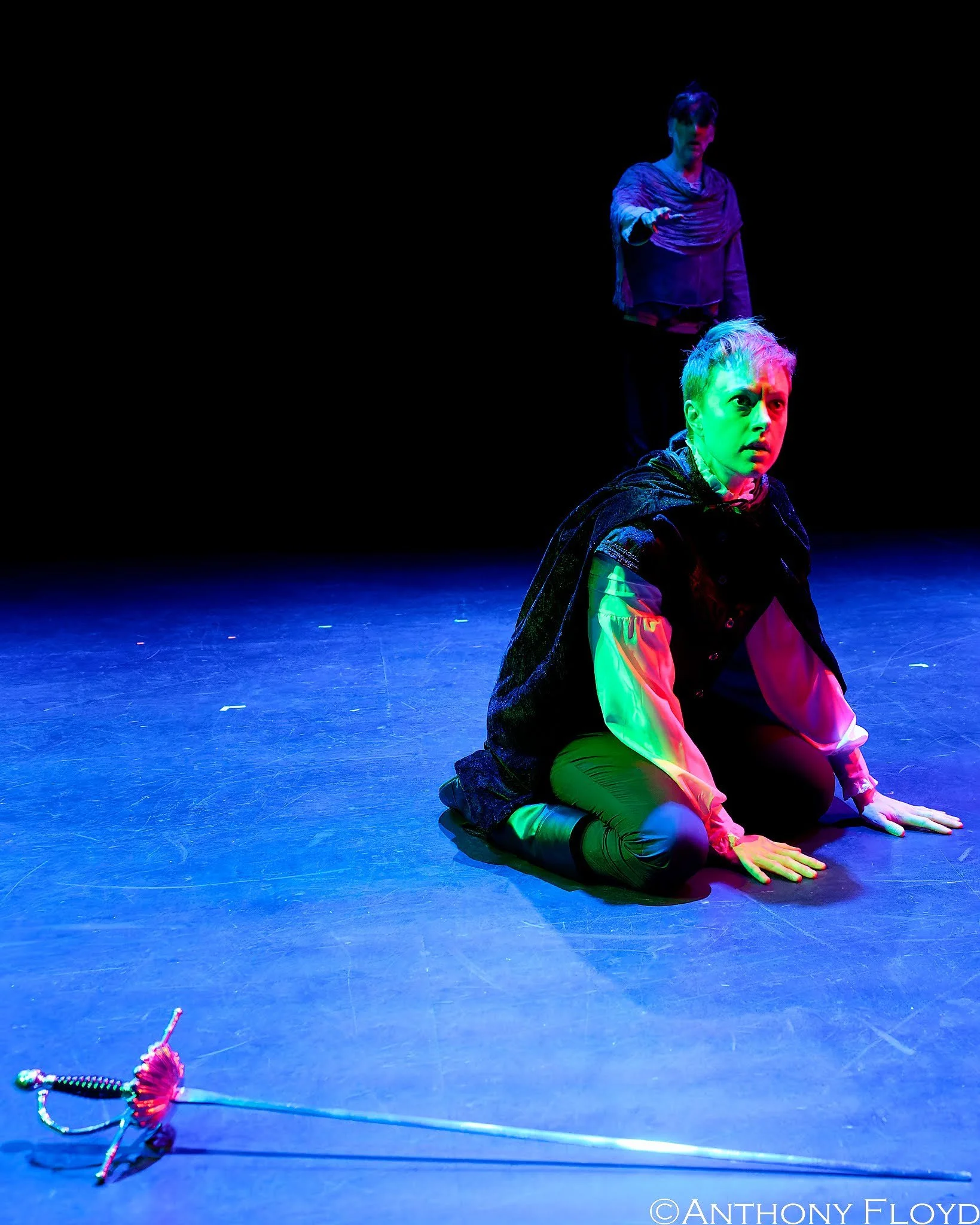
The production's technical elements make particularly good use of the intimacy of the TPS Black Box. Tamara Burgess' sound design establishes an eerie atmosphere around the supernatural elements, with the sound of wind through the woods creating a haunting backdrop as the spirit of Hamlet's father arrives. Phillip Meyer's lighting design complements it beautifully, particularly through the interplay of reds and greens during the Ghost sequences, and stronger and darker tones as the murderous plot arcs take shape. Rather than relying on elaborate spectacle, the two elements work together to change the feeling of the room and signal that Hamlet has crossed into something beyond the ordinary.
That restraint extends to the physical production. The set is deliberately sparse, relying largely on two chairs and boxes that are repurposed throughout the story. It is a practical approach for the intimate Black Box and keeps Shakespeare's language and the performers at the center of the production rather than surrounding them with unnecessary scenery. The costumes, credited to Wynter Elwood, Susan Bradford and the cast, add considerably more visual texture. They are extremely well done throughout, helping establish status and circumstance without overwhelming the performers wearing them. Gertrude's funeral costume is particularly beautiful, while Claudius' wardrobe and the military uniforms also help define the world and its hierarchy.
There is an inherent danger in performing a play whose greatest lines have long since escaped the theatre. An actor can deliver one of Hamlet's famous passages and almost feel the audience waiting for the quotation they recognize. The temptation is to underline it, pause around it or give it an importance that announces, "Here it is."
The Original Theatre Black Dog largely resists that temptation.
Under Susan's direction, the strongest moments come when Shakespeare's words are simply allowed to belong to these characters again. Christine thinks her way through Hamlet rather than presenting a collection of celebrated speeches. Brenden makes Claudius' guilt something more complicated than villainy. Holly finds the tragedy underneath Ophelia's madness. Kael demonstrates how a few carefully played scenes can cast a shadow over an entire story.
More than 400 years after Hamlet was written, we already know its words. The challenge is making us listen to them again. This cast gives us reason to do exactly that.
The Original Theatre Black Dog production of William Shakespeare’s Hamlet, runs on stage at the TPS Black Box Theatre at the Seattle Center Armory through August 30. For more information, including ticket availability and sales, visit https://www.theatreblackdog.com/#/.
Photo credit: Anthony Floyd