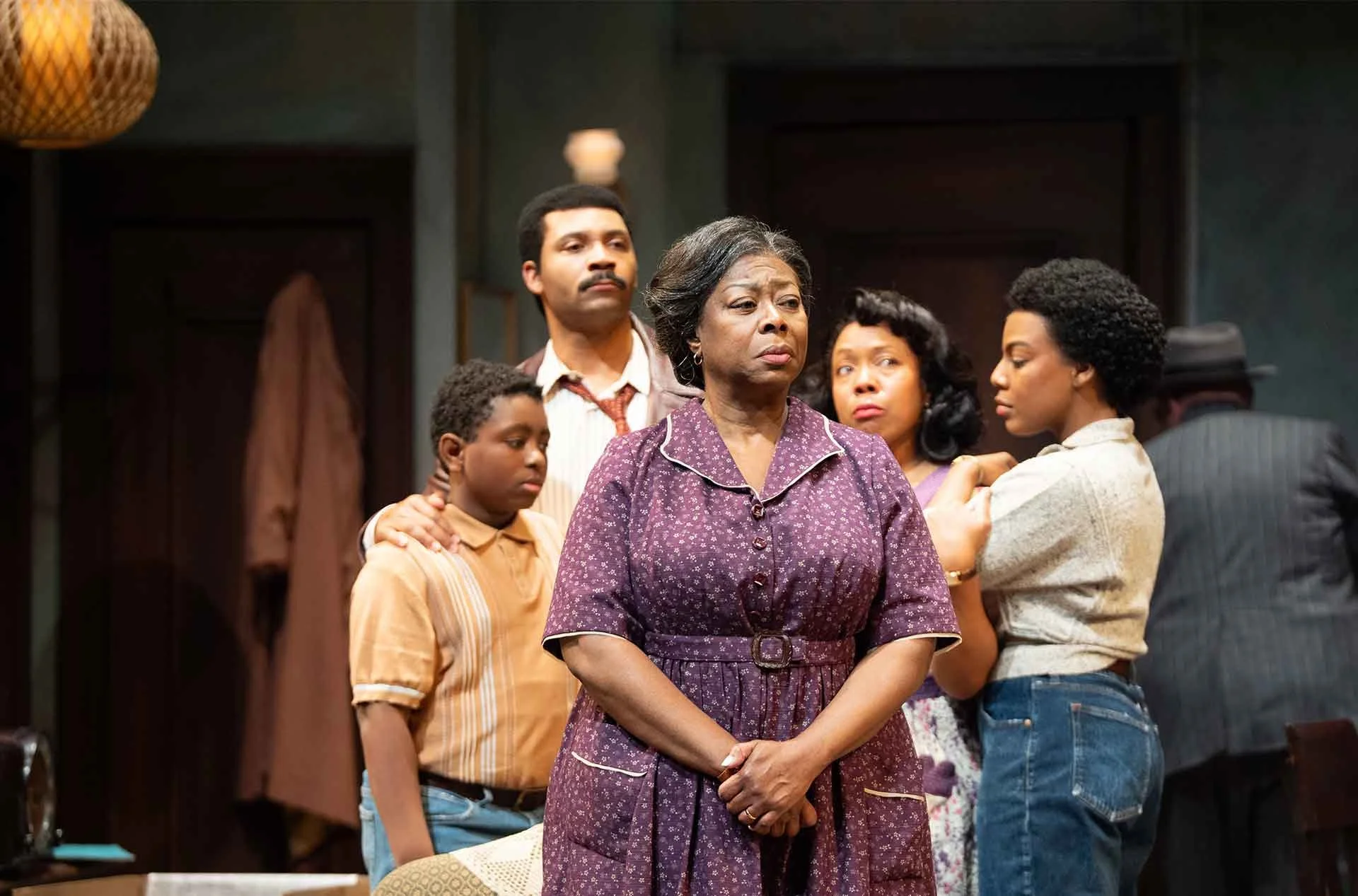

Stage Review - A Raisin in the Sun
Presented By: Oregon Shakespeare Festival - Ashland, OR
Show Run: March 15 - July 19, 2026
Date Reviewed: Wednesday, June 3, 2026
Run Time: 3 Hours (including a 15-minute intermission)
Reviewed by: Greg Heilman
Lorraine Hansberry’s A Raisin in the Sun premiered on Broadway in 1959, becoming the first play written by a Black woman to be produced on Broadway and forever changing the landscape of American theatre. Yet what is perhaps most remarkable about the play is not its historical significance, but how relevant it remains nearly seventy years later. At a time when more and more families find themselves struggling to achieve financial stability, when home ownership feels increasingly out of reach, and when many feel disenfranchised by systems that seem designed to benefit those already in positions of power, Hansberry’s masterpiece continues to speak with exceptional clarity. It is a play about dreams and dignity, about what people are willing to risk to create a better future for themselves and their families, and about the challenge of swimming upstream when the current seems determined to pull them back.
That relevance is fully understood in Oregon Shakespeare Festival’s production of A Raisin in the Sun, directed by Tim Bond and running through July 19 at the Angus Bowmer Theatre. The story follows the Younger family as they await the arrival of a life insurance payment following the death of the family patriarch. To Lena Younger, the money represents an opportunity to provide lasting security for her family. To her son Walter Lee, it is a chance to break free from the limitations that have defined his life. To daughter Beneatha, it offers the possibility of pursuing her ambitions and defining her own identity. As those competing visions collide, Hansberry explores race, class, generational conflict, housing discrimination, and the elusive nature of the American Dream.
Part of what makes Hansberry’s script so compelling is that each member of the Younger family represents a different rung on the ladder of social progress. Their conflicts are not simply personal disagreements, but differing perspectives on what freedom, equality, and success should look like. For Lena Younger, freedom itself is a precious achievement. As someone whose parents were born into slavery, Lena carries a direct connection to that history, and her worldview is shaped by an appreciation for the opportunities that previous generations fought to secure. Home ownership and stability are not merely financial goals for Lena; they are tangible evidence of progress and proof that sacrifices made by earlier generations were not in vain. Walter Lee, however, belongs to a different generation. Appreciation alone is not enough for him. While Lena sees how far her family has come, Walter sees how far they still have to go. He wants more than survival or stability; he wants access to the same opportunities afforded to others. His frustration stems from a system that promises equality while placing obstacles in the path of those trying to achieve it. Much of Walter’s behavior throughout the play is driven by his refusal to accept those limitations, even when his ambitions place him and his family at risk. Beneatha represents yet another step forward. Armed with education and a broader worldview, she challenges not only racial barriers but cultural expectations as well. Through her friendship with fellow student Joseph Asagai, she begins exploring and embracing her African heritage, rejecting pressures to conform to standards established by the dominant culture. For Beneatha, freedom means self-definition, the ability to determine who she is without having that identity dictated by society. Her struggle is not merely against racism, but against any system that seeks to limit people because they are different from those who hold power.
Meanwhile, George Murchison serves as an interesting counterpoint. Having already experienced a degree of financial success and social acceptance, George has largely made peace with the existing system. Yet while he has overcome certain racial barriers, his interactions with Beneatha reveal another form of inequality. His expectation that women should be attractive, agreeable, and ultimately subordinate exposes the misogyny that Beneatha is also fighting against. In that way, Hansberry reminds us that progress in one area does not automatically eliminate prejudice in another. At the same time, Walter’s wife Ruth occupies a different position altogether. Less concerned with social advancement than with the immediate welfare of her family, she reflects the reality faced by many women of her era. Ruth’s priorities are shaped by a society that expects her to focus on caregiving and domestic stability. Her dreams are no less important than those of Walter or Beneatha, but they are grounded in the practical realities of keeping a family healthy, safe, and together.
Standing opposite all of them is Karl Lindner, the embodiment of the very system each character is struggling against in one way or another. Lindner never presents himself as a villain, which is precisely what makes him so effective. He represents institutional barriers wrapped in politeness and respectability, using civility to justify exclusion.
Tim’s direction keeps these themes firmly rooted in the relationships between the characters rather than allowing them to become abstract ideas. The audience is never asked to admire Hansberry’s message from a distance. Instead, the consequences of these social pressures are experienced through the Younger family themselves. Every disagreement carries emotional weight because the stakes feel intensely personal. Tim allows the play’s ideas to emerge organically from the characters and their circumstances, trusting both the material and the audience enough to let the story do the work.
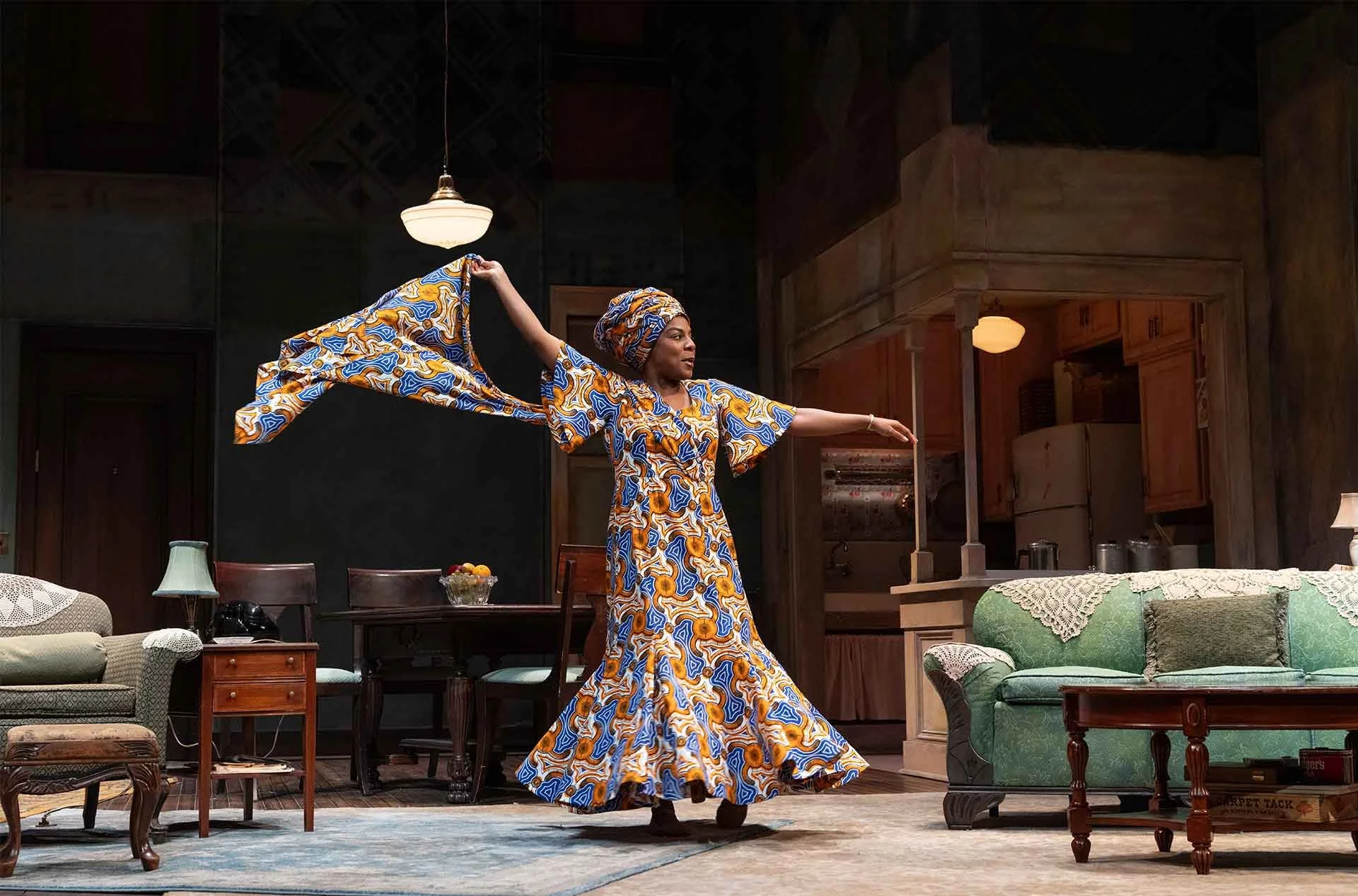
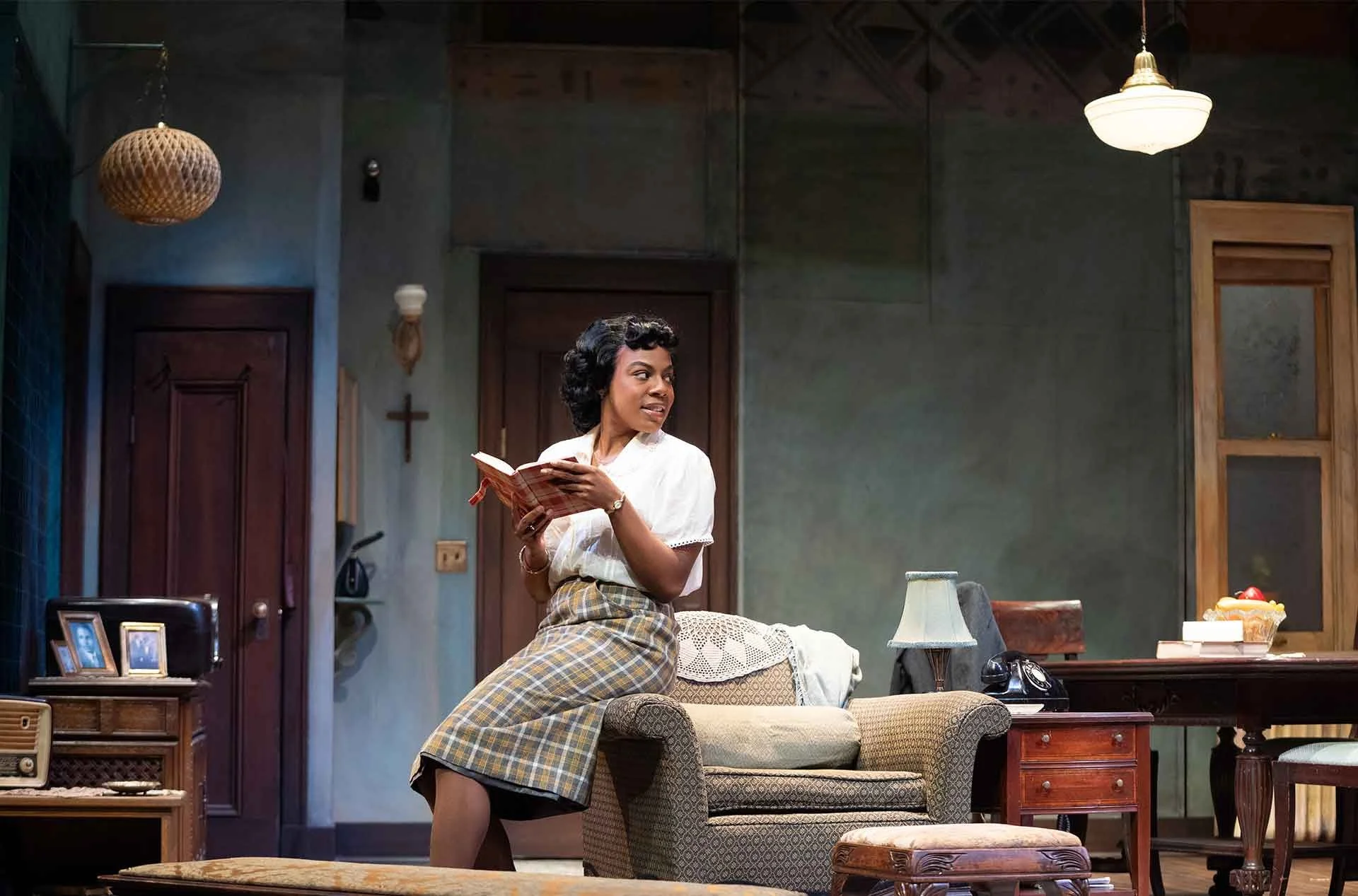
The production’s design elements provide an excellent framework for that storytelling. Scott Bradley’s scenic design creates a detailed and believable apartment that immediately establishes both the challenges and comforts of the Younger family’s life. The space feels appropriately confined without ever appearing artificial, reflecting a family that has learned to make the most of what they have while yearning for something more. Scott’s use of a scrim to define the bedroom areas is particularly effective, creating separation and intimacy within a home where privacy is often a luxury. All of this understates the gorgeousness of this set, though. What Scott has been able to accomplish within the details of this piece is a work of art unto itself.
Complementing the scenery is Lonnie Rafael Alcaraz’s lighting design. The cues are precise throughout the production, never drawing undue attention to themselves while quietly enhancing the storytelling. Particularly effective are the moments when sunlight streams through the apartment window, interacting with the shade and helping establish both mood and realism. Lonnie’s work subtly reinforces the play’s emotional rhythms while grounding the action in a world that feels authentic. Elements as simple as holding a spot on the character carrying the emotional weight of a particular scene just a second longer before fading completely to black is just another example of the professionalism on display here.
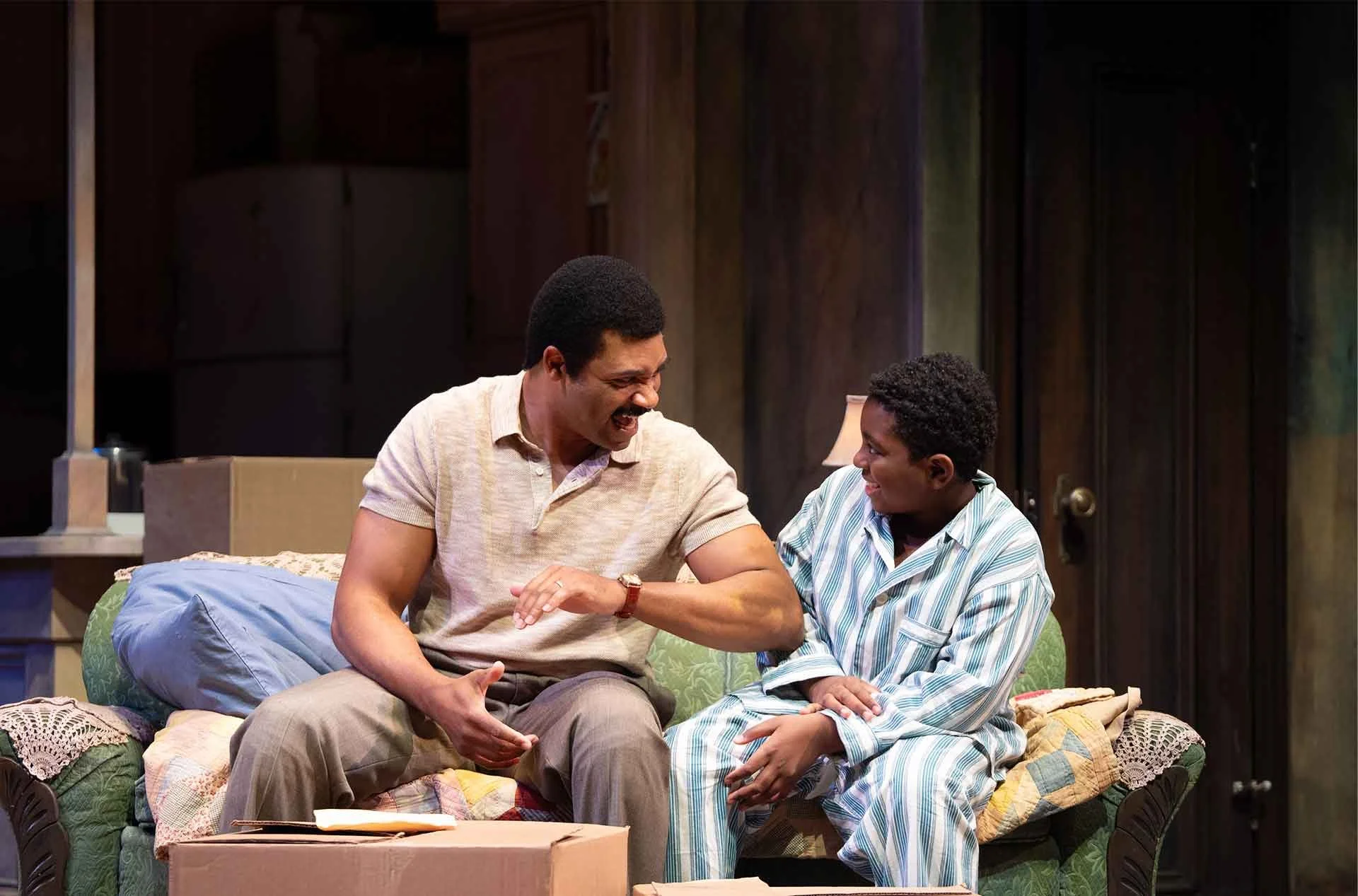
At the center of the production is Preston Butler III as Walter Lee Younger, one of the most complex and compelling characters in the American theatre. Walter is a dreamer, but not merely because he wants money, though at the surface it’s the money that appears to drive him. What he truly seeks is dignity, independence, and the opportunity to determine his own future. Preston captures that longing beautifully. From his earliest moments on stage, there is an energy simmering beneath the surface, a sense that Walter is constantly searching for a way to escape the limitations that surround him. Preston’s accent work is excellent, and he brings tremendous emotional commitment to every scene. Preston’s performance is particularly engaging due largely to the breadth of emotion he displays. Walter’s journey takes him through hope, frustration, desperation, confidence, shame, and ultimately redemption, and Preston navigates those shifts with impressive skill. Some of his strongest work comes when Walter attempts to explain his plans for the future and later when he desperately tries to recover the family’s lost money. In those moments, the audience gains a deeper understanding of the man behind the ambition. If there is one area where the performance occasionally pushes a bit too hard, it comes during Walter’s lowest emotional point, where the intensity briefly borders on becoming slightly overstated. Even then, it is clear that Preston is fully invested in Walter’s pain, and the emotional honesty of the performance remains intact.
Opposite him, Lynnette R. Freeman delivers a wonderfully nuanced performance as Ruth Younger. While Walter dreams of dramatic transformation, Ruth’s aspirations are rooted in stability and security. Lynnette beautifully captures a woman who is exhausted by the pressures of daily life but refuses to surrender to them. The chemistry between Lynnette and Preston is one of the production’s greatest strengths. Their relationship feels authentic, complicated, and deeply familiar. The love between Ruth and Walter never disappears, even during their most difficult moments, and both actors do excellent work revealing the tension between affection and frustration that defines so much of their marriage.
As Beneatha Younger, Saran Evelyn Bakari brings confidence, intelligence, and vitality to the stage. Beneatha is one of Hansberry’s most forward-thinking characters, a young woman determined to define herself on her own terms rather than accepting the expectations imposed upon her. Saran fully embraces that independence, creating a character who is vibrant, curious, and unwilling to settle for easy answers. There is a confidence in her physicality and delivery that immediately establishes Beneatha as someone determined to chart her own path. At the same time, she never loses sight of the vulnerability beneath that confidence. As Beneatha’s frustrations grow and her worldview is challenged, Saran allows the character’s emotional development to unfold naturally, revealing both her strength and her uncertainty.
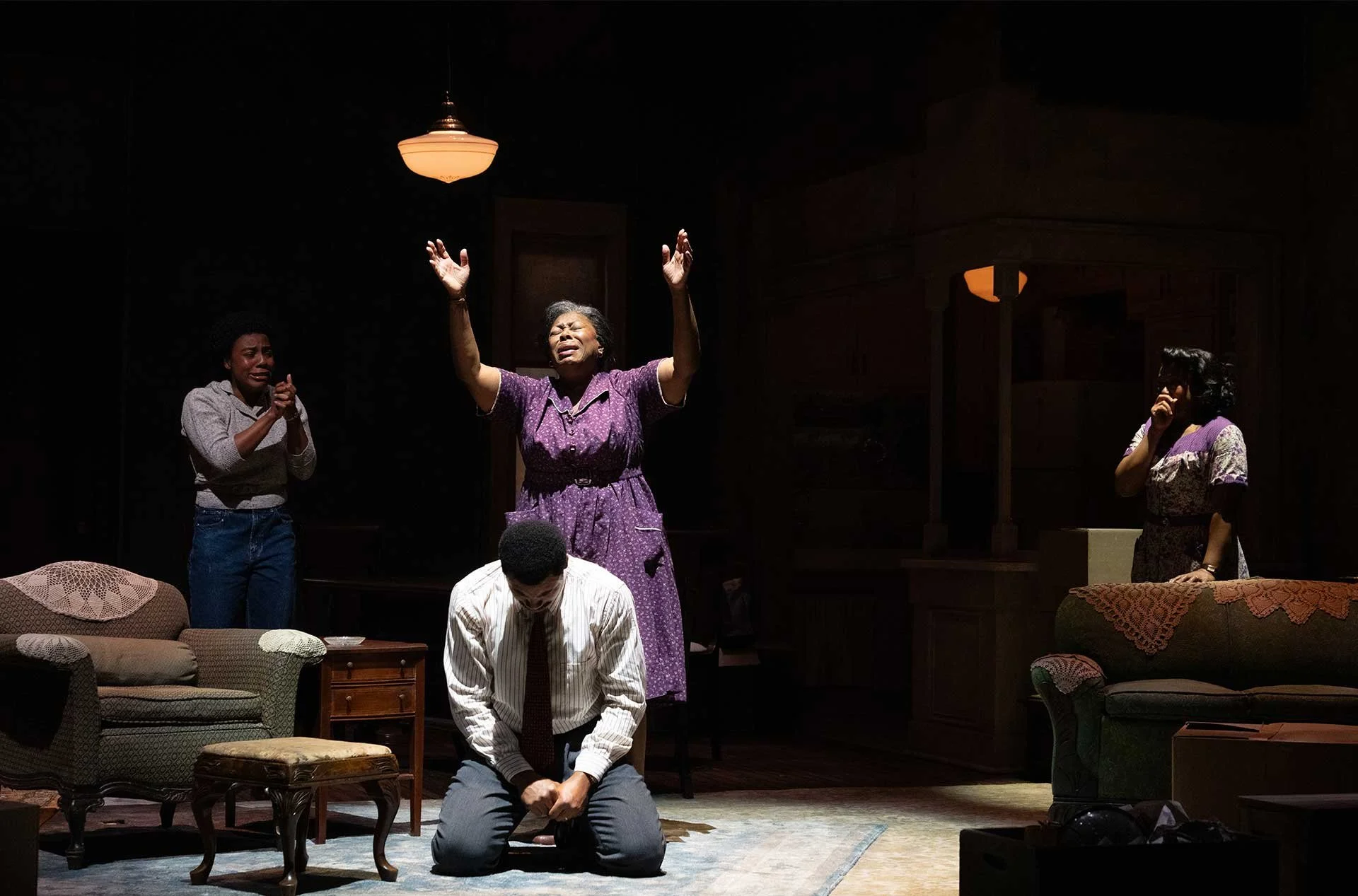
The emotional heart of the production, however, belongs to Greta Oglesby as Lena Younger. As the family’s matriarch, Lena serves as both its moral compass and emotional foundation, and Greta understands the importance of that responsibility from the moment she steps on stage. Her performance anchors the entire production. What is most impressive about Greta’s work is the remarkable emotional range she displays throughout the evening. Lena is capable of tremendous warmth and compassion, but she is also firm, resilient, disappointed, hopeful, and fiercely protective of those she loves. Greta navigates all of those dimensions with an expertise that is compelling to watch. Her reactions often communicate as much as the dialogue itself, particularly in moments involving the aforementioned insurance check and the dreams attached to it. The audience can see Lena processing possibilities, fears, responsibilities, and hopes simultaneously.
Much of the strength of the performance comes from how Greta commands the stage through conviction and emotional honesty. When Lena offers encouragement, it feels genuine. When she expresses disappointment, it carries real weight. When she must confront difficult truths, the pain is visible beneath her resolve. By the end of the evening, Greta has created a portrait of a woman whose strength comes not from being unbreakable, but from continuing to move forward despite the burdens she carries. Just as Lena is the emotional rock of the Younger family, Greta becomes the emotional rock of the production itself.
Among the supporting cast, Adebowale Adebiyi provides an excellent counterpart to Saran’s Beneatha as Joseph Asagai. Through Joseph, Hansberry introduces ideas of cultural identity, heritage, and self-discovery, and Adebowale brings both warmth and conviction to those conversations. His chemistry with Saran helps illuminate Beneatha’s evolving understanding of herself and her place in the world. Jaysen Wright clearly establishes George Murchison as a man who has found comfort within the existing social structure and sees little reason to challenge it. Successful and confident, George values appearances and conformity in ways that put him at odds with Beneatha’s independent spirit. Jaysen effectively highlights the superficial aspects of the character while making his worldview understandable, even when it proves frustrating. MJ Sieber faces perhaps one of the most difficult acting assignments in the play as Karl Lindner. Karl represents everything the Younger family is attempting to overcome, yet he cannot be played as a traditional villain. The character’s power comes from how reasonable he appears on the surface while advocating for a system built on exclusion. MJ understands this balance perfectly. The more uncomfortable the audience becomes during Karl’s scenes, the more successful the performance becomes, and judging by the reactions in the theatre, MJ succeeds admirably. By portraying Karl with calm civility rather than overt hostility, MJ reveals how discrimination often survives behind polite language and respectable appearances.
TayLar also makes a memorable impression as Mrs. Johnson, the neighborhood busybody whose observations are often delivered with a smile and a sting. The passive-aggressive criticism and unsolicited commentary feel instantly recognizable, drawing knowing reactions from the audience while providing moments of levity amid the heavier themes. Rounding out the cast is Corey Jerod Harris, Jr. (Travis Younger, Walter and Ruth’s young son), Chris Butler (Bobo), Justin Walter Cook, and Armando McClain (the latter pair playing movers).
Finally, additional marks go to Michael Keck’s sound design and original music, which support the production throughout, helping establish atmosphere without overwhelming the action. Likewise, Judith Moreland’s work as voice and text director contributes to the overall authenticity of the performances, with accents and speech patterns feeling natural and consistent across the company.
A Raisin in the Sun endures because Hansberry understood that the struggle for dignity and opportunity is universal. While the specific circumstances facing the Younger family are rooted in mid-century America, the questions the play asks remain painfully relevant. How do families pursue their dreams when economic barriers seem insurmountable? How much should someone risk for the possibility of a better future? What happens when entire communities feel locked out of opportunities available to others?
Those questions continue to resonate in a world where economic inequality grows wider, housing affordability remains a challenge for many families, and social mobility often feels increasingly elusive. Oregon Shakespeare Festival’s production does not offer easy answers, nor does Hansberry’s script. Instead, it offers something more valuable: a deeply human portrait of people refusing to surrender their hopes despite the obstacles placed before them.
Through thoughtful direction, excellent design work, and a collection of strong performances, this production reminds us why A Raisin in the Sun remains one of the most important plays ever written. It is not simply a story about one family in Chicago. It is a story about all those who continue to dream of something better, even when the odds seem stacked against them, and about the courage required to keep moving forward when the world would prefer that you stay exactly where you are.
The Oregon Shakespeare Festival production of A Raisin in the Sun runs on stage at the Angus Bowmer Theatre through July 19. For more information about the current season and this show, including ticket availability and sales, visit https://www.osfashland.org/.
Photo credit: Jenny Graham