
Stage Review - References to Salvador Dalí Make Me Hot (Sound Theatre Company)
Stage Review - References to Salvador Dalí Make Me Hot
Presented By: Sound Theatre Company - Seattle, WA
Show Run: October 01 - October 17, 2026
Date Reviewed: Saturday, October 3, 2026 (Opening Night)
Run Time: 2 Hours (plus a 10-minute intermissions)
Reviewed by: Greg Heilman
José Rivera’s References to Salvador Dalí Make Me Hot is the kind of play that tells the audience fairly quickly that reality is going to be optional. A play in which the Moon plays guitar, a Cat and a Coyote debate sex, desire, freedom, and the difference between being wild and domesticated, and a woman carries on conversations with celestial bodies and animals is the kind of setting that fits right into the surreal artistic reference of its title. Yet beneath all of Rivera’s magical realism is something considerably more human, a marriage strained by distance, loneliness, desire, and the effects of war on both the soldier who goes away and the person left waiting for him to return. Sound Theatre Company’s production, directed by Colin Hovde and running through October 17 at Center Theatre in the Seattle Center Armory, embraces both sides of Rivera’s play, allowing its surrealism to be funny, sensual, and strange without losing sight of the very human story underneath it.
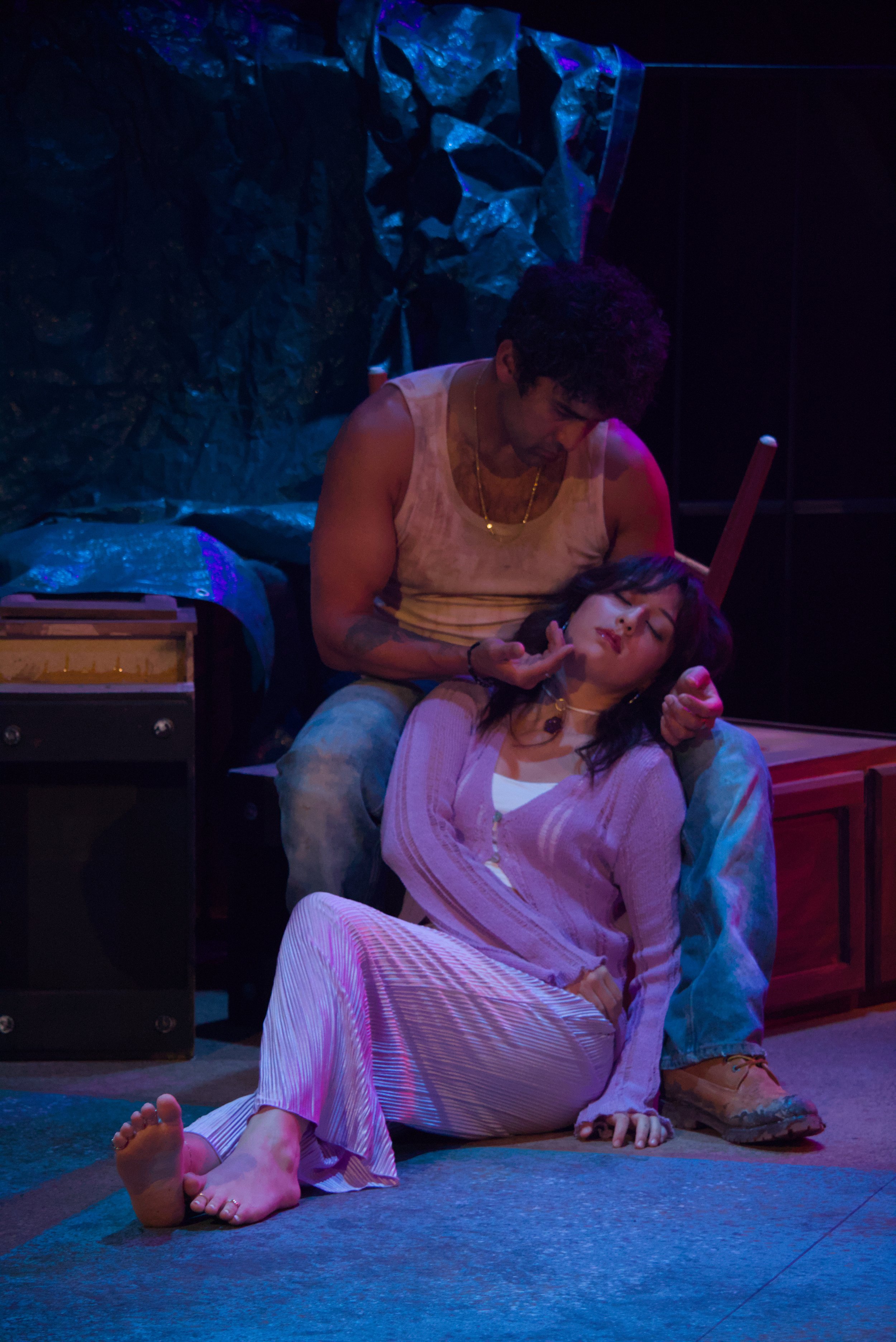
Set in Barstow, California, shortly after the Persian Gulf War, the play centers on Gabriela (Pilar O’Connell), whose husband Benito (Rolando Cardona-Román) has returned from military service to a marriage that has changed while he was away. Gabriela has spent months alone, contemplating what she wants from her life and her husband, while Benito comes home expecting to resume something much closer to the life he left behind. Their inability to reconcile those two realities becomes the emotional center of the play.
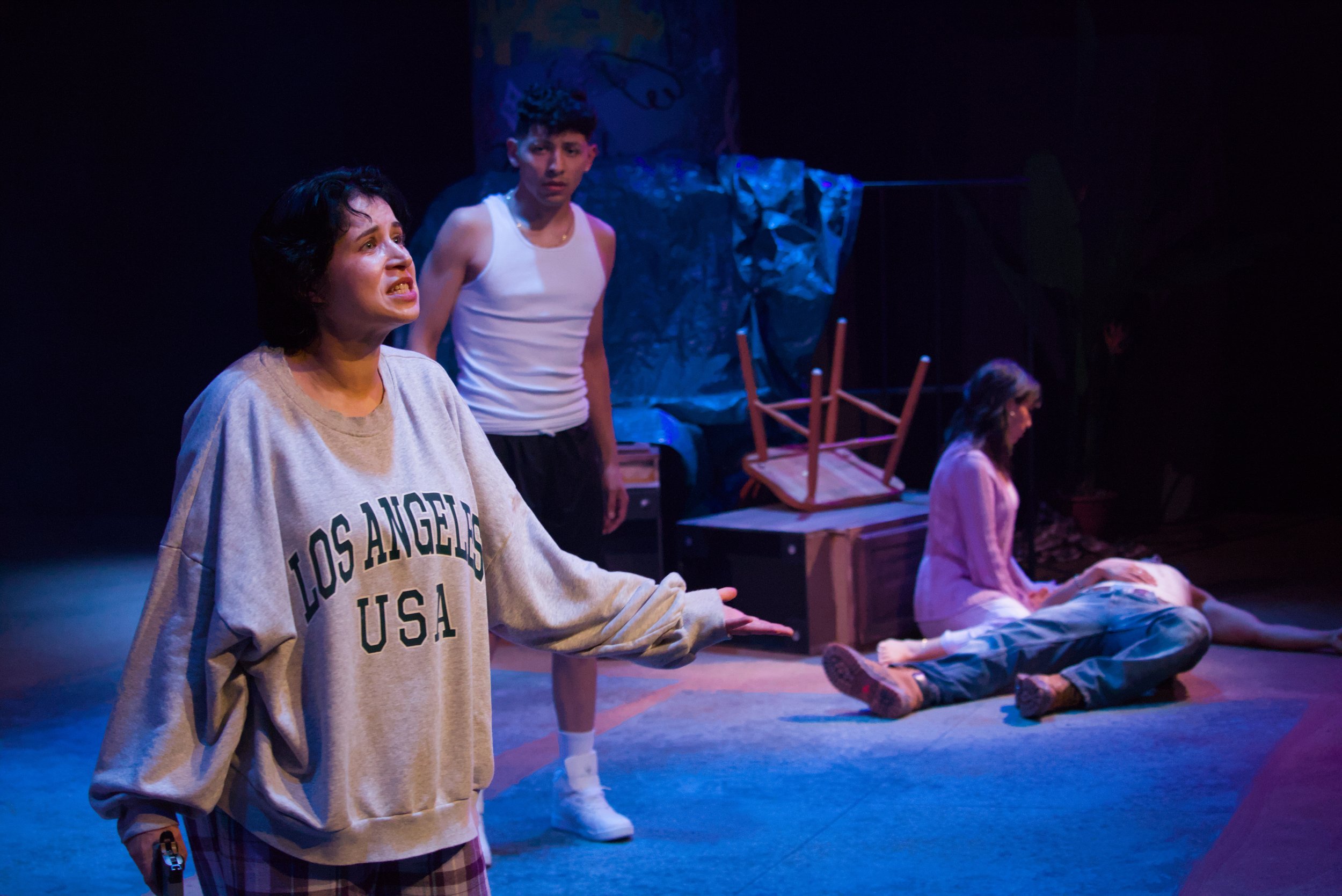
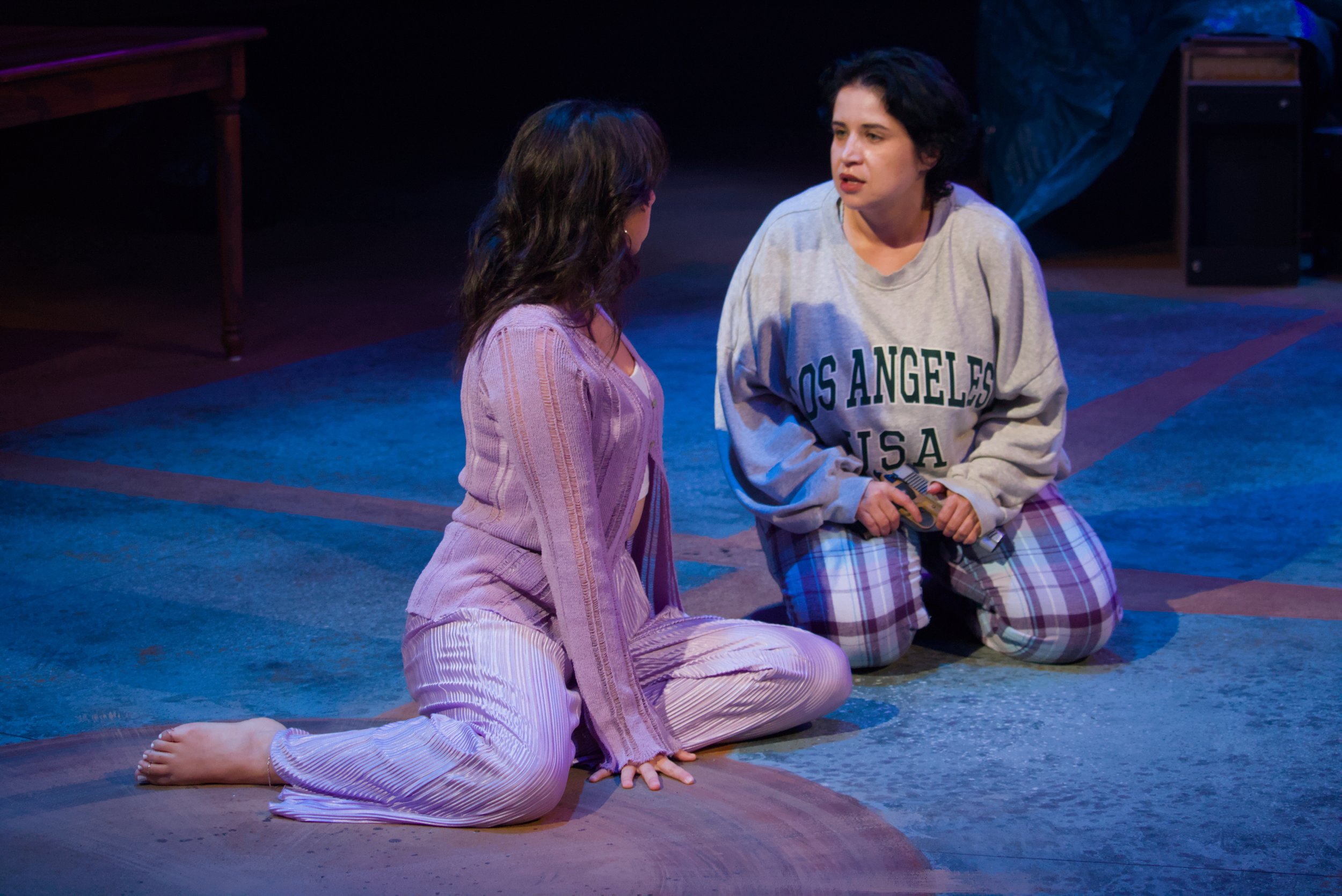
Before Benito’s return, however, Rivera introduces the audience to Gabriela’s world through the considerably less conventional inhabitants of the desert around her. Isabella Martinez’s Cat and Jorge Chacón’s Coyote engage in a sort of dance, an extended courtship and philosophical sparring match that mirrors many of the questions Gabriela will eventually confront herself. Coyote represents something untamed and instinctual, while Cat has become comfortable with domestication. Even Fantasia Rose’s costumes reinforce that distinction. Coyote looks like he belongs outdoors, his clothes dirty and worn by the world around him, while Cat is cleaner and more refined, visually separating the wild from the domesticated before either needs to explain it.
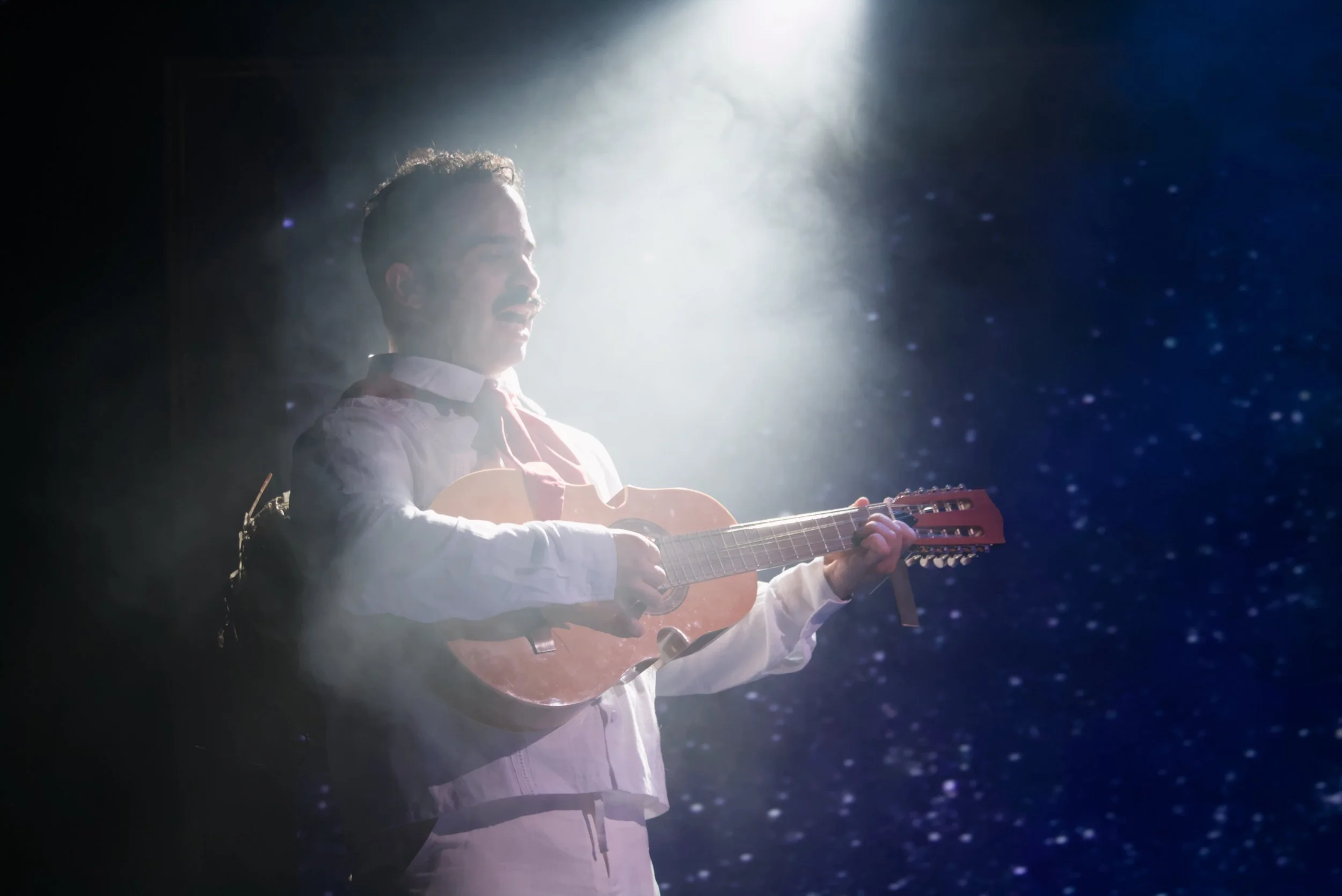
The interplay between Isabella and Jorge gives the play some of its funniest and most playfully sensual moments, but there is purpose behind the absurdity. Their argument about what it means to be wild or tame becomes another way for Rivera to explore desire, security, independence, and the compromises people make in exchange for comfort. With Rolando’s Moon nearby, at times accompanying the proceedings on guitar, the desert becomes a place where Gabriela’s internal questions seem to take physical form.
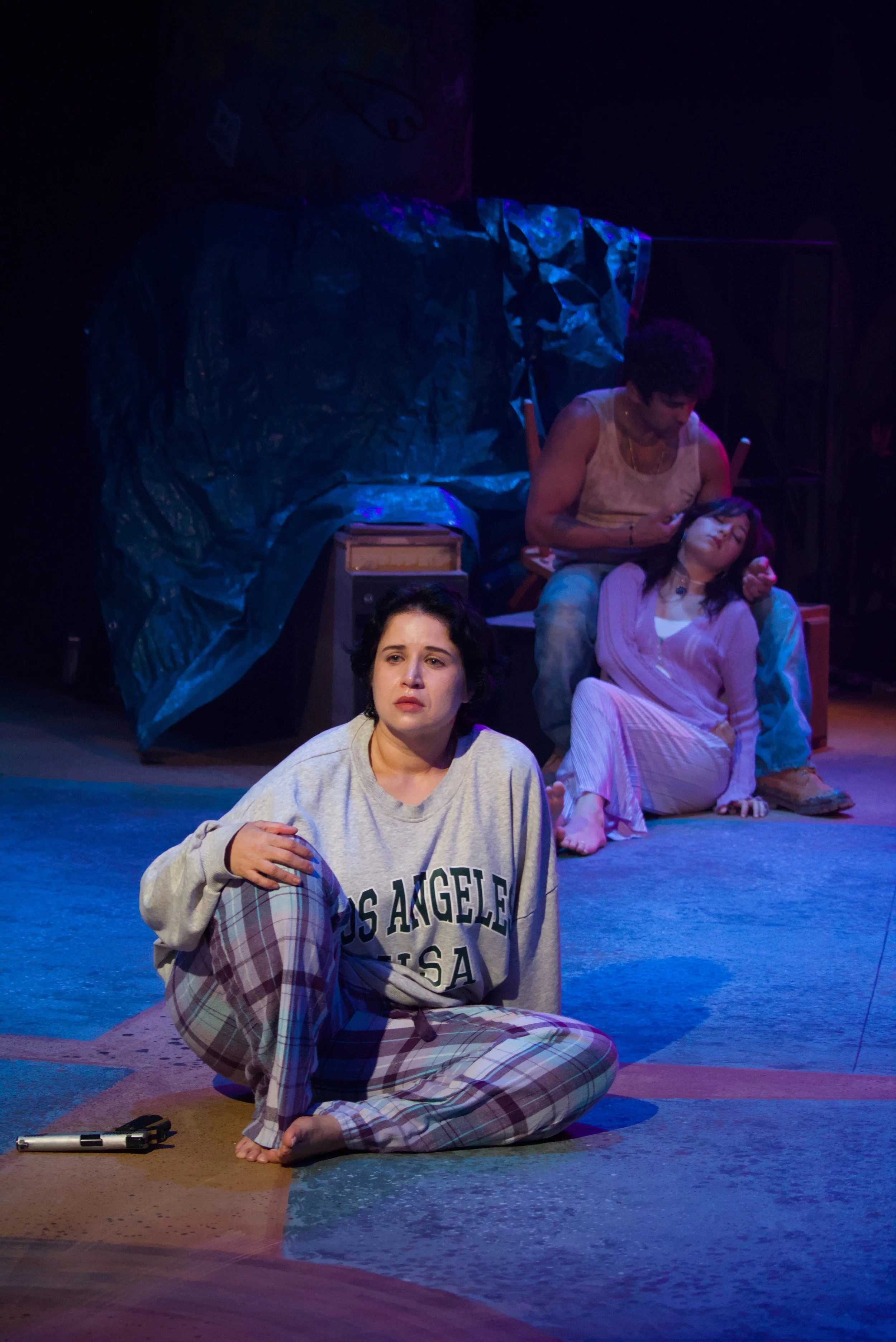
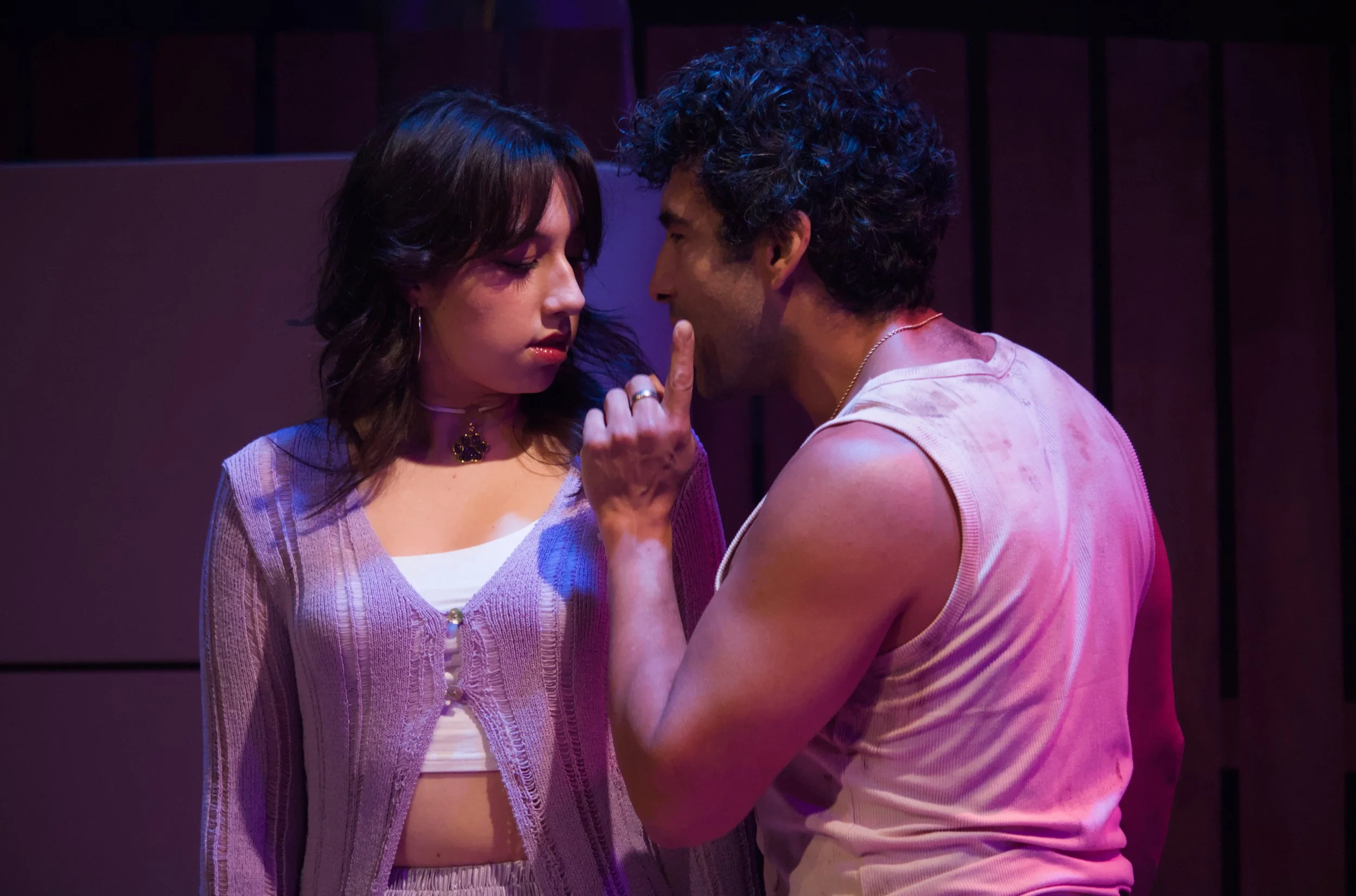
Those questions become considerably more complicated when Malik Cantú’s Martín enters Gabriela’s life. What initially seems driven largely by sexual desire (Martín tends to divert himself by peering over the fence at a naked Gabriela as she sleeps in the backyard) develops into something more romantic, giving Gabriela a glimpse at an alternative to the life she has been waiting to resume. Rivera never makes that alternative particularly simple either. This is a play filled with people (and animals) wanting something from one another while simultaneously trying to determine what they want for themselves.
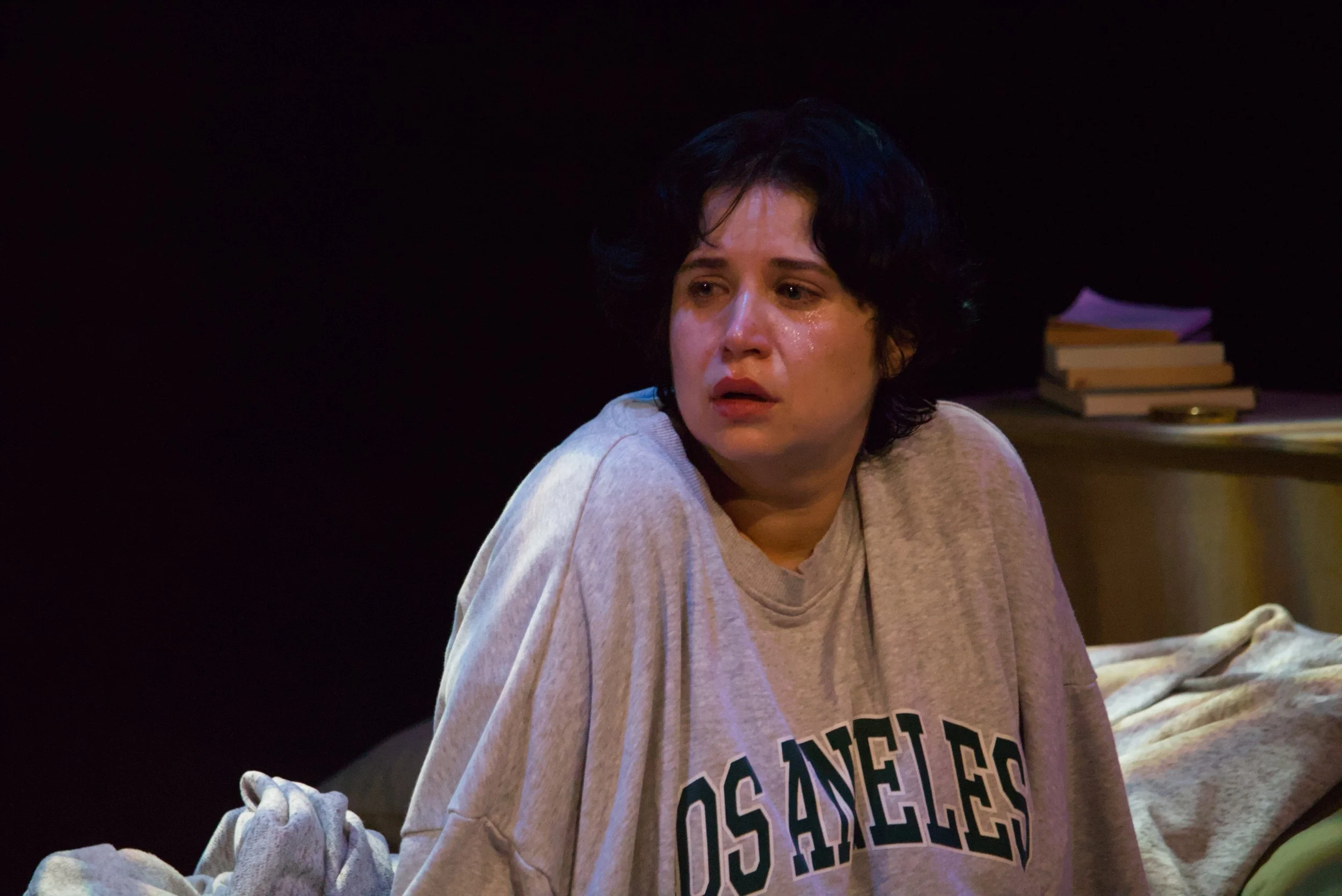
At the center of all of this is Pilar, who brings remarkable emotional depth to Gabriela. This is a performance in which she allows herself to open up and explore places that few of us ever give ourselves permission to step into, much less expose to a room full of strangers. There is an honesty to her performance that makes Gabriela’s emotional journey feel less like a sudden crisis than the culmination of all the time she has spent alone contemplating her marriage, her sexuality, her loneliness, and what she wants the rest of her life to look like. Pilar doesn’t merely present the conclusions Gabriela has reached, she shows the emotional work it took for her to get there.
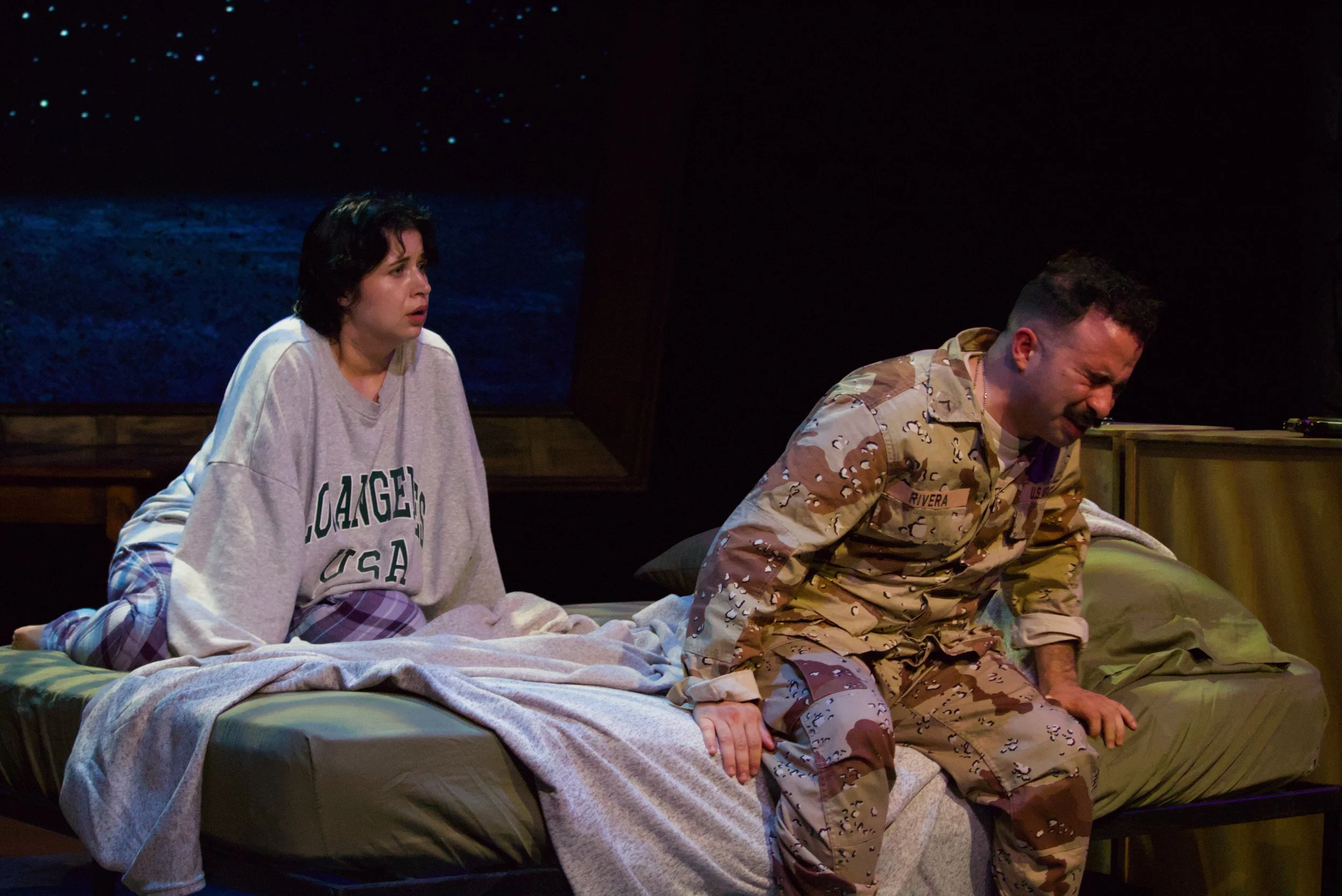
The production changes considerably once Benito returns, and so does Rolando. The whimsical Moon disappears and in his place is a soldier whose military experience seems embedded in his body. Even when Benito is arguing with Gabriela, Rolando maintains a posture and physical discipline that suggests military training hasn’t simply been left behind with the uniform. It is a subtle but effective performance choice, reinforcing that Benito may have returned to Barstow, but some part of him remains somewhere else.
Rolando is every bit Pilar’s equal when the play turns its attention fully toward their marriage. Benito is quite adept at covering his inner demons with a projection of contentment, behaving as though coming home should be enough to return everything to normal. What makes Rolando’s performance so effective is that Benito doesn’t simply snap when Gabriela begins breaking through that exterior. It is a gradual release. The defenses weaken piece by piece, emotion escaping a little at a time until Benito reaches the point where he simply cannot keep it inside anymore.
That distinction is important because war changes both the soldier and the person left behind. Benito has returned from the Persian Gulf expecting Gabriela to be the woman he left. At the same time, Gabriela has had months to experience loneliness, fear for his safety, and the gradual realization that her own needs did not stop existing simply because her husband was serving overseas. Benito has his commitment and sense of duty, Gabriela has had to build a life around his absence, and the life they shared before, one in which Gabriela submitted to her husband, is no longer sustainable. Their conflict isn’t simply about whether they still love one another. It is about whether the versions of themselves who remain can still build a life together.
This pair of across are at their best when Rivera strips away the magical realism and forces Gabriela and Benito to finally talk to one another. An Act II confrontation in which Benito begins opening up about what he experienced during the war is the most memorable and charged of the play. The anger and sexual frustration that have been sitting on the surface gradually give way to something much deeper. Pilar brings everything Gabriela has spent the play contemplating into the room, while Rolando lets Benito’s carefully constructed defenses fall away incrementally. By the time those defenses finally collapse, the scene feels earned rather than manufactured.
Colin wisely gives his actors the space to live inside that confrontation rather than pushing it toward melodrama. Raya Tuffaha’s work as fight and intimacy consultant is particularly important in a production where physical desire, confrontation, and emotional vulnerability are so closely intertwined. Marianna de Fazio’s dialect coaching is similarly impressive, not only in the layered accent Pilar uses for Gabriela (sort of a Long Island by way of Puerto Rico), but in the multiple accents Rolando navigates between his dual roles as Benito and the Moon. Neither feels like an accent laid over a performance, rather each contributes to defining who these characters are.
What makes Rolando’s work even more impressive is what the play subsequently asks of him. After inhabiting one of the production’s most emotionally raw sequences as Benito, he must eventually return to being the Moon. It is an enormous tonal transition, the same actor moving from a soldier confronting the psychological consequences of war back into Rivera’s dreamlike celestial observer, and Rolando makes the shift without allowing one character to bleed into the other.
Colin and his design team give Rivera’s magical realism room to exist without overwhelming the human story. Burton Yuen’s scenic design establishes the desert environment, while Dominique Salas’ lighting, Mya Woods’ sound, and Nick O’Leary’s projections allow the world to slip between the literal and the surreal. Some of the most effective transitions have an almost dreamlike quality, particularly as the production moves between Benito and the Moon, making the transformations feel like extensions of Gabriela’s emotional landscape rather than theatrical tricks.
That balance is ultimately what makes this production of References to Salvador Dalí Make Me Hot work so very well. Rivera has written a play in which a Cat can debate a Coyote, the Moon can serenade a lonely woman, and fantasy can interrupt reality without warning, but none of those things are actually more complicated than the marriage at its center. Gabriela and Benito have both survived his absence. The more difficult question is whether their marriage can survive his return.
Sound Theatre Company doesn’t attempt to resolve the contradictions in Rivera’s play. Instead, Colin and his ensemble lean into them. Desire can coexist with resentment. Duty can coexist with abandonment. Someone can come home and still not entirely return. And two people can love each other while discovering that love alone may not restore what existed before one of them left.
Sound Theatre Company’s References to Salvador Dalí Make Me Hot may tell its story through talking animals, a guitar-playing Moon, and the surreal landscape of José Rivera’s imagination, but its greatest strength is how deeply human Colin Hovde and his cast make it all feel. It combines a cast who, through humor and sensuality, give the fantasy life, while also providing the emotional weight that brings everything back to earth, and a design team that makes the shifts between reality and magical realism feel natural. This is an imaginative, beautifully acted production that understands the strange world Rivera creates is ultimately just another way of exploring something very real, what happens when two people who have both changed must decide whether there is still a life they can share.
The Sound Theatre Company production of References to Salvador Dalí Make Me Hot runs on stage at the Center Theatre at the Seattle Center Armory through October 17. For more information, including ticket availability and sales, visit https://soundtheatrecompany.org/2026-season/references-to-salvador-dali-make-me-hot/.
Photo credit: Nikeesha Gooding