
Stage Review - Silver Lining (Phoenix Theatre)
Stage Review - Silver Lining
Presented By: Phoenix Theatre - Edmonds, WA
Show Run: March 27 - April 19, 2026
Date Reviewed: Sunday, April 05, 2026
Run Time: 2 Hours (including a 15-minute intermission)
Reviewed by: Greg Heilman
Silver Lining, written by Sandi Toksvig and running on stage at Phoenix Theatre in Edmonds through April 19, is a character-driven comedy set within a residential care home, where a group of women find themselves facing an increasingly dire situation as flood waters begin to rise around them. Cut off from the outside world and left largely to their own devices, the residents must rely on one another as they navigate both the immediate crisis and the deeper personal histories that surface along the way. Under the direction of Renée Gilbert, the play blends humor with reflection, using its premise to explore friendship, identity, and resilience. It’s the kind of ensemble-focused piece that plays directly into Phoenix Theatre’s strengths, where productions built on strong group chemistry and collaborative storytelling consistently shine, and that foundation serves this show well as it leans into both its humor and its heart.
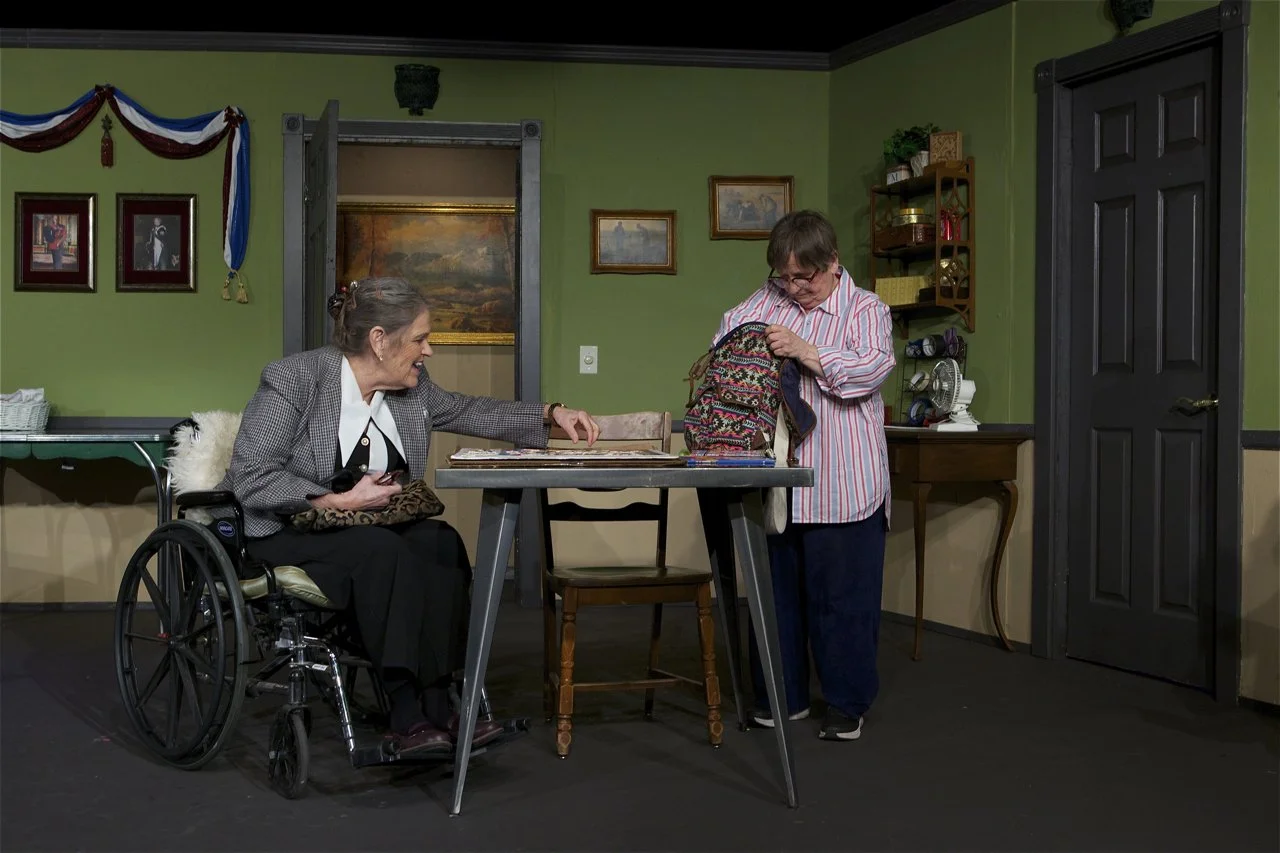
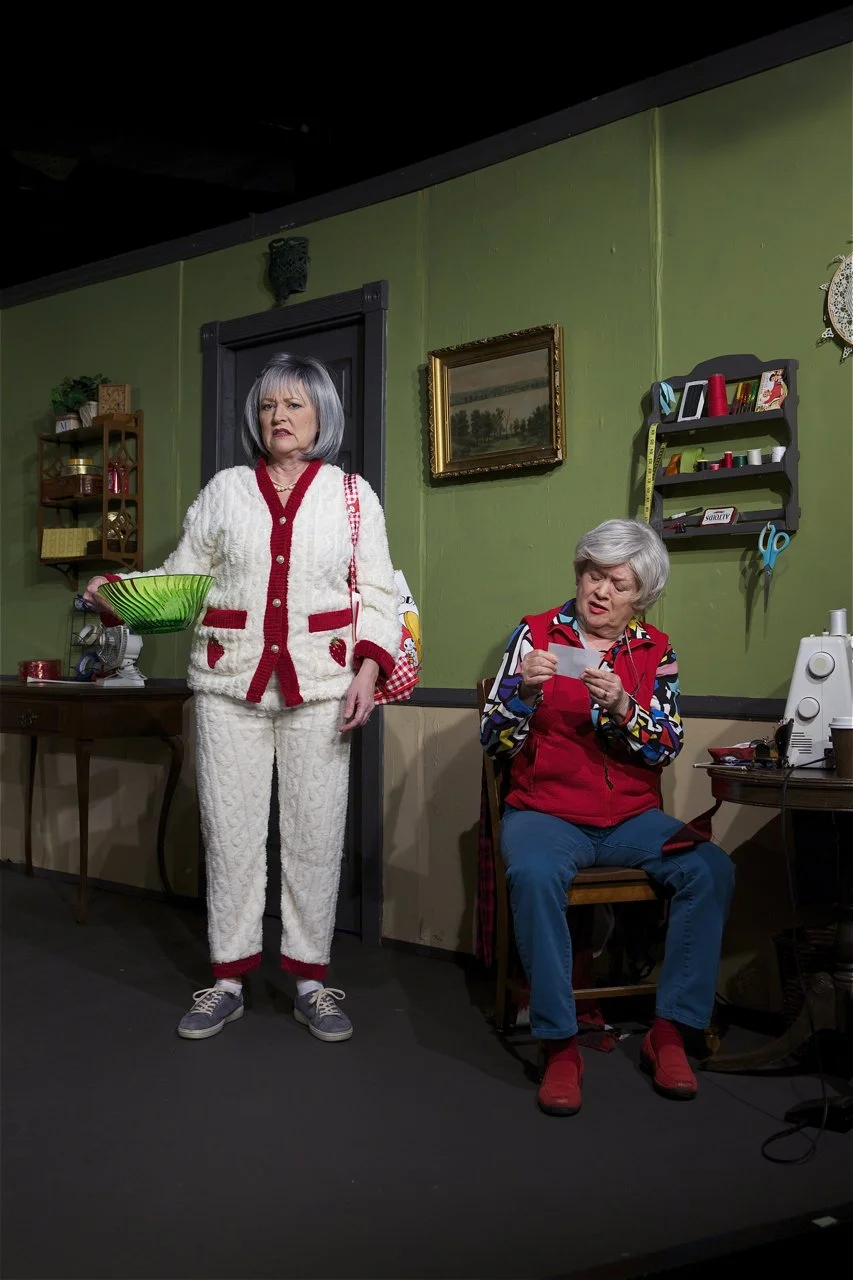
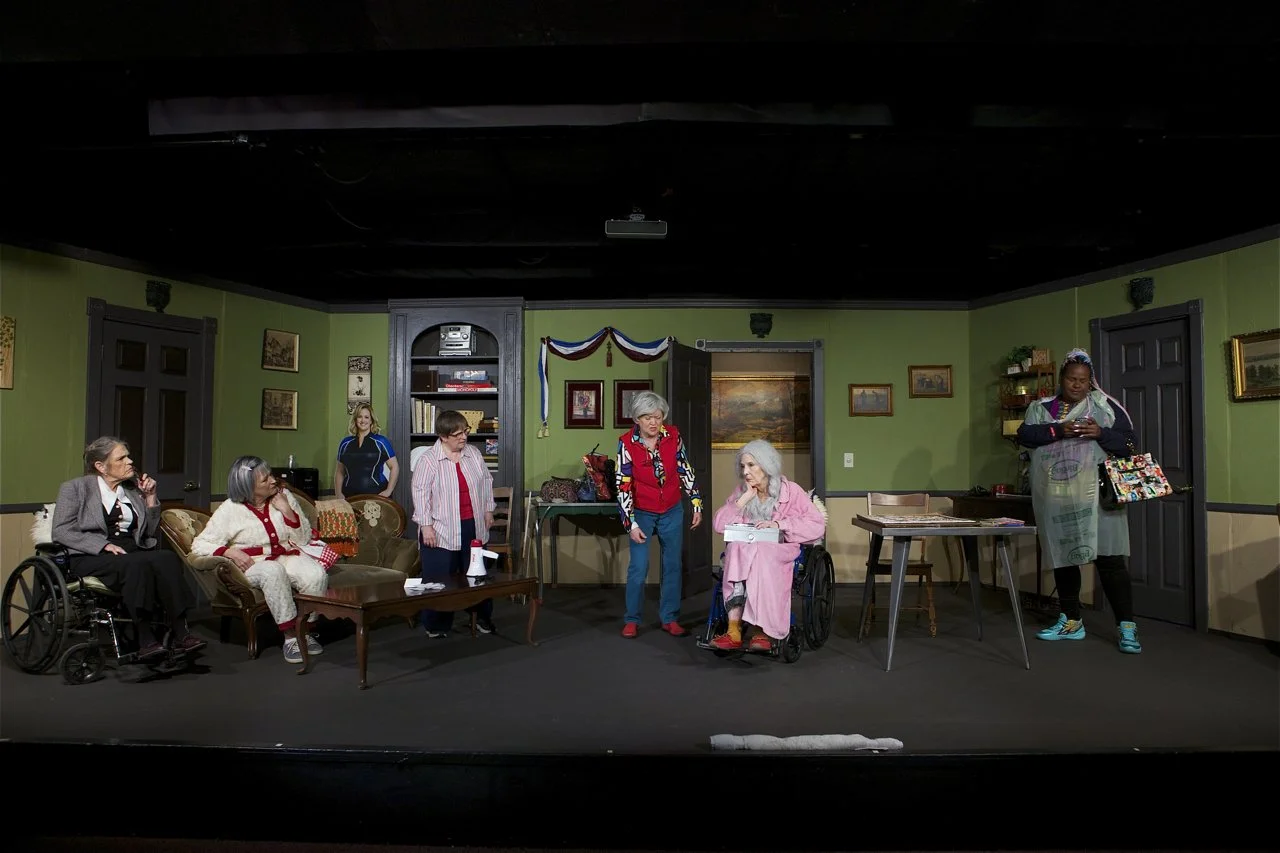
The setting is established with a strong sense of familiarity, brought to life through the thoughtful work of the scenic and technical team. With set construction by Kris Helland and Susan Connors and set decoration also by Susan, the stage is filled with carefully chosen details—a sewing machine, puzzle table, and the ever-present bingo cards and board games—that create an environment that feels instantly recognizable. Anyone who has spent time in a retirement or nursing home will recognize these elements, which reflect the communal nature of such spaces while also hinting at the individuality of those who inhabit them. It’s a scenic approach that grounds the production in something tangible, allowing the audience to connect quickly with both the space and the lives unfolding within it.
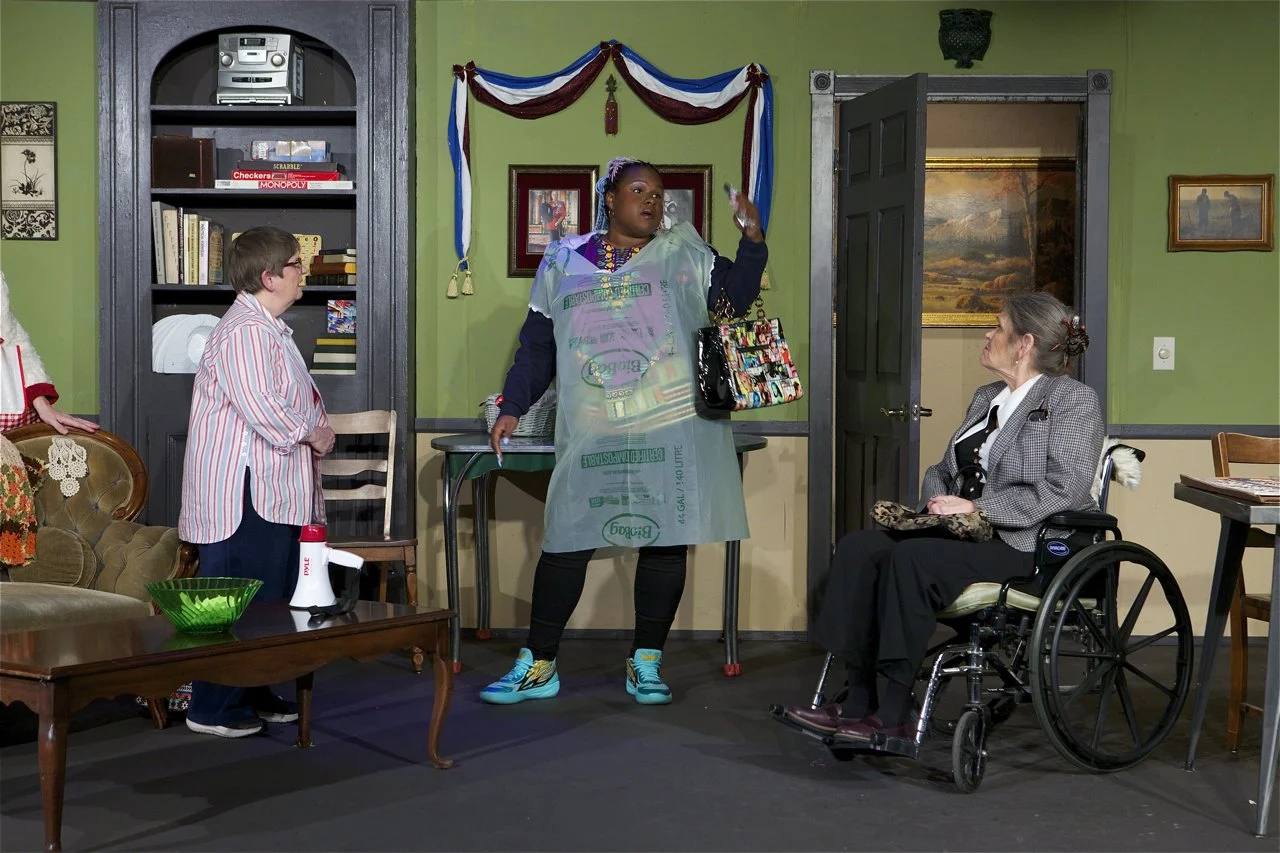
That individuality is where the production truly finds its voice, as each character brings a distinct presence to the group. Susan Connors’ Gloria is energetic and take-charge, someone who appears to have settled comfortably into the rhythms of the home, though there is a quiet sadness beneath the surface that she works to keep contained. Dawn Cornell’s May, confined to a wheelchair, is sharp-tongued and quick-witted, delivering her sarcasm with precision, while Erin Carter’s June, her sister, leans into a more abrasive worldview, at times revealing prejudices and a desire to escape the home and cling to a younger version of herself. Melanie Calderwood’s Maureen is a woman defined by her past, layered with secrets that she reveals only sparingly, if at all, a characterization that fits Melanie’s signature deadpan delivery extremely well. Melanie Workhoven’s St. Michael is a mysterious arrival whose true identity remains unknown, wheeled in with a box of contents that can only be described as “mature”. She shifts between lucidity and confusion, speaking in commercial taglines before snapping back to clarity, creating a character that is both unsettling and compelling. CeCe Brantley’s Hope enters with purpose, attempting to wrangle the group into some sense of order, only to quickly discover that these women are far more self-sufficient—and far less interested in being managed—than she initially expects.
Each of these personalities serves as both the engine of the first act’s humor and the emotional weight of the second, and it’s here where the piece finds its true depth. The ensemble is well cast across the board, with each actor clearly understanding the rhythm and tone of the piece. The first half unfolds as something of a slow burn, with the pacing taking its time to establish these relationships—perhaps even feeling a bit subdued at moments—but once the energy begins to build, the potential of the production becomes clear, and that momentum carries effectively into the second act.
That infusion of energy arrives with James Lynch’s Jed. Entering with a burst of presence, James immediately lifts the pace of the show, and the rest of the cast responds in kind, feeding off that energy. His arrival acts as a turning point, sharpening the interactions and giving the ensemble a renewed sense of momentum that propels the story forward.
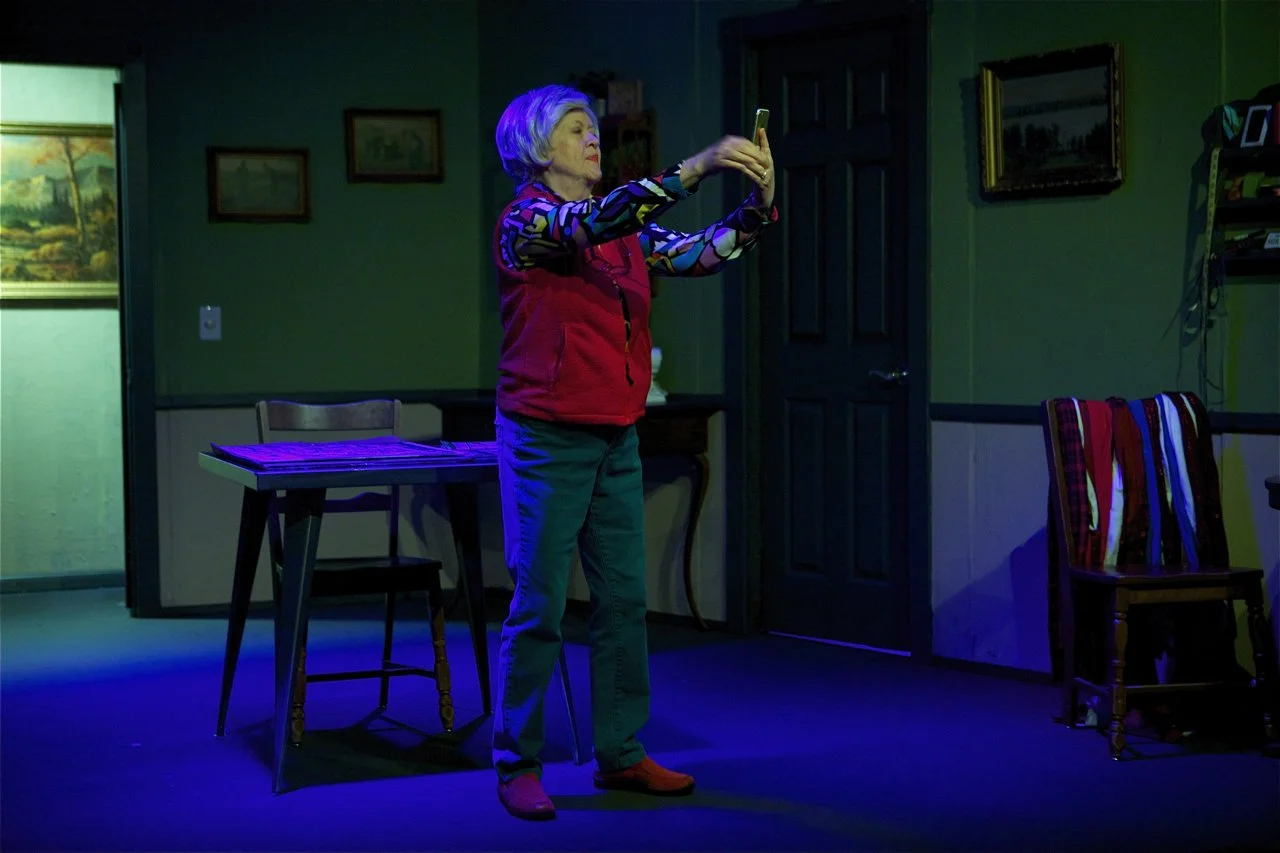
From a design standpoint, the production continues to support the storytelling effectively. Elizabeth Shipman’s costumes are well suited to both character and setting, with particular attention given to June’s knitted ensemble, which adds a layer of specificity and texture. The sound design, executed by Craig Marshall, finds a strong balance between the volume of the effects and the actors on stage, with moments of rain and thunder adding atmosphere without overwhelming the dialogue. The lighting design, also supported through Craig’s technical direction, does particularly nice work in establishing a world in distress, as the waters rise against the retirement home, using flashes and shifts to reinforce both the storm outside and the urgency building within as the women begin to scheme together in search of a way out. These elements work together cohesively to support the stakes of the story.
There are moments where the vocal work could be more unified, as accents occasionally feel inconsistent across the ensemble, at times pulling focus away from the personalities of the characters. It’s a minor distraction, but one that stands out in a production so heavily reliant on character and dialogue.
As the play moves into its second act, the structure allows each performer the opportunity to deepen their character through moments that feel both expositional and organic. The act takes on the sense of a reconvening, where past relationships and personal histories come into clearer focus, particularly in the evolving dynamic between May and June, whose differences form one of the emotional cores of the piece.
Under Renée’s direction, Silver Lining balances humor with introspection, allowing its characters to be both entertaining and revealing. The ensemble’s collective strength ultimately defines the production, creating a world that feels authentic and grounded in shared experience.
Phoenix Theatre’s latest offering, Silver Lining by Sandi Toksvig, is less about any single moment and more about the accumulation of them—small interactions, shared histories, and the ways people continue to grow and respond to one another, no matter where they find themselves. It’s a thoughtful, ensemble-driven production that finds its strength in the interplay of its cast and the humanity at its core.
The Phoenix Theatre production of Silver Lining runs on stage in Edmonds through April 19. For more information, including ticket availability and sales, visit https://www.tptedmonds.org/.
Photo credit: James Sipes