
Stage Review - The Prince (Screaming Butterflies Theatre)
Stage Review – The Prince
Presented By: Screaming Butterflies Theatre – Tacoma, WA
Show Run: September 10 – September 27, 2026
Date Reviewed: September 26, 2026
Run Time: 2 hours and 25 minutes (inclusive of a 10-minute intermission)
Reviewed by: Anna Tatelman
It’s a rare treat to see a regional premiere of a new work. It’s even more thrilling to see that work produced by a theatre company that deeply understands the beating heart of this new play and isn’t afraid to tackle all its nuances, theatrical risks, and emotions. Screaming Butterflies Theatre’s recent northwest premiere of The Prince offered all this and more as a theatrical experience while making the most of its limited budget.
Based in Tacoma, Screaming Butterflies Theatre is a small performing arts company dedicated to showcasing fresh takes on canonical tales. They strive to reimagine or recontextualize familiar stories or myths through a feminist and/or social justice lens. Screaming Butterflies also wants to be deeply anchored in both their local Tacoma and broader regional community, uplifting local artists across disciplines. These values are embodied in their choice to produce Abigail Thorn’s The Prince, which could variously be described as a loose adaptation with a gender-equitable perspective of Waiting for Godot, Henry IV part I, or perhaps even the Into The Spiderverse films.
The Prince follows Jen and Sam, two transwomen who find themselves trapped inside a metaverse of canonical plays, mostly Shakespeare’s Henry IV part I. Sam, who has been stuck here for some time, serves as Jen’s guide in navigating the various plays without drawing unnecessary attention to herself as anything more than bit characters. Sam claims that sticking to the confines of the play’s text as much as possible will allow them to eventually find and access a door into another dimension – hopefully their own – and escape. Despite Jen’s bafflement at both their predicament and the prosaic density of The Bard, she finds herself becoming emotionally involved in the lives of several of the other play’s characters. Although Sam insists the other characters are merely “antibodies” – unreal outside of the metaverse – Jen begins to suspect this is false for several others, especially as she watches the character of Harry Hotspur wrestle with gender dysphoria.
Suffice to say, this is a wonderfully dense script with complex characters charting situations both logistically and emotionally nuanced, intricate worlds built upon worlds, and at least three interpretations of what’s literally happening at any given moment. In the wrong hands, all these harmonious elements could become a plain mess, but director Jen Tidwell controls the chaos with both care and a sense of fun. There are multiple scenes, for instance, where audiences are asked to keep track simultaneously of a scene as written by Shakespeare, Jen and Sam’s argument about how to interact with the possibly realcharacters, and how Jen’s interactions with the characters change the trajectory of their pre-determined play scenes. Tidwell knows when to pull the audience’s focus to just one of these elements and when to let us experience the chaos that Jen feels as she tries to strike the balance between following Sam’s rules and following her instincts.
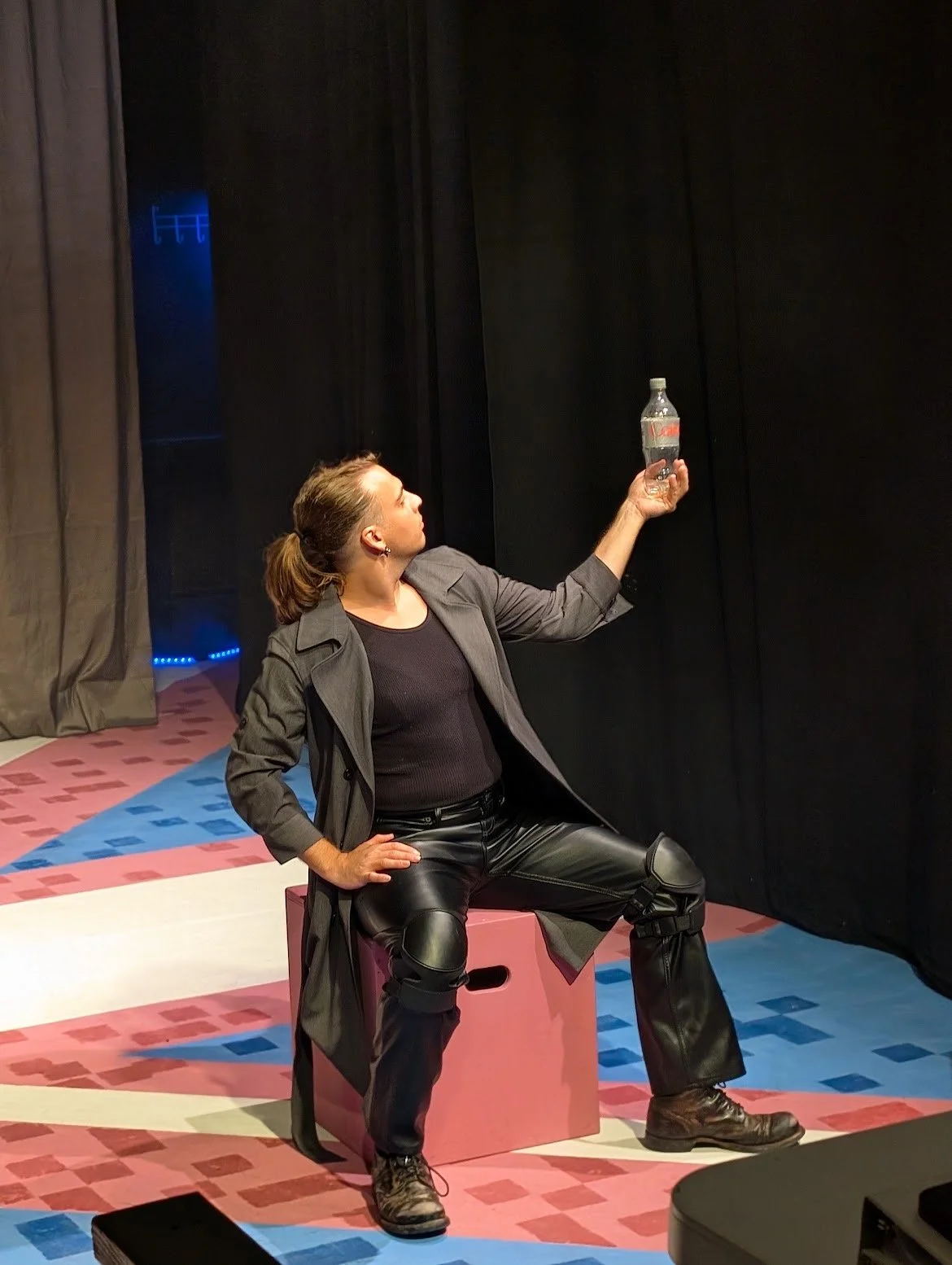
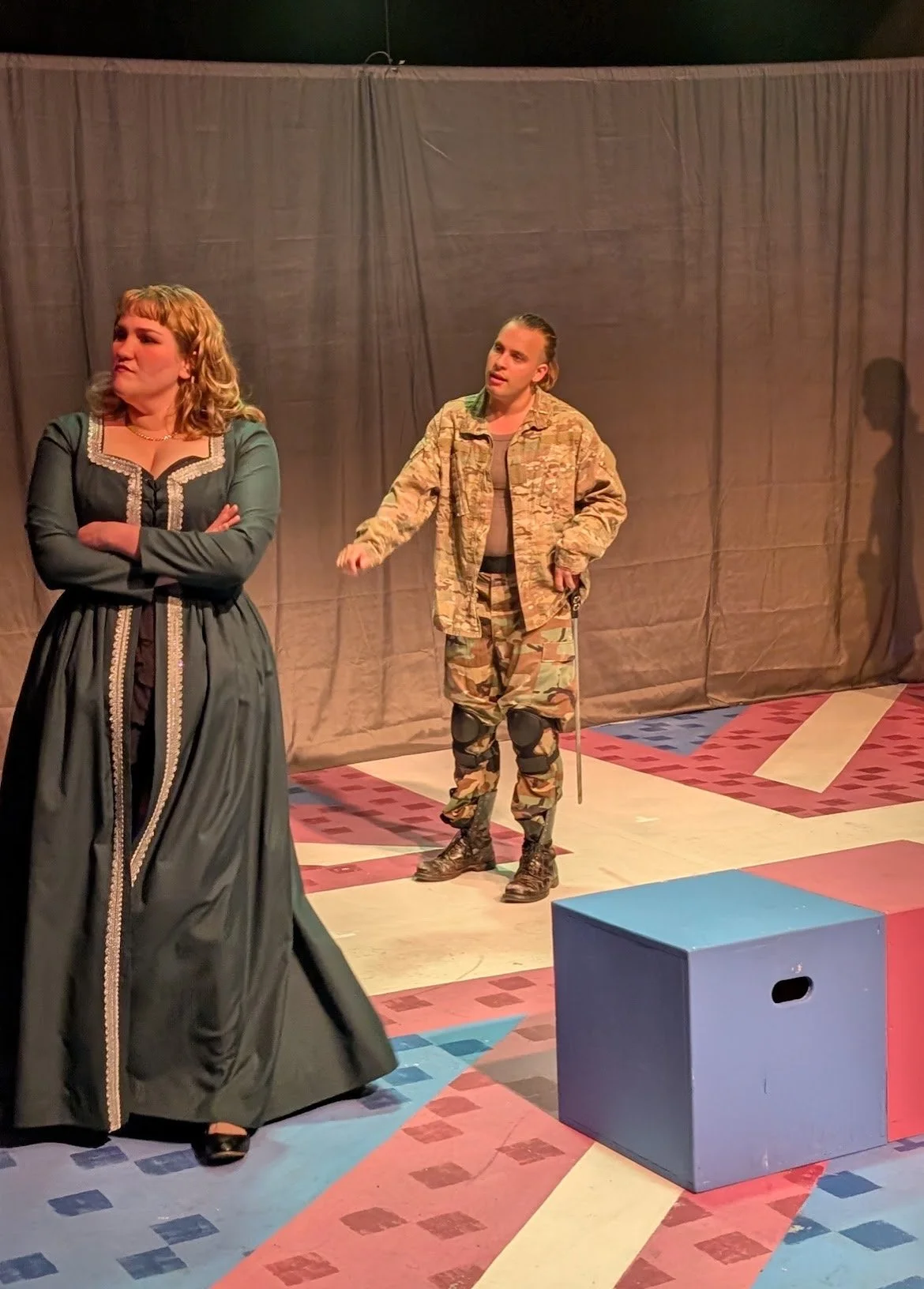
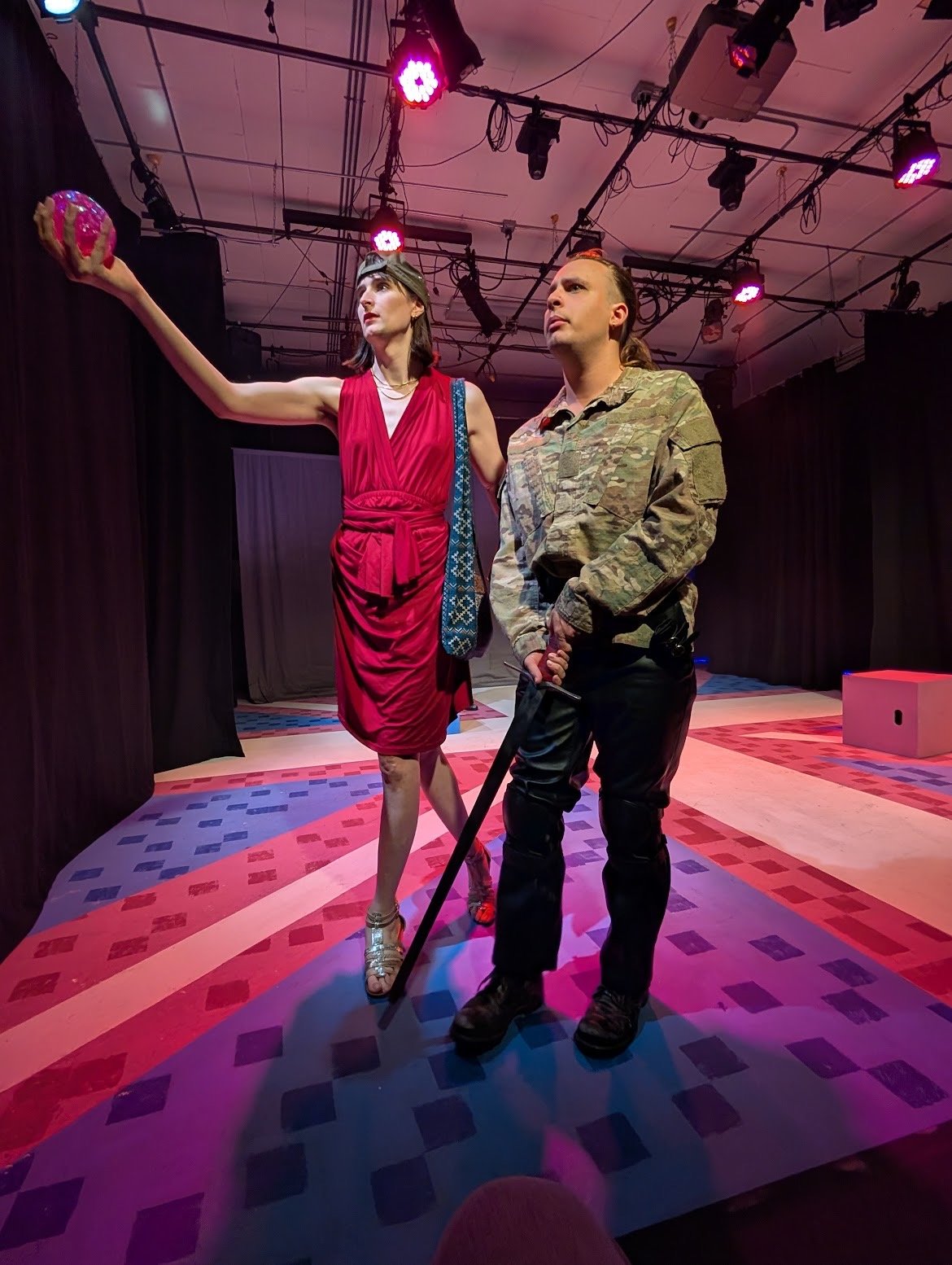
One of the most exciting and novel parts about this production is that it offers three dynamic starring roles to actors who are transwomen. Sophie J. Sen, who plays Harry Hotspur, depicts with a woman who not only firmly believes she’s a nobleman and a soldier, but doesn’t have the language to articulate herintense gender dysphoria. Sen artfully depicts this internal conflict through a demeanor that can change instantly from wrathful, lashing out at others to avoid her own introspection, to confused and heartbroken. Her body language captures what words can’t, such as the way she simply touches her sword handle in scenes when she’s being cruel to those who want to help, as if remind herself of her prescribed role as a man in a man’s world.
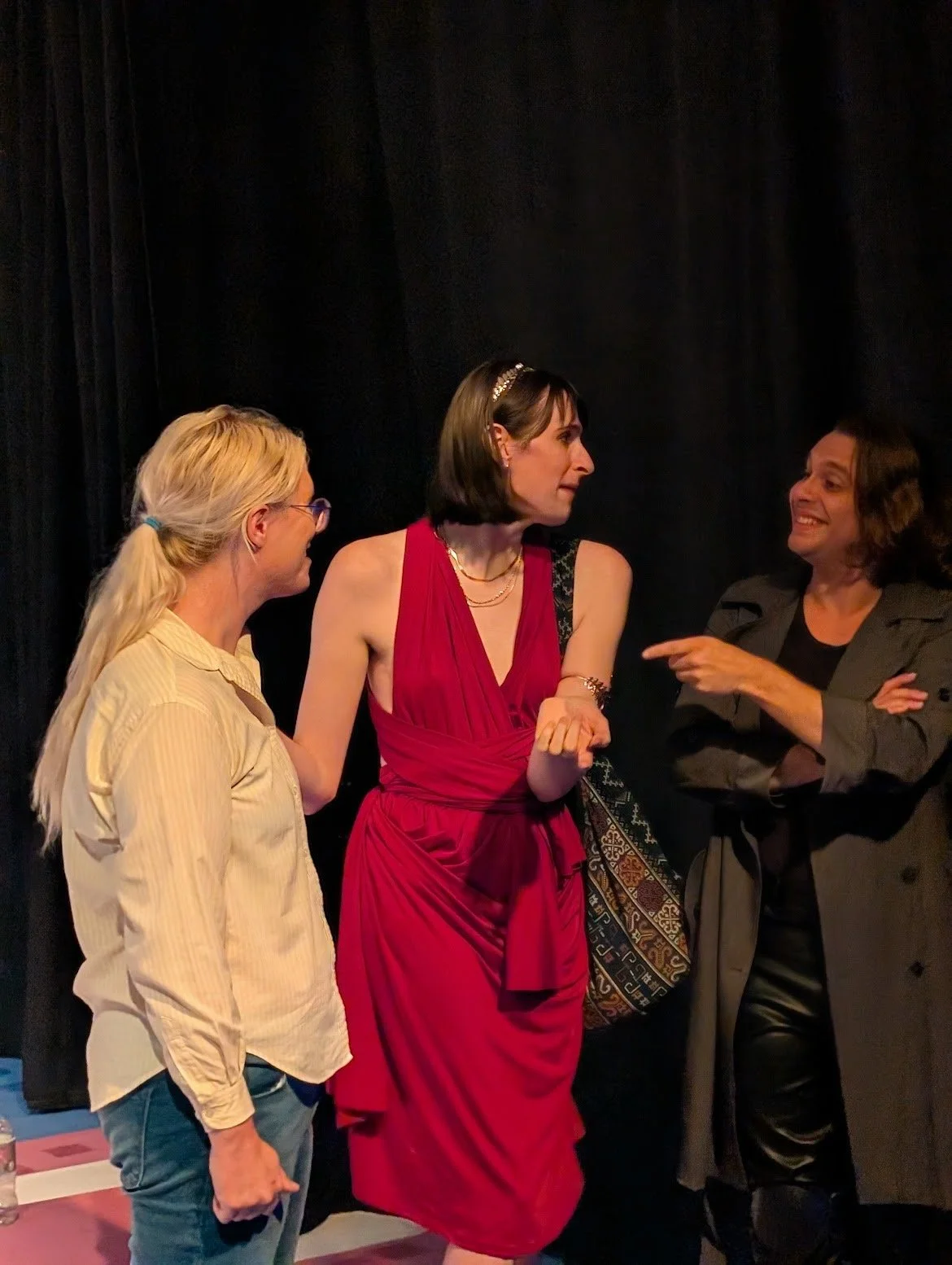
By contrast, Jen (portrayed by Marnie Wingett), who is awarethat she’s not really a character in a play, struggles to speak and act in a Shakespearean fashion, constantly counting syllables on her fingers and breaking out into anachronistic exclamations (a personal favorite: “I didn’t understand a fucking word of that”). Wingett earns the biggest laughs throughout the evening with her impeccable physical and verbal comedic timing. But Wingett never loses sight of the more emotional undercurrent that drives Jen to try and help the other characters, even when it risks upsetting the metaverse and (in Sam’s eyes) jeopardizing their escape home. Opposite Wingett as the metaverse guide Sam is Jamie Ava Brokaw, who believably captures the moral complexities of her character. Brokaw doesn’t shy from depicting her character’s more practical perspective and offers instead an understandable portrait of someone who wants to help those (i.e. Jen and herself) she believes capable of helping, but doesn’t want to risk being trapped for the rest of her life.
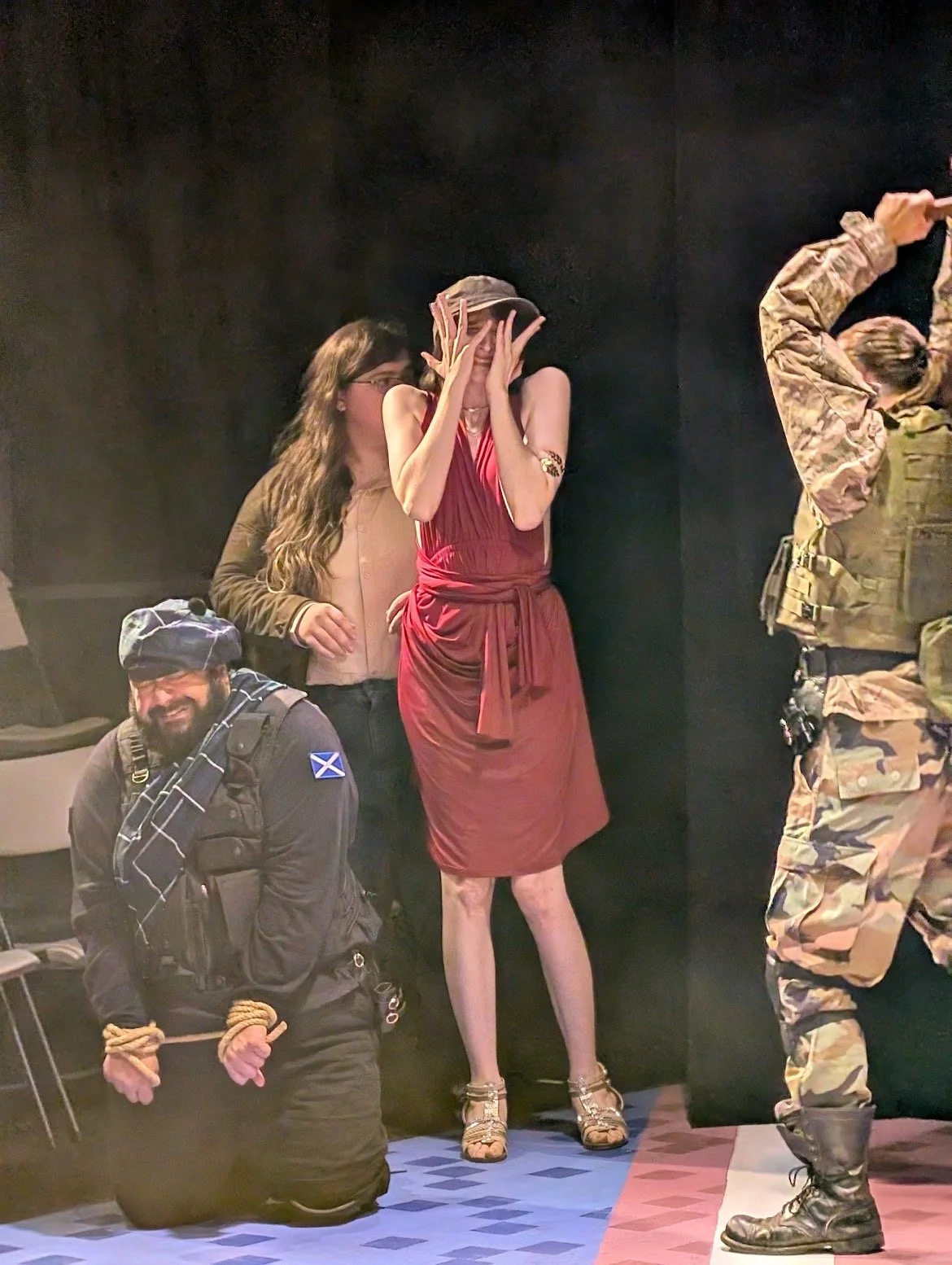
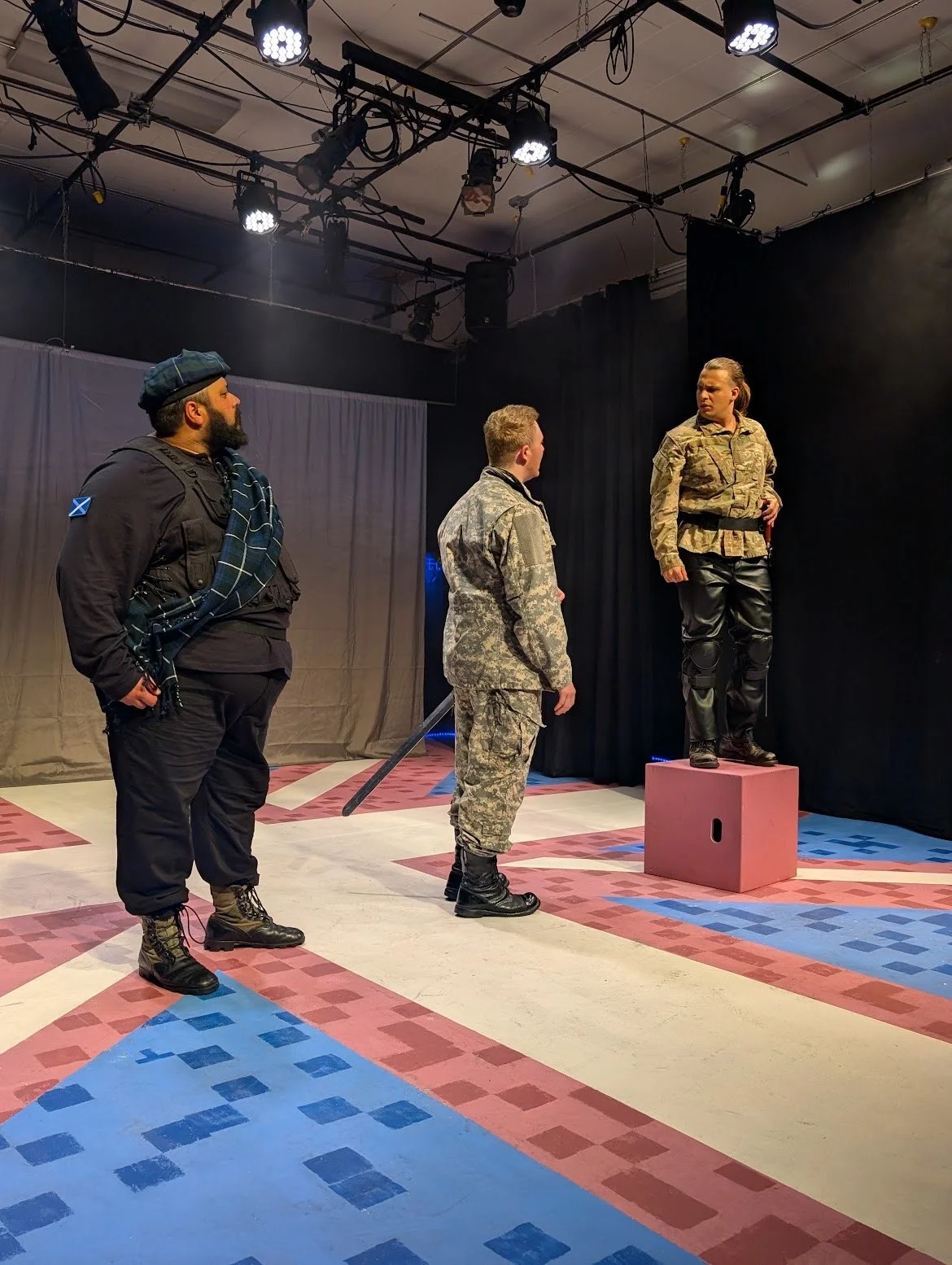
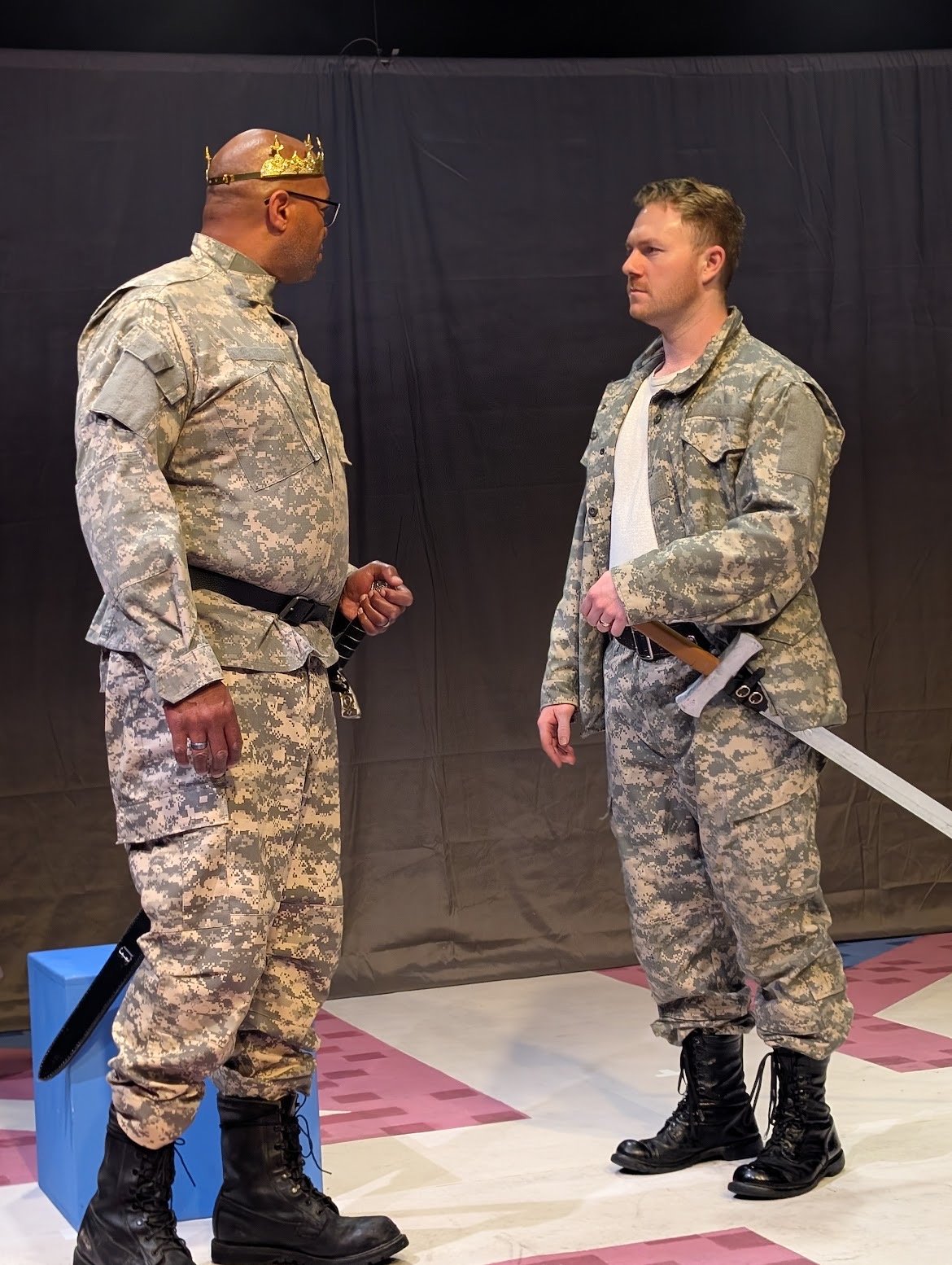
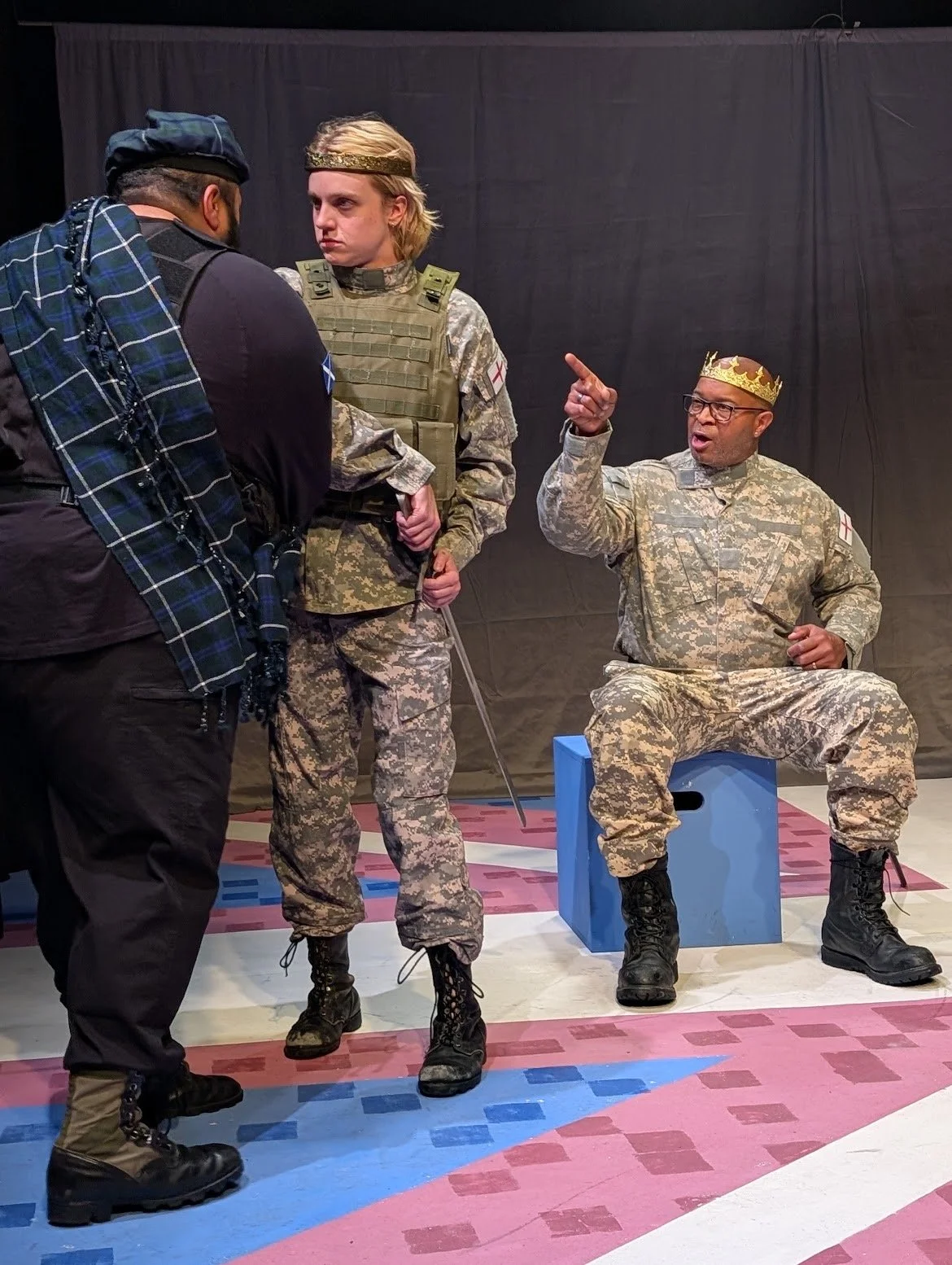
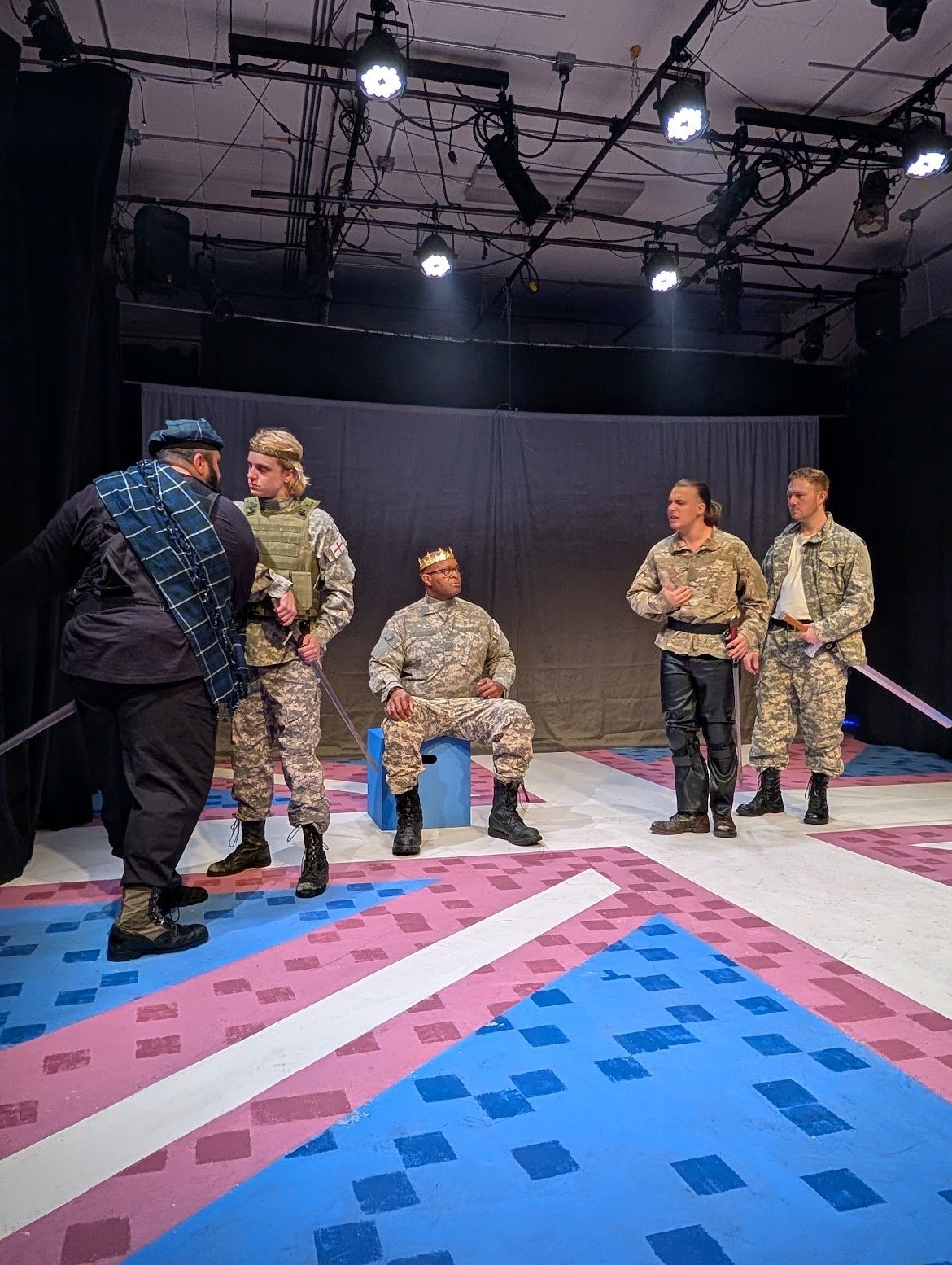
With an ensemble of eight, this is a larger cast for a small-scale production. While I felt that some of the ensemble struggled to connect with the Shakespearean portions of the text, all the performers understood how to make the most of those moments when their characters wrestle in real-time with complicated ideas about identity, gender, prescribed societal roles, and belonging. It’s both exciting and emotionally gripping to watch their preconceived views unravel and spin into something new, especially in contrast to their more buttoned up Shakespearean personas. Sage Stevens, for example, is a delight as a Shakespearean woman acquiring the language for feminism for the first time as she strives to be more than just a dutiful wife, and Lux Greene delivers a monologue in which they do hilarious parodies of the people in their life who they constantly disappoint, earning laughs until the speech culminates in quiet heartbreak. Rounding out the ensemble is Russell Campbell, who gives dignified portrayals of multiple kings struggling with interpersonal connections; Sameer Arshad, who always stays present and reactive even in scenes when he’s not the focus, and delivers all his lines with impeccable accents; and Liam Sharpe, who also offers great comic relief, such as when he dozes off in the background as Polonius.
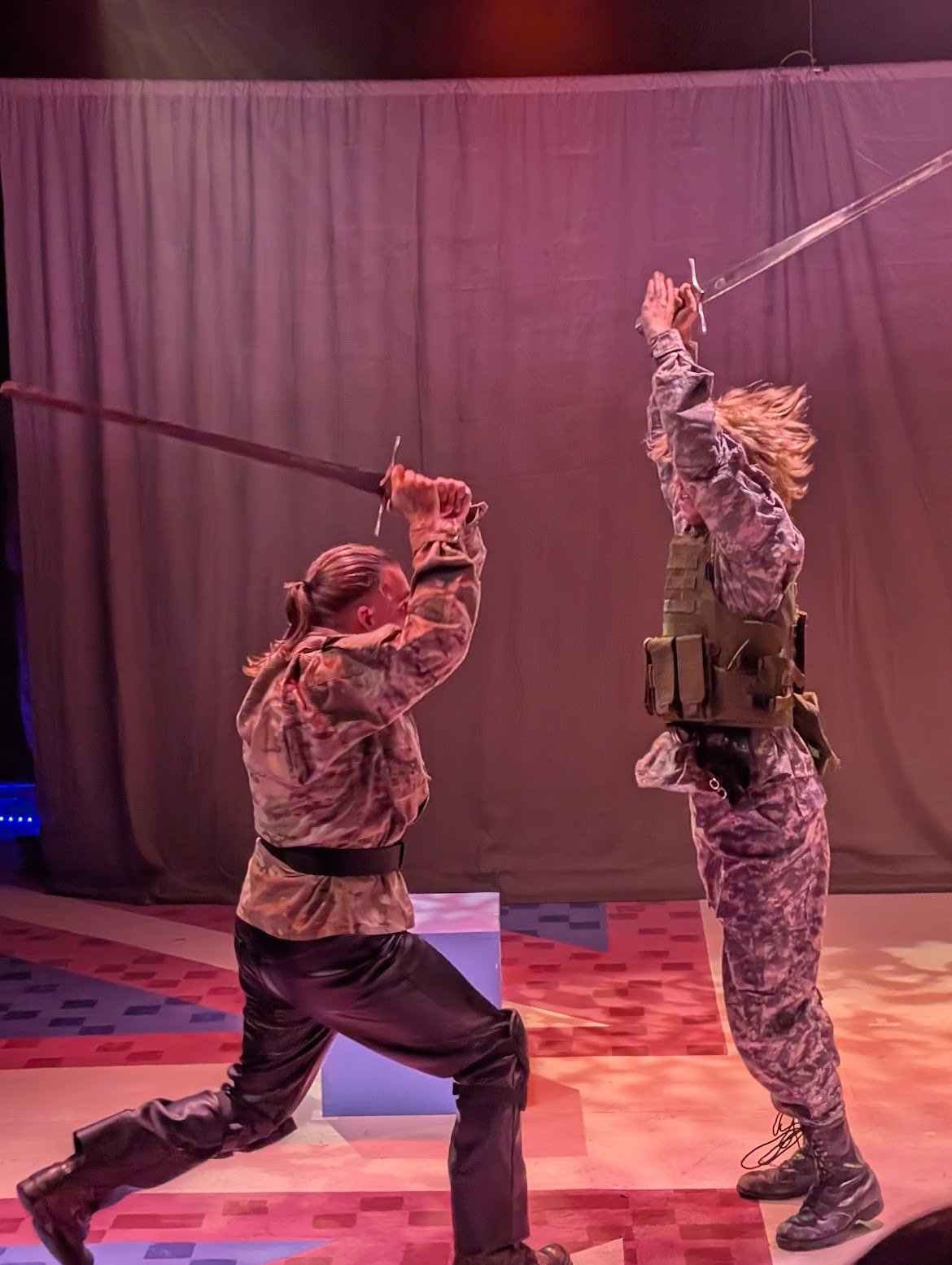
When it comes to production design, Screaming Butterflies does an impressive amount with limited resources. Jen Tidwell’s multiple scenes of fight choreography are engaging and period-esque; they feel both safe for the performers and rich with dynamic movement. The floor is painted with a Union Jack flag, which sets the tone for the exploration of what that flag represents: war, colonialist expansion, and how all those relate to traditional ideas of masculinity (carpentry by Dana Trummert). While most of the focus is on the play’s language, during the moments when the characters become momentarily disjointed from the metaverse, the stage fills with ambient, echoing, eerie noises (soundscape composer Elliot Turner).
What are our roles supposed to be in life within the framing of the gender binary? Why do we perform those roles and how can we move beyond them? Is performance a means of escaping the roles we’ve been put into, or is performance itself a trap? Screaming Butterflies Theatre’s latest production asks these and many more thoughtful, urgent questions about identity, community, and performance, both on stage and in reality. Their rendition of The Prince is a philosophically urgent show that – thanks to direction that choregraphs its chaos, actors who inhabit nuanced roles, and exciting production design – also manages to be one heck of a nonstop fun ride.
The Prince, which was presented by Screaming ButterfliesTheatre and ran on stage at Dukesbay Theatre, closed on September 27, but if you’d like more information on the theatre company and their upcoming shows, visit https://www.screamingbutterfliestheatre.org.
Photo credit: Jordan Hughes