
Stage Review - Woman Before a Glass (SecondStory Rep)
Stage Review - Woman Before a Glass
Presented By: SecondStory Repertory - Redmond, WA
Show Run: August 21 - September 06, 2026
Date Reviewed: Friday, August 21, 2026 (Opening Night)
Run Time: 75 Minutes (including at 15-minute intermission)
Reviewed by: Greg Heilman
There may be no better measure of a biographical play’s success than whether its subject follows you home. Before walking into SecondStory Repertory’s production of Woman Before a Glass, I knew virtually nothing about Peggy Guggenheim. By the time I left, I wanted to know everything. My wife and I spent much of the drive home talking about Peggy, the Guggenheim family, the stories we had just heard, and the remarkable life behind them. The play and, especially, Pat Haines-Ainsworth’s captivating portrayal had turned someone I knew only as a famous surname into someone I wanted to understand.
On stage at SecondStory Rep at Redmond Town Center through September 6, Woman Before a Glass is Lanie Robertson’s 70-minute, one-woman exploration of Peggy Guggenheim, the famed art collector, patron, and champion of the avant-garde. Directed by Doug Knoop, the play finds an aging Peggy looking back over a life that intersected with some of the most consequential artists and personalities of the 20th century, while revealing a woman whose extraordinary public life was accompanied by plenty of private pain.
Robertson avoids making the evening feel like a chronological lecture. Instead, Peggy talks directly to the audience, like they are all long lost friends stopping by for a martini and a story. In the first of the play’s three scenes, Peggy recounts her life and relationships while her daughter is in another room preparing for her first one-woman show. That relationship continues throughout the evening. The audience doesn’t simply watch Peggy Guggenheim recount her biography, they are the people she has chosen to tell it to. It gives the production an intimacy that proves essential as her recollections move from humorous and occasionally scandalous to deeply painful.
There is an adjustment period, though. Reading a book sometimes requires a few pages before you settle into an author’s cadence and the world on the page really begins to draw you in. Woman Before a Glass feels much the same. Robertson gives Peggy a distinctive rhythm, and it takes a little time to find your footing within it. Once you do, the stories begin flowing naturally into one another, and the well-written transitions allow the production to become increasingly engrossing.
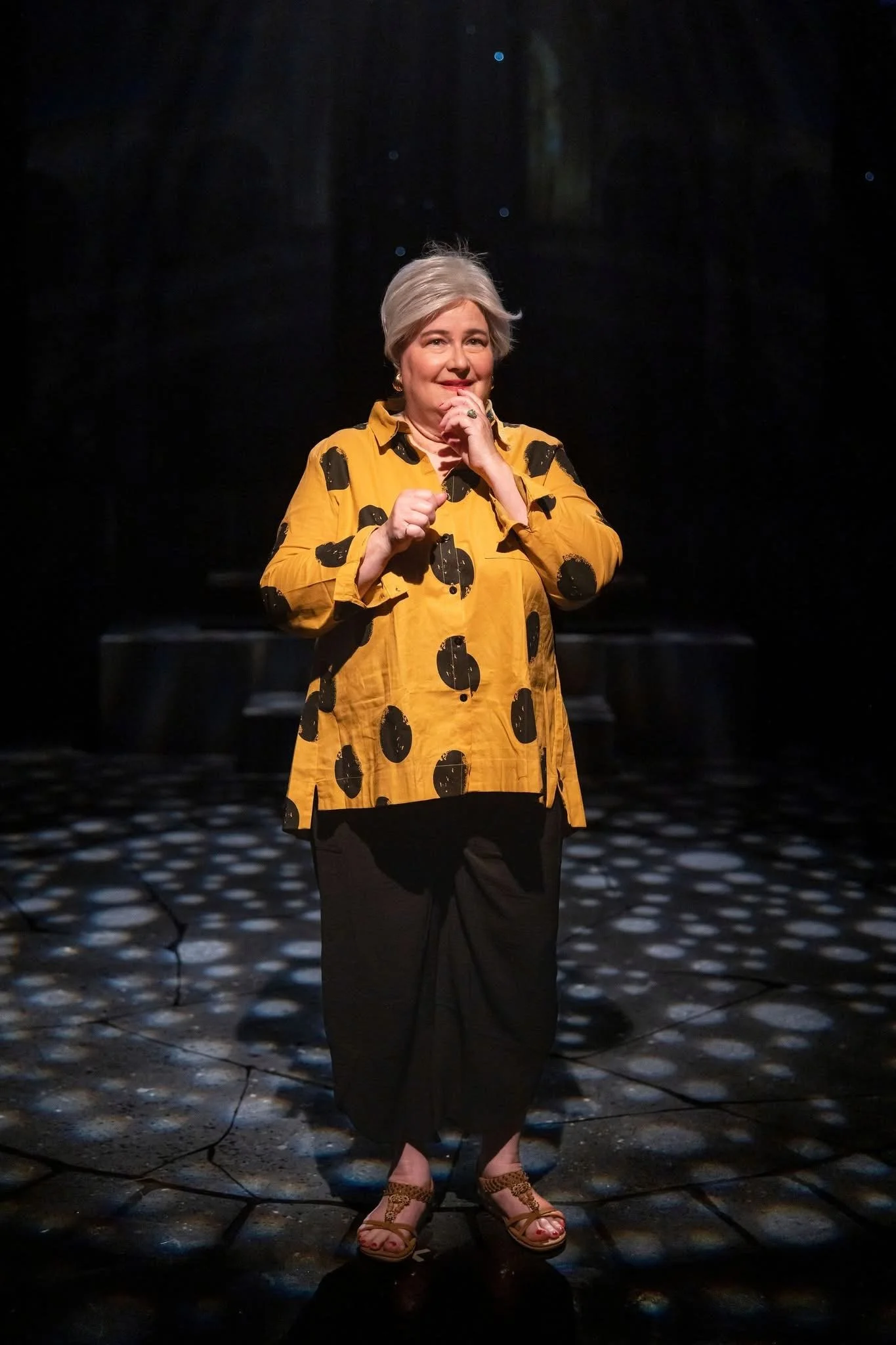
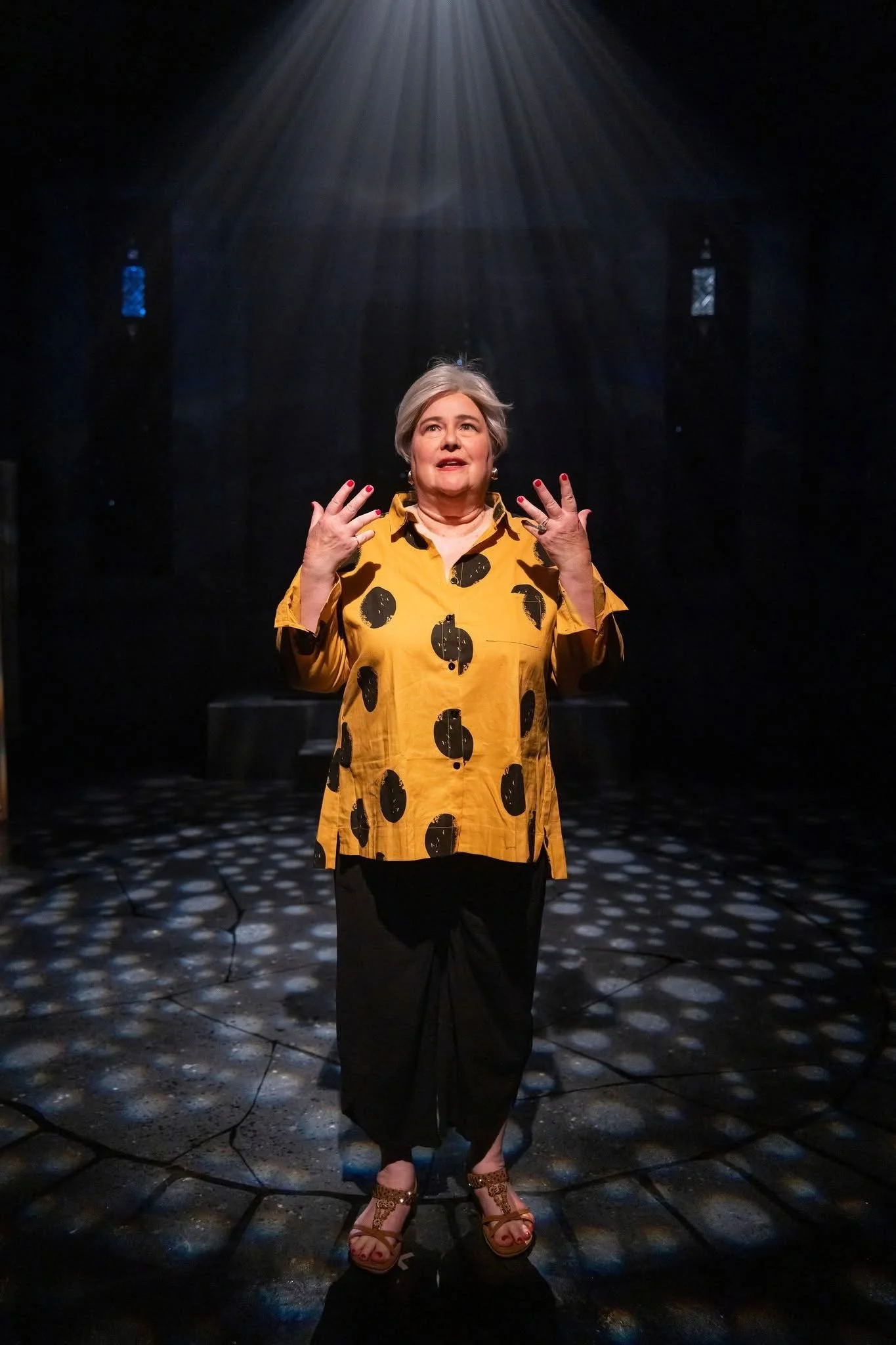
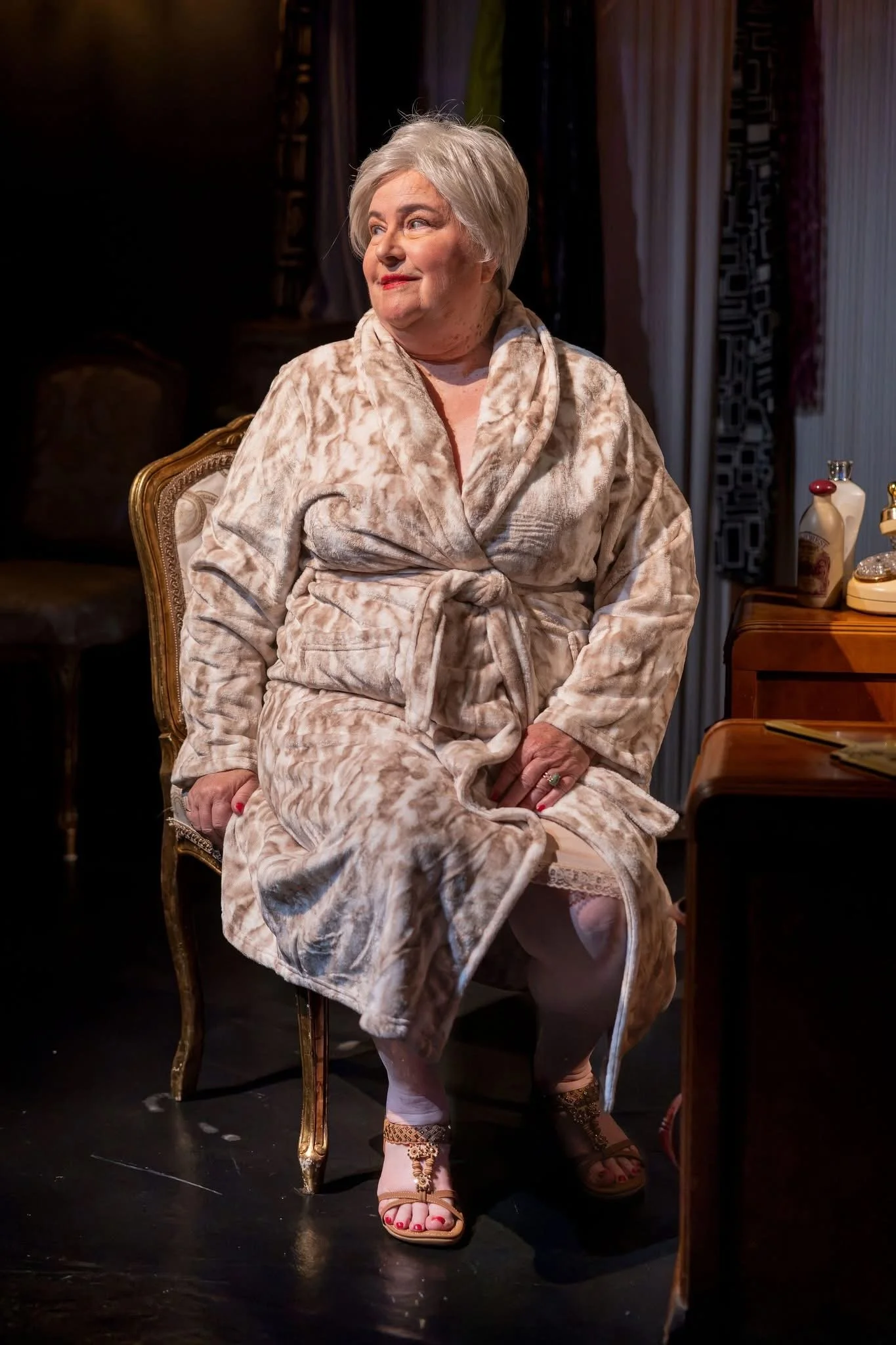
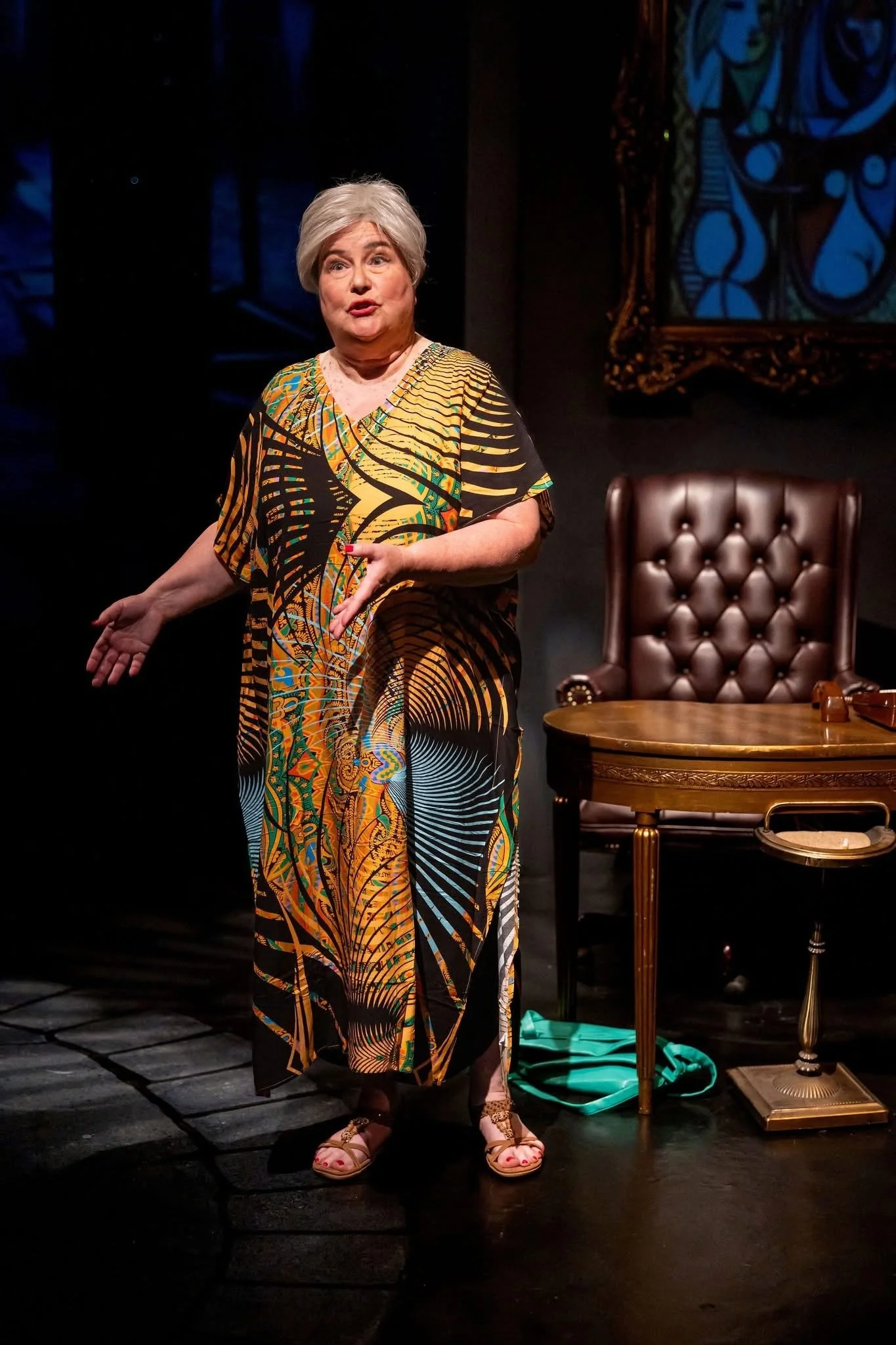
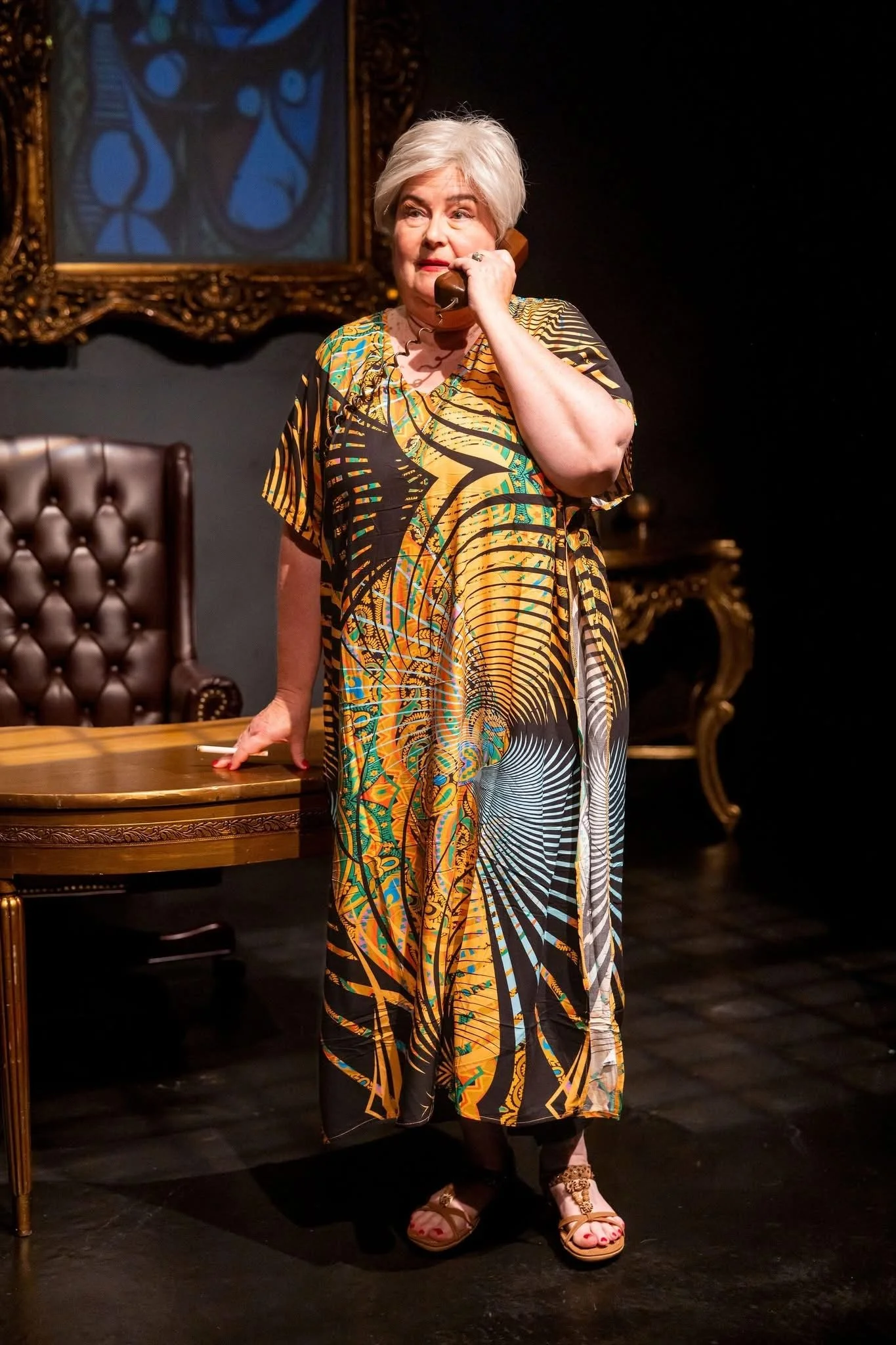
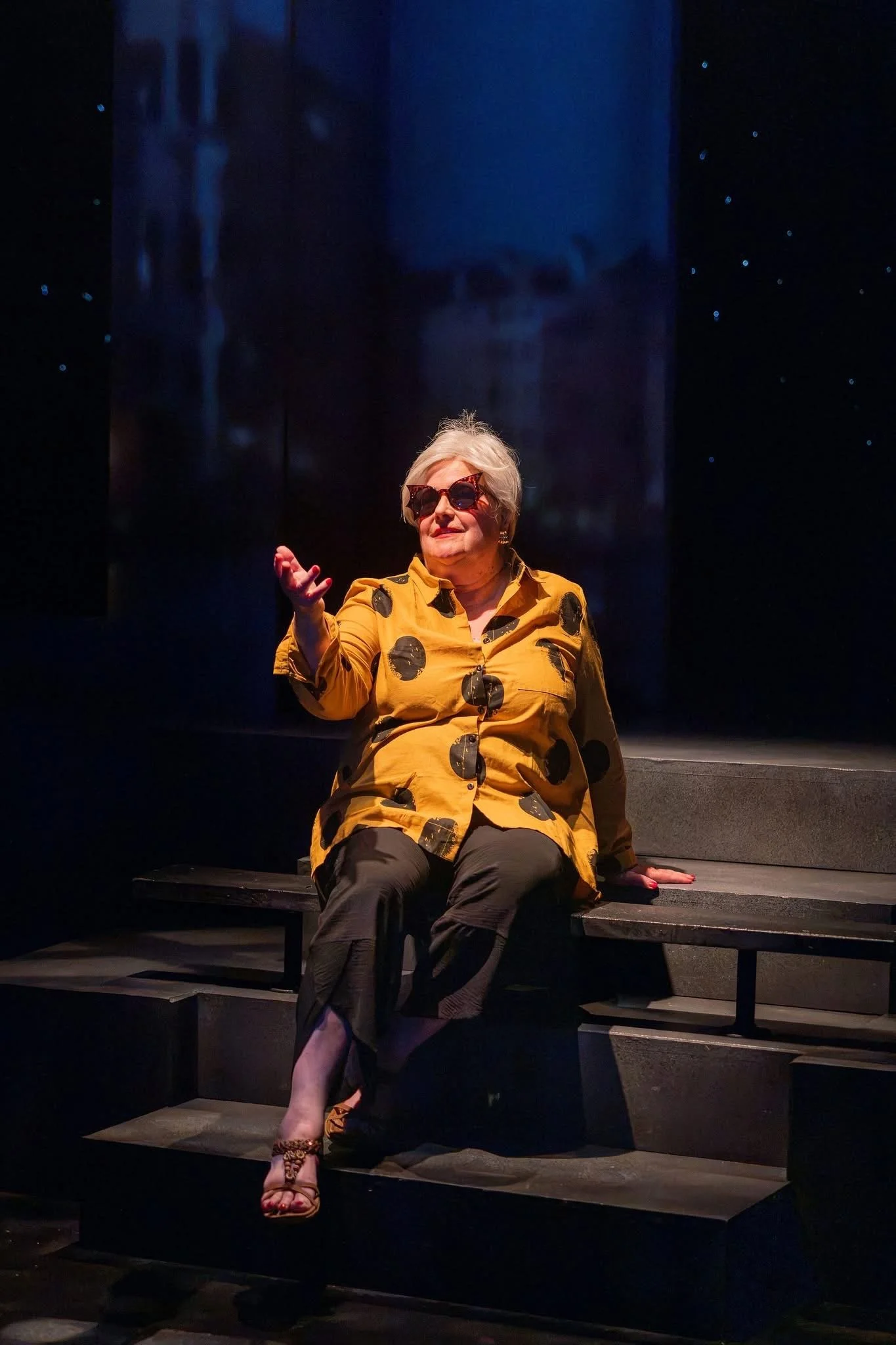
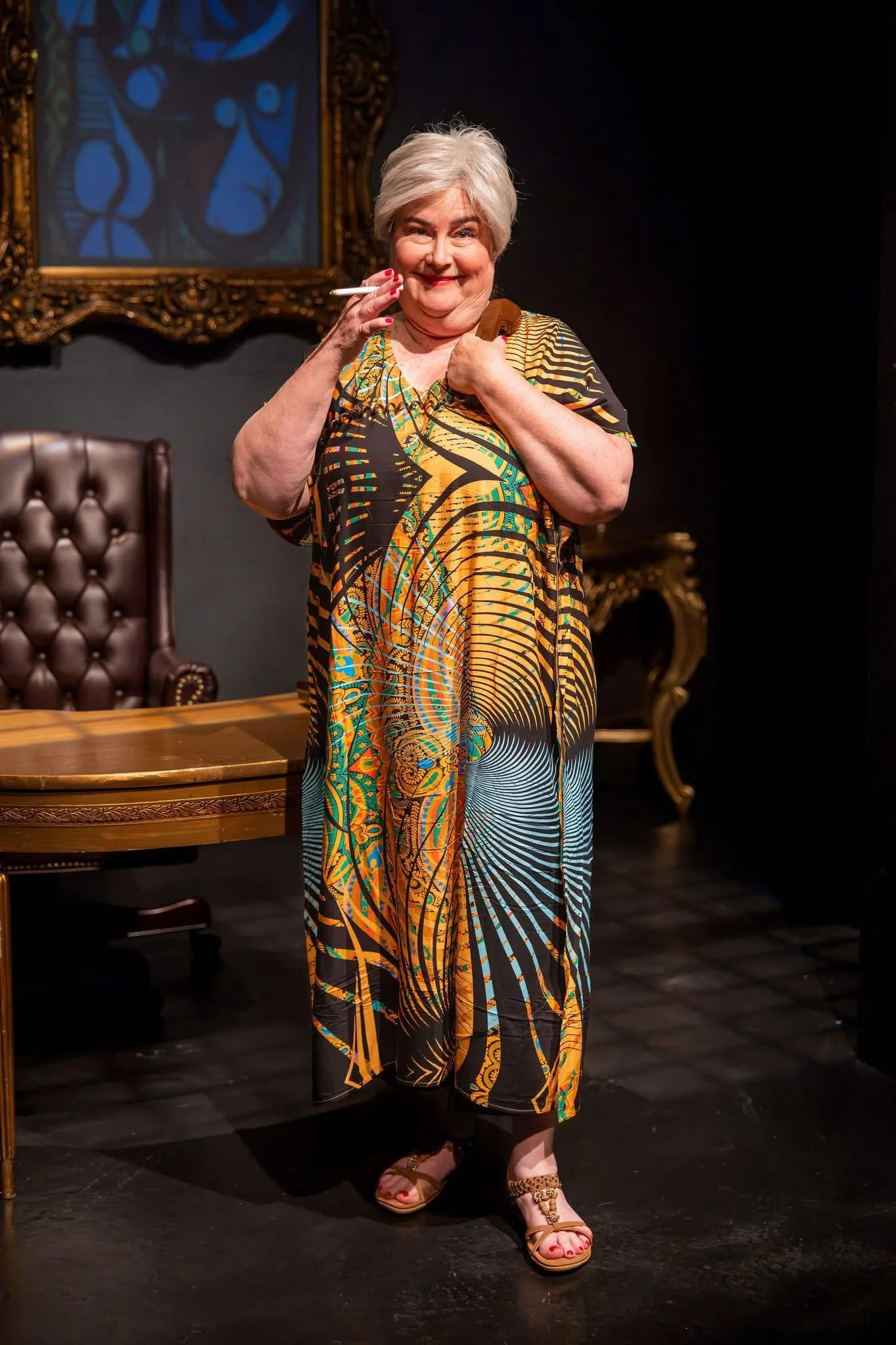
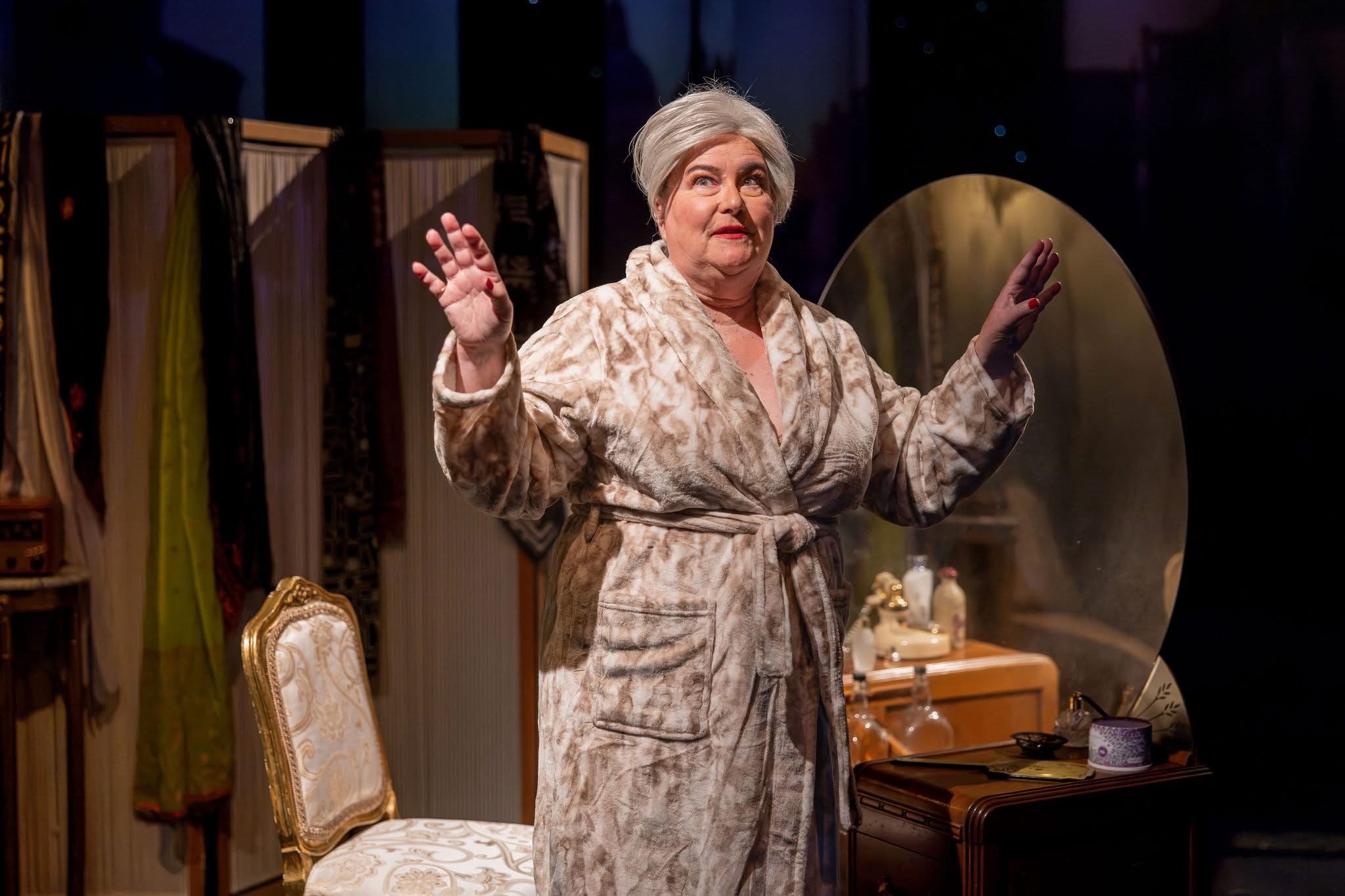
At the center of everything is Pat, who has quite an emotional landscape to traverse. Peggy can be angry one moment, resentful the next, then pensive, happy, funny, or wounded, and Pat navigates those changes like a seasoned traveler who knows every turn in the road. Importantly, she doesn’t sacrifice the conversational nature of the piece to get there. Even when Peggy launches into a tirade, Pat’s pacing and physical movement feel purposeful, allowing the emotion to build while maintaining the sense that this woman is telling a story rather than delivering a performance.
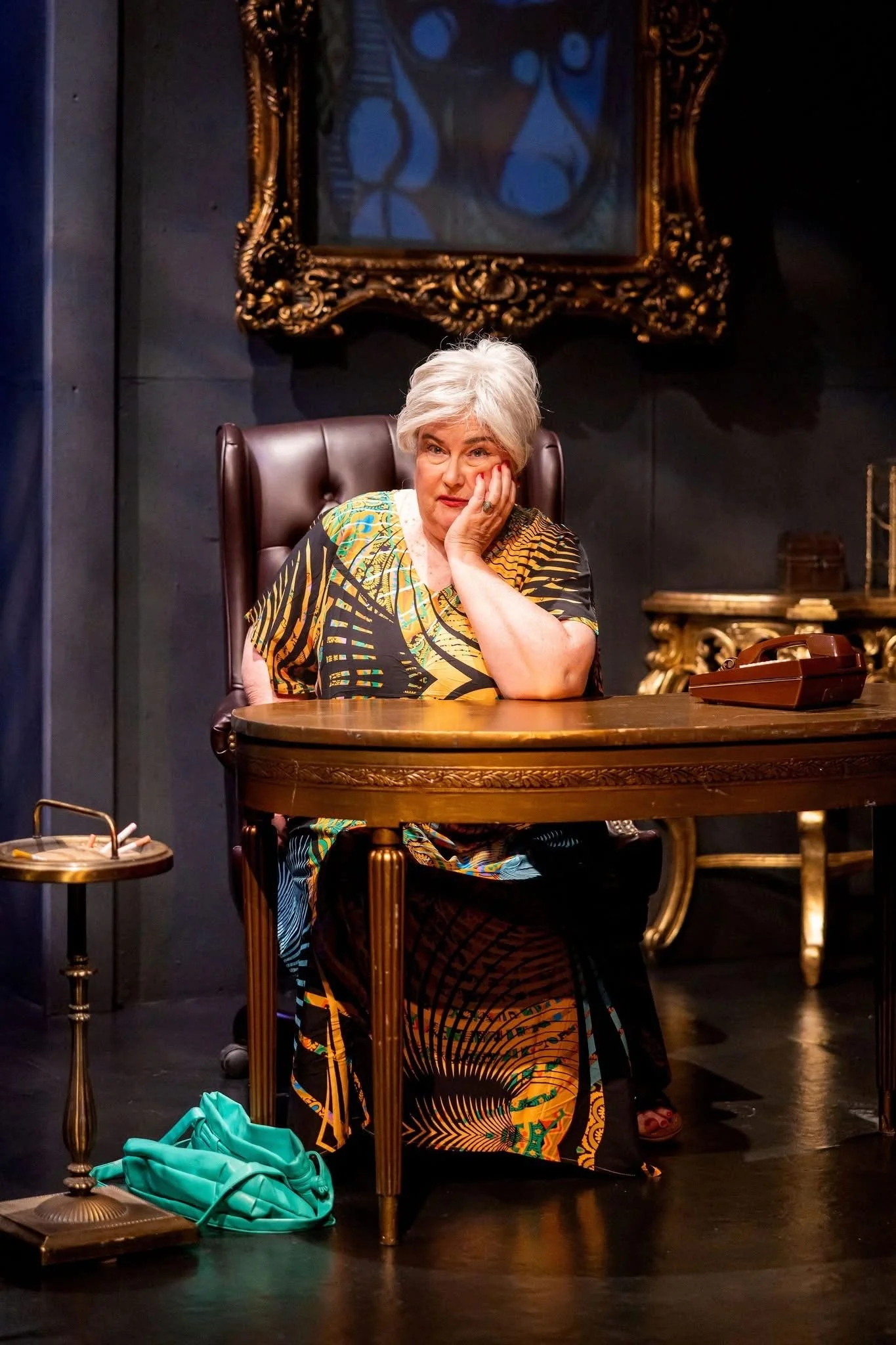
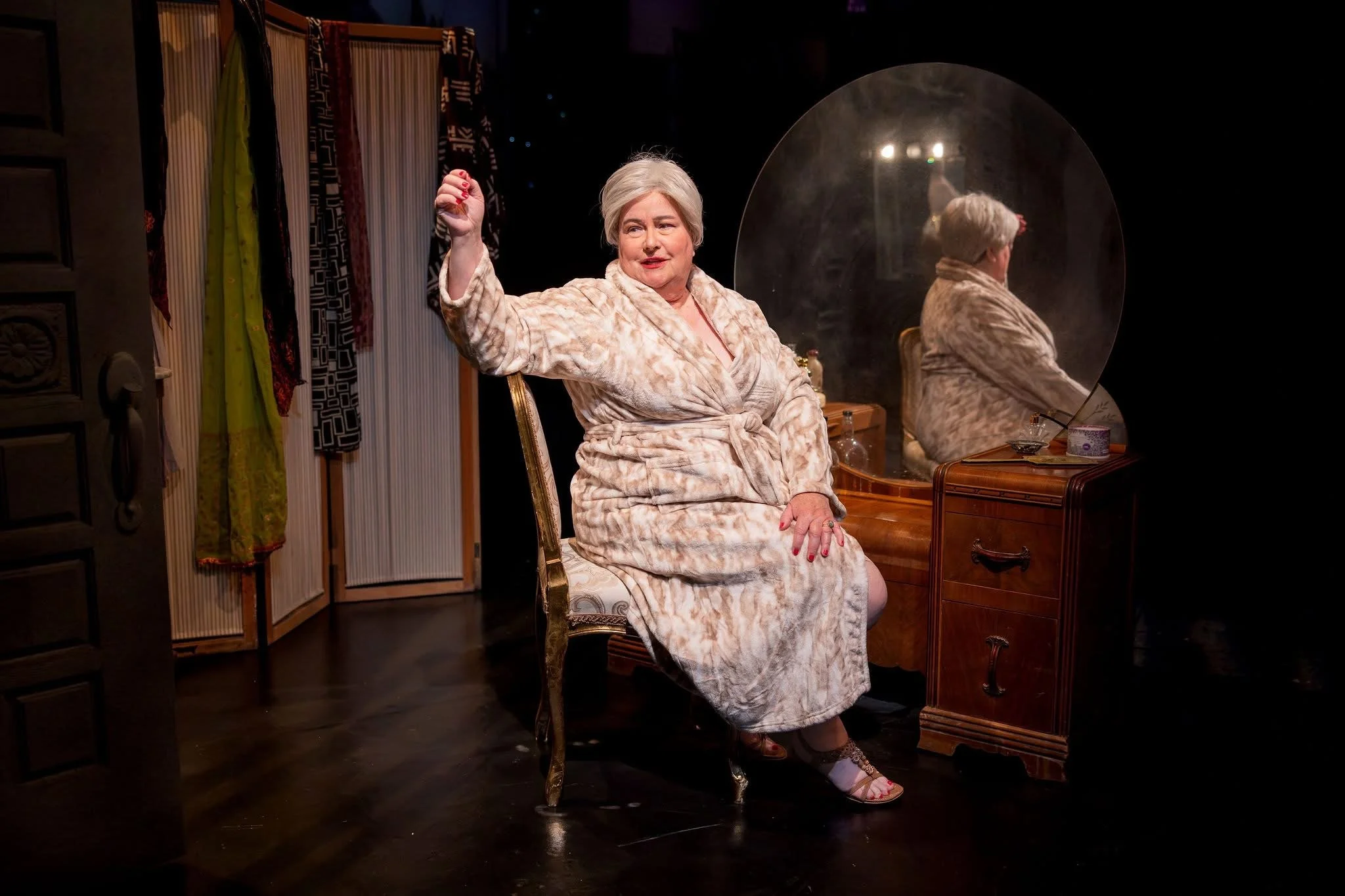
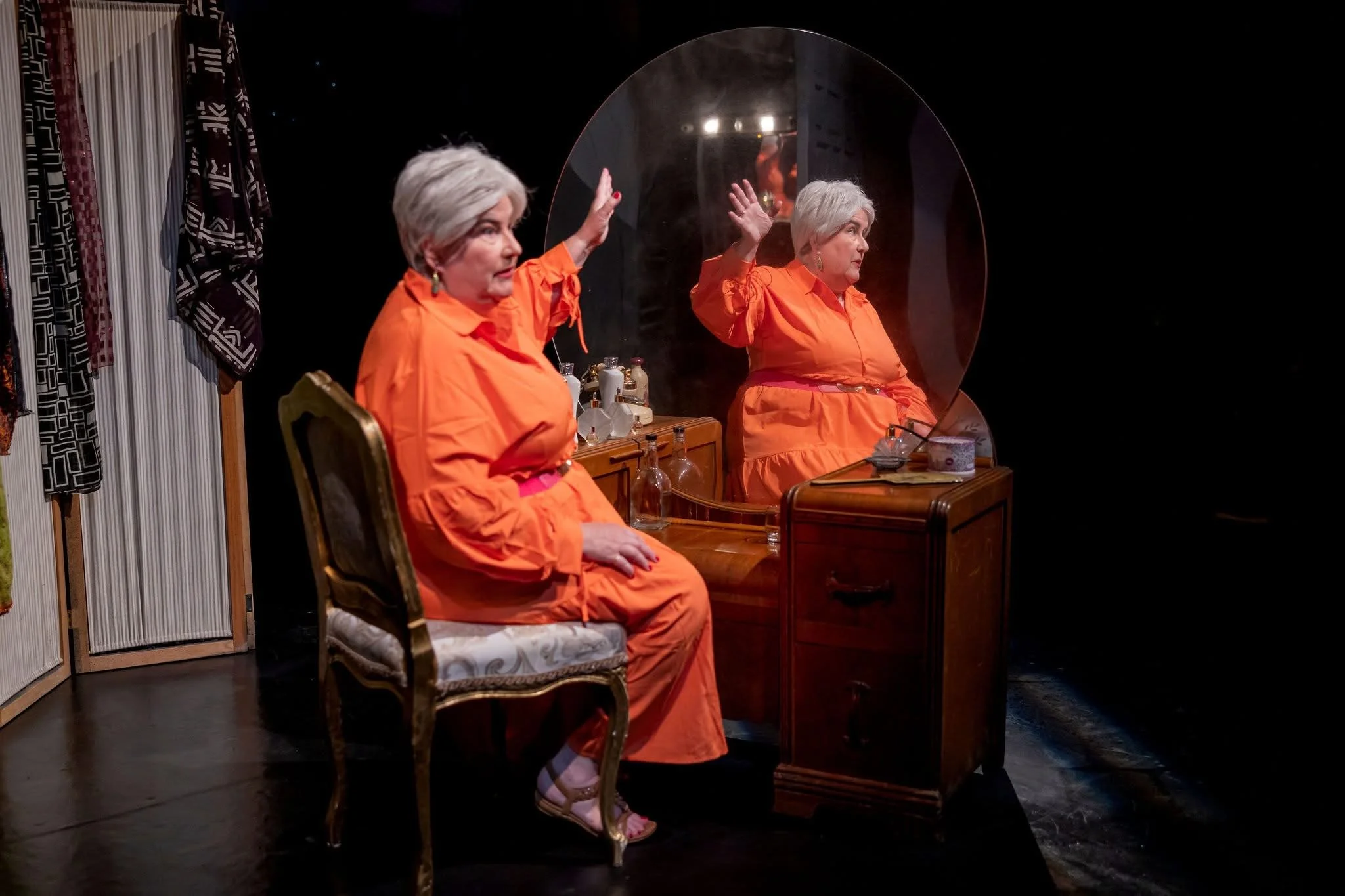
Her physical choices are equally thoughtful. Something as simple as the way Peggy puts herself into a chair or gets herself back out helps define the personality of the woman. When she paces, there is purpose behind it. When Peggy’s concern as a mother emerges, so does her pride in her daughter, with Pat allowing both emotions to exist simultaneously. These details accumulate over the course of the evening, giving the audience a Peggy who feels inhabited rather than impersonated. This extends to Peggy’s distinctive voice. Pat consistently maintains the manufactured Mid-Atlantic dialect associated with Hollywood and society’s upper echelon during the period, carrying it confidently from beginning to end. It becomes another piece of the character rather than an affectation layered on top of her, helping establish both Peggy’s place in society and the carefully cultivated persona she presents to the world.
Yet it’s when that persona cracks that Pat does some of her finest work. There is genuine sadness as Peggy recounts losing her father aboard the Titanic, including the story of him giving up his place on a lifeboat before the ship went down. But even that doesn’t compare to one of the evening’s lowest emotional points, when Peggy learns of her daughter’s death. Pat has already been asked to navigate an enormous range by then, but here the emotional breakdown feels startlingly natural. She doesn’t reach for the moment or overplay it. The grief simply seems to overwhelm Peggy, providing a glimpse beneath the practiced storyteller and society figure at the devastated mother underneath.
Doug’s direction understands that with only one performer on stage, variation becomes crucial. Peggy’s movements, the shifts between stories, and the changing visual environment keep a potentially static format alive, while still leaving Pat room to command the stage. Robertson’s transitions from one recollection to another are particularly effective, allowing memories to emerge with the associative quality of someone looking backward across an enormous and complicated life.
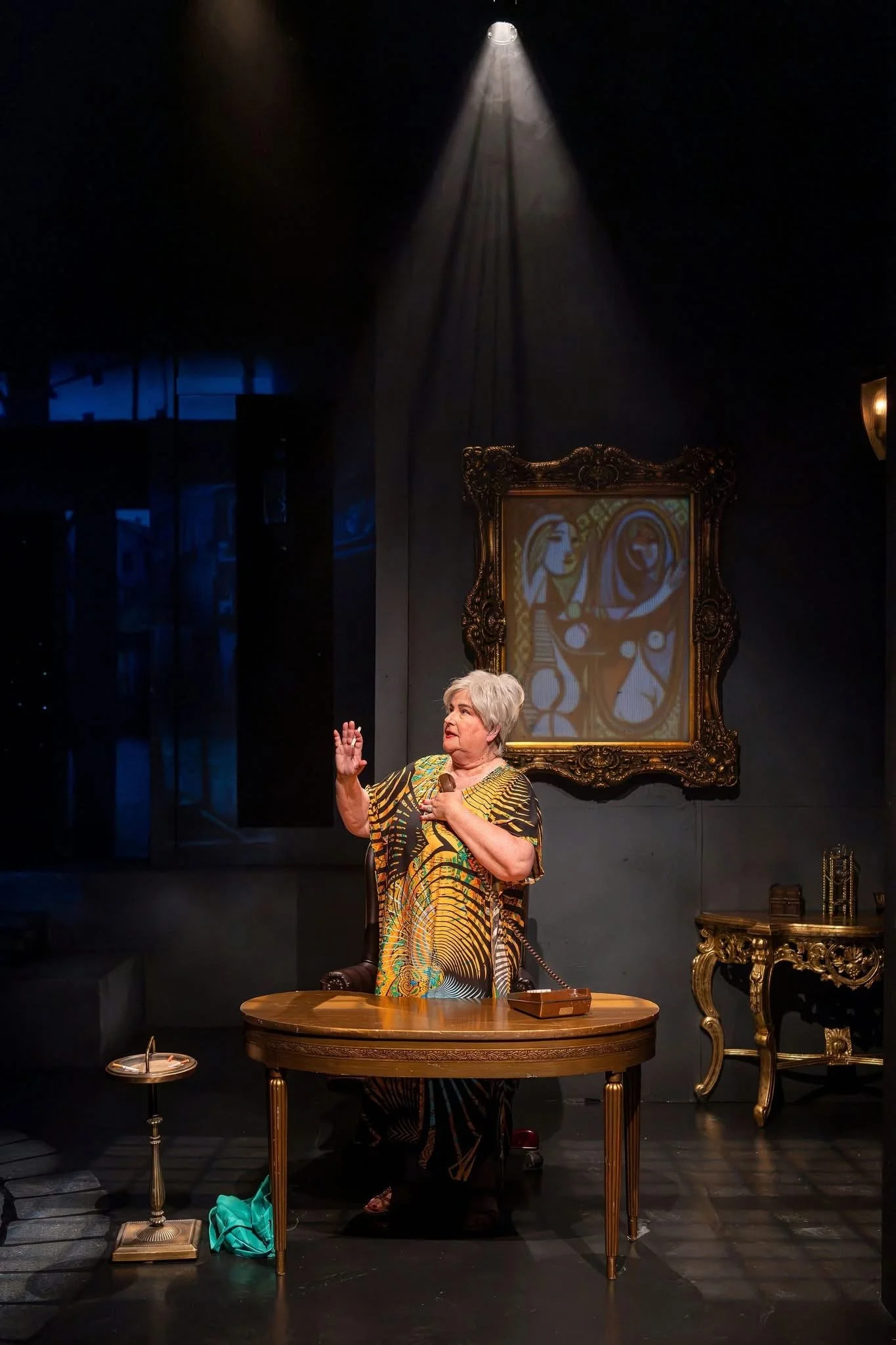
Production designer Mark Chenovick gives those memories a handsome physical and visual home. One side of the stage serves as a dressing area while the other provides a more formal sitting space, with stairs rising upstage toward what feels like a veranda. Behind it, a screen expands Peggy’s surroundings beyond the confines of the stage.
The projections are especially effective. Images of modern art between scenes quietly reinforce Peggy’s place in that world without competing with the woman telling the story, while other visual touches become more transportive. A scene on the water at sunset is particularly lovely, as is the projection work accompanying Peggy’s recollection of floating in a gondola. The production’s props are relatively restrained, functioning largely as set decoration, but that restraint is appropriate. This is ultimately a production built around memory, and it doesn’t need to literally recreate every place Peggy takes us. Pat paints enough of the picture herself.
And that may ultimately be what makes Woman Before a Glass such a wonderful piece of theatre. You don’t need to arrive with an appreciation for modern art, an understanding of the Guggenheim family, or even the slightest idea of who Peggy Guggenheim was. I certainly didn’t. Robertson provides the stories, Doug and Mark create the environment in which to tell them, and Pat turns those stories into a woman.
The best compliment I can give this production is that 70 minutes with Peggy Guggenheim isn’t enough. Woman Before a Glass sent me out of SecondStory Rep wanting the next chapter, and the conversation continued long after we left the theatre. When a one-woman show can turn a stranger from history into the subject of an entire drive home, both the play and the woman standing alone on that stage have done something very right.
The SecondStory Rep production of Woman Before a Glass, featuring Pat Haines-Ainsworth as Peggy Guggenheim, runs on stage at Redmond Town Center through September 6. For more information, including ticket availability and sales, visit https://www.secondstoryrep.org/.
Photo credit: Colin Madison Photography